TLDRs; Broadcom shares fell nearly 2% as investors seek clearer AI revenue guidance for 2026. CEO Hock Tan reports $73 billion AI backlog but avoids giving annualTLDRs; Broadcom shares fell nearly 2% as investors seek clearer AI revenue guidance for 2026. CEO Hock Tan reports $73 billion AI backlog but avoids giving annual

Broadcom (AVGO) Stock: Drops After Investors Seek Bigger AI Payoff

2025/12/12 18:26
4 min read

TLDRs;

  • Broadcom shares fell nearly 2% as investors seek clearer AI revenue guidance for 2026.
  • CEO Hock Tan reports $73 billion AI backlog but avoids giving annual revenue forecast.
  • Strong AI demand boosts earnings, yet margin concerns weigh on market sentiment.
  • Broadcom remains a key AI chip supplier despite temporary investor disappointment.

Shares of Broadcom Inc. (NASDAQ: AVGO) slid nearly 2% on Friday after investors expressed concerns over the company’s timeline for monetizing its AI business.

Despite reporting strong quarterly earnings that beat Wall Street estimates, market participants were seeking a clearer picture of when the company will see tangible financial benefits from its rapidly growing AI segment.


AVGO Stock Card
Broadcom Inc., AVGO

CEO Hock Tan highlighted a $73 billion backlog in AI product orders but stopped short of providing a full annual revenue forecast, describing 2026 as a “moving target.”

The drop came after a brief surge in extended trading following Broadcom’s earnings announcement. While the company posted first-quarter sales projections of $19.1 billion, surpassing analysts’ estimates of $18.5 billion, the lack of precise AI guidance triggered investor caution. “It’s difficult to pinpoint exactly what ’26 will look like,” Tan remarked during a conference call, emphasizing that the backlog figure represents a minimum expectation.

AI backlog boosts revenue, but margins tighten

Broadcom’s backlog largely consists of orders for custom AI semiconductors and XPU-based AI racks, with major clients including Anthropic and other undisclosed hyperscale cloud providers. The company reported an $11 billion order from Anthropic in Q4, following a $10 billion order in Q3. Tan also noted a separate $1 billion order, though he declined to identify the customer.

Despite the surge in AI orders, profit margins are under pressure. Analysts at Morningstar explained that gross margins may narrow due to the higher mix of AI revenue, even though the AI chips themselves remain margin-accretive.

Broadcom’s semiconductor segment, which contributed $9.2 billion in Q3 revenue, grew 26% year-over-year, with AI-specific semiconductors accounting for $5.2 billion, a 63% increase from the previous year.

Earnings beat expectations but AI trade hesitates

Broadcom’s strong financial performance did little to immediately revive the broader AI trade, which has recently shown signs of cooling amid concerns over lofty valuations and delayed payoffs. Oracle’s underwhelming results in the previous session contributed to short-term tech sector volatility.

Still, Broadcom topped Q4 revenue forecasts with $18.02 billion and adjusted earnings per share of $1.95, surpassing analysts’ expectations of $1.88.

CEO Tan reassured investors that momentum from AI demand would continue into the first quarter, projecting AI semiconductor revenue to double year-over-year to $8.2 billion. The company’s infrastructure software division, including VMware, also continues to grow, helping offset pressures from AI margin dilution.

Broadcom’s strategic position remains strong

Despite the temporary market setback, Broadcom continues to secure a pivotal role in the AI semiconductor ecosystem. The company helps design and manufacture Google’s Tensor Processing Units (TPUs) and has entered a multiyear agreement with OpenAI to supply 10 gigawatts of Application-Specific Integrated Circuits (ASICs).

These ASICs provide an energy-efficient alternative to Nvidia’s dominant GPUs in data centers supporting AI services like ChatGPT and Gemini.

Analysts remain bullish on Broadcom’s long-term prospects. Morgan Stanley recently raised its price target to $443, while Jefferies and Melius Research suggested upside of more than 40%, citing strong demand for custom AI chips and increasing adoption of multimodal AI models.

While investors may need patience for full AI revenue realization, Broadcom’s entrenched position in data center infrastructure and AI hardware makes it a key player in the sector.

Conclusion

Broadcom’s near-term stock drop underscores market impatience for immediate AI profits. While strong earnings and a record AI backlog highlight robust demand, investors are wary of margin pressures and the absence of a full-year AI forecast.

Nonetheless, the company’s partnerships, ASIC offerings, and expanding presence in hyperscale data centers indicate a solid foundation for long-term growth in the AI space.

The post Broadcom (AVGO) Stock: Drops After Investors Seek Bigger AI Payoff appeared first on CoinCentral.

Market Opportunity
Talisman Logo
Talisman Price(SEEK)
$0.06061
$0.06061$0.06061
-2.49%
USD
Talisman (SEEK) Live Price Chart
Disclaimer: The articles reposted on this site are sourced from public platforms and are provided for informational purposes only. They do not necessarily reflect the views of MEXC. All rights remain with the original authors. If you believe any content infringes on third-party rights, please contact [email protected] for removal. MEXC makes no guarantees regarding the accuracy, completeness, or timeliness of the content and is not responsible for any actions taken based on the information provided. The content does not constitute financial, legal, or other professional advice, nor should it be considered a recommendation or endorsement by MEXC.
Tags:

You May Also Like

Cashing In On University Patents Means Giving Up On Our Innovation Future
Cashing In On University Patents Means Giving Up On Our Innovation Future

The post Cashing In On University Patents Means Giving Up On Our Innovation Future appeared on BitcoinEthereumNews.com. “It’s a raid on American innovation that would deliver pennies to the Treasury while kneecapping the very engine of our economic and medical progress,” writes Pipes. Getty Images Washington is addicted to taxing success. Now, Commerce Secretary Howard Lutnick is floating a plan to skim half the patent earnings from inventions developed at universities with federal funding. It’s being sold as a way to shore up programs like Social Security. In reality, it’s a raid on American innovation that would deliver pennies to the Treasury while kneecapping the very engine of our economic and medical progress. Yes, taxpayer dollars support early-stage research. But the real payoff comes later—in the jobs created, cures discovered, and industries launched when universities and private industry turn those discoveries into real products. By comparison, the sums at stake in patent licensing are trivial. Universities collectively earn only about $3.6 billion annually in patent income—less than the federal government spends on Social Security in a single day. Even confiscating half would barely register against a $6 trillion federal budget. And yet the damage from such a policy would be anything but trivial. The true return on taxpayer investment isn’t in licensing checks sent to Washington, but in the downstream economic activity that federally supported research unleashes. Thanks to the bipartisan Bayh-Dole Act of 1980, universities and private industry have powerful incentives to translate early-stage discoveries into real-world products. Before Bayh-Dole, the government hoarded patents from federally funded research, and fewer than 5% were ever licensed. Once universities could own and license their own inventions, innovation exploded. The result has been one of the best returns on investment in government history. Since 1996, university research has added nearly $2 trillion to U.S. industrial output, supported 6.5 million jobs, and launched more than 19,000 startups. Those companies pay…
Share
BitcoinEthereumNews2025/09/18 03:26
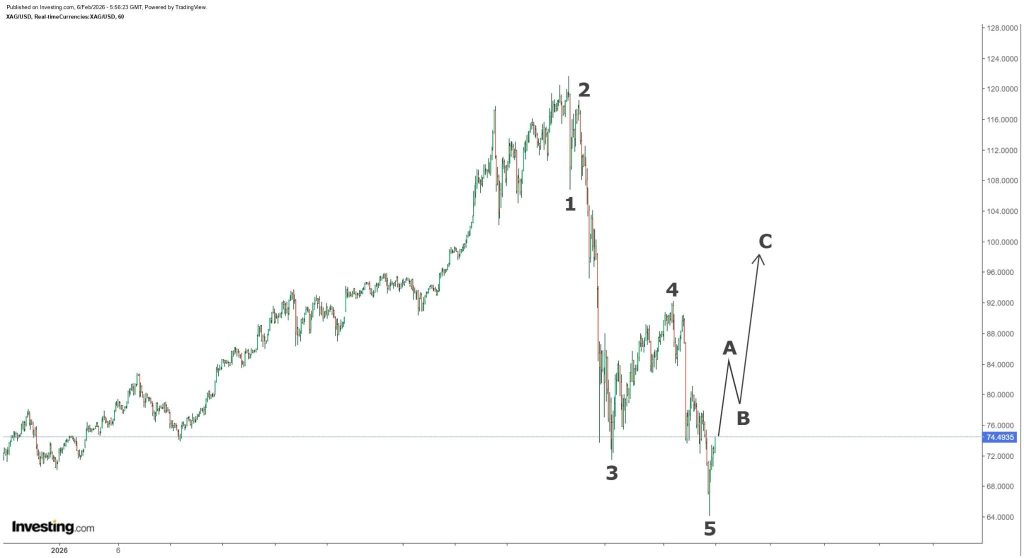
Silver Price Crash Is Over “For Real This Time,” Analyst Predicts a Surge Back Above $90

Silver Price Crash Is Over “For Real This Time,” Analyst Predicts a Surge Back Above $90

Silver has been taking a beating lately, and the Silver price hasn’t exactly been acting like a safe haven. After running up into the highs, the whole move reversed
Share
Captainaltcoin2026/02/07 03:15
Citi Caps Year-End at $4,300, But ETF outflows Challenge Outlook

Citi Caps Year-End at $4,300, But ETF outflows Challenge Outlook

The post Citi Caps Year-End at $4,300, But ETF outflows Challenge Outlook appeared on BitcoinEthereumNews.com. Ethereum Price Prediction: Citi Caps Year-End at $4,300, But ETF outflows Challenge Outlook Disclaimer: The information found on NewsBTC is for educational purposes only. It does not represent the opinions of NewsBTC on whether to buy, sell or hold any investments and naturally investing carries risks. You are advised to conduct your own research before making any investment decisions. Use information provided on this website entirely at your own risk. Related News © 2025 NewsBTC. All Rights Reserved. This website uses cookies. By continuing to use this website you are giving consent to cookies being used. Visit our Privacy Center or Cookie Policy. I Agree Source: https://www.newsbtc.com/news/ethereum/ethereum-price-prediction-citi-caps-year-end-at-4300-but-etf-outflows-challenge-outlook/
Share
BitcoinEthereumNews2025/09/18 14:30