Digital Nomads: Adebayo Aderohunmu on what African talent needs to be hired globally
Adebayo Aderohunmu’s journey from a sociology classroom in Ile-Ife, southwest Nigeria, to the talent acquisition teams of global tech companies has not been a linear path. In the last five years, his career has tracked the rapid trajectory of Africa’s most ambitious startups from Reliance Health, Moniepoint, Stitch, to LemFi.
Now, as a talent acquisition associate at Verto in the United Kingdom, he’s gleaned critical insights into the systemic differences that define how African talent operates and relocates on the global stage.
Aderohunmu’s initial steps into the professional world were guided by academic curiosity rather than commercial strategy. As a student of sociology, he discovered that he did not want to be an academic and settled on Human Resource Management, which had captured his interest for a few years.
During the uncertainty of the COVID-19 pandemic in 2020, he pivoted to the tech space. When he applied for a job at Reliance Health, he resumed with some fear and trepidation amidst widespread industry layoffs.
Despite the initial anxiety, he quickly became invested in the company’s mission. “I felt so much sold to it,” he recalled. Aderohunmu was captivated by Reliance Health’s purpose, which entailed using technology and data science to make healthcare cheaper in emerging markets. He saw the sector as a space where people were asking new questions, building new products, working with a different kind of mindset. This visibility of tech’s societal impact became the foundational principle of his career.
 Adebayo Aderohunmu (R) receives an award from Reliance HMO cofounder and COO, Ope Olumekun, at the company’s end of year party
Talents travel, not all titles do
Aderohunmu identified one of the most critical structural challenges facing African professionals: the seniority trap. In Nigeria, for instance, Aderohunmu observed that younger talent tend to want managerial roles quickly in their career as a way to earn more. They also often lack mentorship opportunities as they progress.
In contrast, global companies prioritise deep specialisation through supporting ‘Individual Contributors’ (ICs) who can remain technical experts without managing staff. “You can be an individual contributor for so long,” Aderohunmu explained, “and earn the same pay as an engineering manager.”
So when Nigerian ‘senior software engineers’ interview for global roles, they tend to fail, because managing people while mastering your craft is a specific skill set global firms require.
Cultural fragmentation across Lagos, Cape Town, and London
Aderohunmu’s experience across different cities and countries highlights profound differences in work culture, structure, and communication. What works in Yaba might falter in Shoreditch or Cape Town.
The structural differences are clear. Companies based outside of Nigeria, particularly those in the UK, have a relentless attention to structure and communication.
Employees in the UK, based on their experience, are not just expected to execute tasks but to dedicate themselves to improving processes, looking to data and external trends, to grow innovation internally.
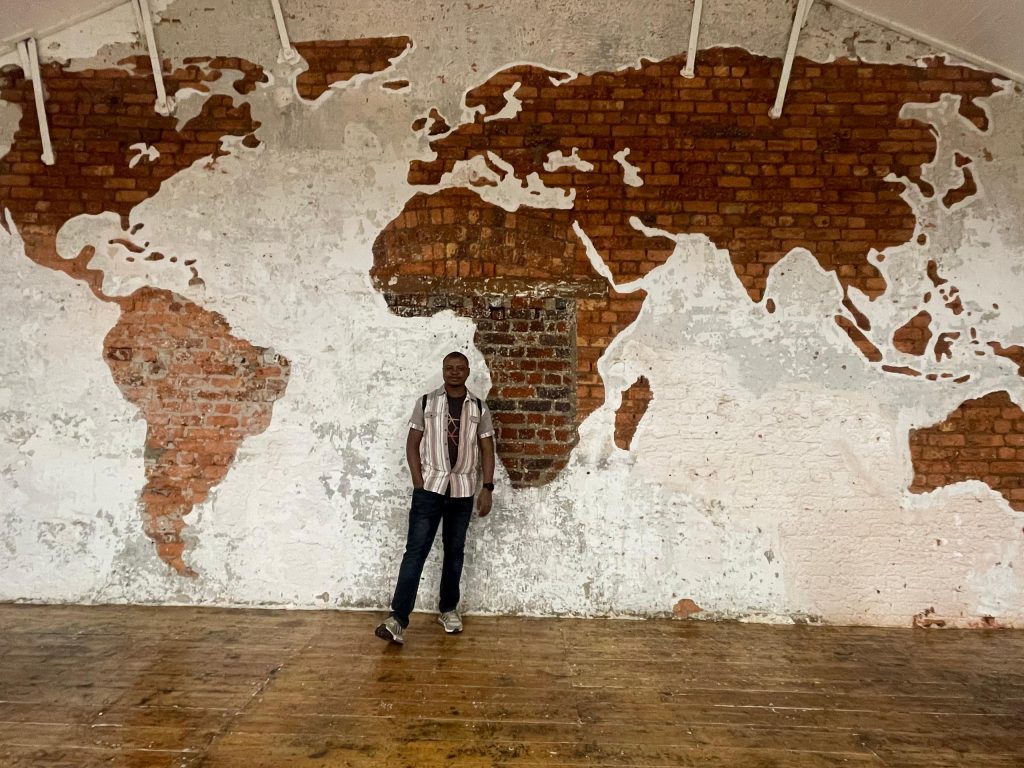 Aderohunmu at the Stitch Cape Town Office
The cultural distinctions are the most vivid when comparing African hubs. Aderohunmu notes that talent expectations in Cape Town carry more similarities with the European way than startups in Nigeria or West Africa.
‘Play and sports’ being integrated into the professional fabric was a significant shift for him when he started working at Stitch, a fintech in South Africa. He said, “Where, for instance, in Lagos, the most you get is nightlife, or clubbing, in a place like South Africa, Padel [a racket game] and similar sports are cultural for them.”
Aderohunmu noted that employees closed their calendars just to head to the [game] court. However, he quickly realised it wasn’t merely leisure, but a venue for business, where sales teams might close deals with prospective clients during these out-of-office interactions. “It was the fact that our sales folks, talking about their prospects who met in public, maybe even closed a deal [with them].” This contrasts sharply with the nightlife culture typical of Lagos’ professional socialising.
Aderohunmu recalled an instance when a South African company decided to go fully remote, and employees actively complained because they wanted to return to the office. He realised such resistance existed because the realities for an employee in Lagos are different: battles with traffic and infrastructure that make remote work a sanctuary for Nigerians.
Furthermore, the sanctity of personal time varies. In the UK and South Africa, Aderohunmu encountered “unnegotiable lunch hours,” where time is strictly observed. Communication flowed differently, too. In global companies, he found a ‘very fluid culture’ where bottom-top communication is encouraged, yet this is not often the case with African-based companies.
The deliberate path to global mobility
When Aderohunmu decided to move to the United Kingdom, he started to expand his network. He noted it as one of the first things to do for any talent seeking global mobility: to optimise their professional digital footprint and connect with professionals in the location they plan to move to.
In addition, rather than wait for official job applications, his advice to would-be professional migrants is to actively look for opportunities. This proactivity is what started his journey with Verto. Aderohunmu had moved to the United Kingdom in pursuit of a master’s degree when he saw a post by the CEO of Verto. He applied and sent a cold email to ‘put another foot in the door’.
But when it finally comes down to adapting to diverse cultures, Aderohunmu encouraged actively engaging these cultures. For him, he engaged with the UK culture by trying local food and attending events, noting that while these seem like ‘small cultural insignias,’ they remain vital for fitting into the larger culture.
The recruiter’s playbook on navigating bias and visas
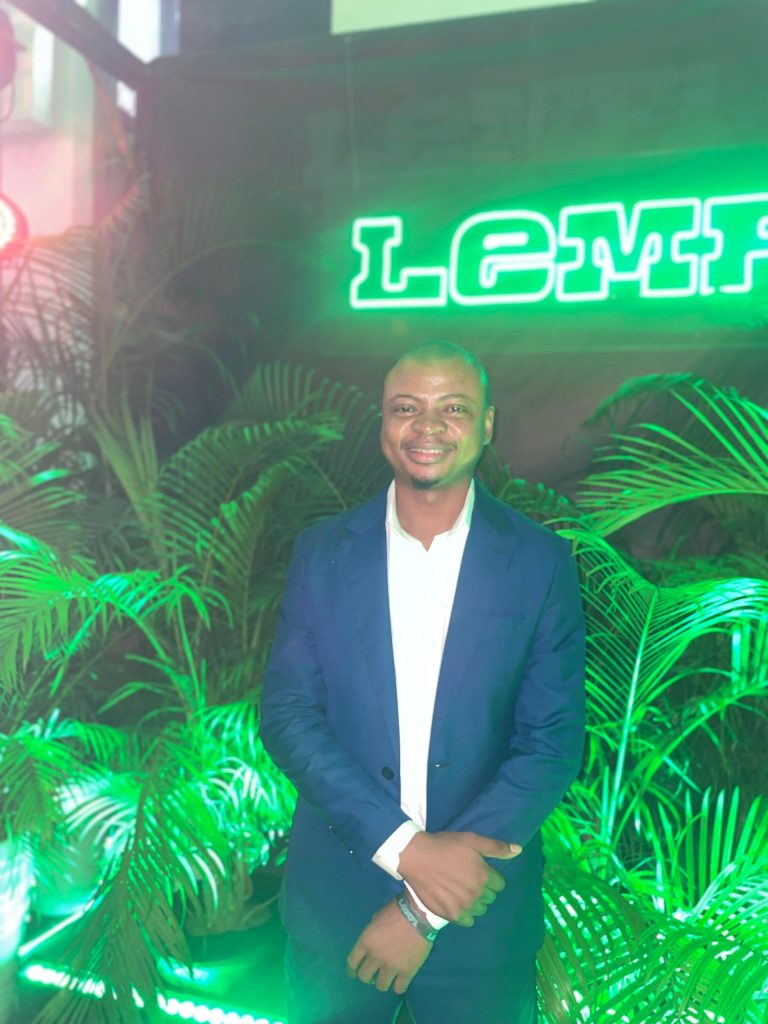 Aderohunmu at LemFi’s 2023 end of year party
Drawing from his experience on both sides of the hiring table, working with and hiring for tech giants across regions, Aderohunmu offers critical advice for African professionals seeking job opportunities: global companies demand cultural maturity.
One company might prioritise diversity, equality and inclusion, based on where they are domiciled. And other companies that are domiciled elsewhere might not place weight on it. He recounts an instance, during an interview process, where one Nigerian candidate referred to both men and women with masculine pronouns such as ‘he’ and ‘guys’, as opposed to using gender-neutral terminology. “Within that interview, it was interpreted as if he was not…inclusive enough,” Aderohunmu said, and this ruled the candidate out of the hiring process.
He also shared that candidates must demonstrate autonomy. In the growing era of remote work, a growing trend is companies that seek out candidates who, by themselves, are autonomous, responsible, and capable of working unsupervised. This is particularly necessary for companies where work does not occur within a shared physical space.
Finally, for those attempting relocation, the path is arduous, and Aderohunmu warned that “[the] Global Talent Visa doesn’t automatically give you a job.” African talents seeking professional recognition on a global scale must contend with competition and bias. “You must put in a lot of effort to get yourself through the door, a lot of effort, either in job applications…or attending events, to put yourself in the face of people.”
You May Also Like

Trump to Announce Fed Chair Soon: "Someone Who Believes in Lower Interest Rates by a Lot"

XRP Price Falls Below $2, Deepening Investor Concerns