IT’S BEEN many years since I last paid a visit to Villa Escudero Plantations and Resort — a popular go-to destination for Filipinos taking their balikbayan friendsIT’S BEEN many years since I last paid a visit to Villa Escudero Plantations and Resort — a popular go-to destination for Filipinos taking their balikbayan friends

All aboard the Changan Nevo convoy
2025/12/15 00:01

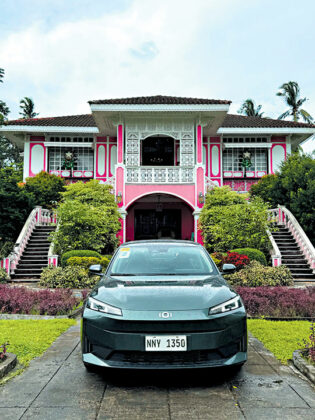
IT’S BEEN many years since I last paid a visit to Villa Escudero Plantations and Resort — a popular go-to destination for Filipinos taking their balikbayan friends out for some pasyal (sightseeing). It’s a bit far from the Metro, but still close enough for a well-planned day trip. And I think it is that combination of exotic, local dining — you eat Filipino food right next to a man-made waterfall that feeds into a small hydroelectric plant, while your feet are immersed in ankle-deep water — and driving accessibility that makes this place one of those balikbayan favorites.

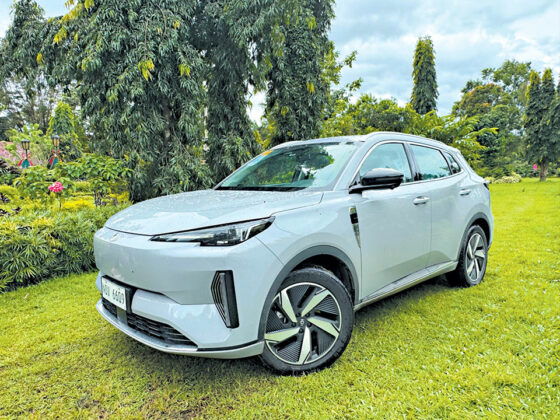
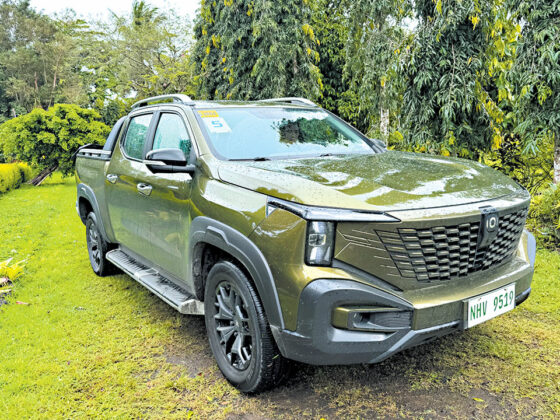
This year, I got to return to Villa Escudero driving in a convoy of Changan Nevo plug-in hybrids. The global Chinese auto manufacturer had successfully introduced its Nevo lineup of electrified vehicles to the Philippine market earlier this year, and decided that before closing the fourth quarter of 2025, it would showcase the unique performance and capabilities of the Changan Nevo Q05, Hunter K50, and A05 to the Philippine media. There were five model variants of the Nevo lineup in total, as the Nevo Q05 came in both the Q05 iD and Q05 SE, and the Hunter K50 came in both 4×4 and 4×2 iterations.

I happily joined the long drive, which took off from Changan’s flagship showroom along C5 in Pasig and proceeded straight to Villa Escudero Plantations and Resort in Tiaong, Quezon. The entire round-trip journey was approximately 200 kilometers in distance, and well worth the adventure.

My media team drove the Changan Nevo Q05 SE, and we found it impressively spacious. The seats are comfortable and the car is easy to drive, with no caveats. It comes with 19-inch, five-spoke alloy wheels, a rear spoiler, front and rear fog lights, a shark-fin antenna and full-on LED lights. I like how it offers four electric drive modes: Battery Electric, Hybrid, Range Extended Electric and Intelligent Energy Management (iEM). The last drive mode sort of learns from your driving behavior and then adjusts the car’s energy consumption based on the collected feedback.

Alongside its 1.5-liter BlueCore gasoline engine mated to a dedicated hybrid transmission (DHT) that produces 212hp and 330Nm of torque, the Nevo Q05 carries an 18.4-kWh battery, rated to be capable of providing 115km of driving range in pure EV mode. Additionally, it is rated to offer up to 1,215km of comprehensive range.

As we drove through city roads that led us to the South Luzon Expressway, and eventually into the country roads of Quezon and farther into the mildly off-road premises of Villa Escudero, we found ourselves happy with its handling and performance. It saved us energy through the typically unforgiving morning traffic of the Metro, providing enough power to sail through the expressway and comfortably overtake other vehicles — while keeping us reasonably safe with its advanced driver assistance systems. It’s a good product with its price point set at P1.259 million. The higher-end Changan Nevo Q05 iD sells for a bit more, P1.449 million.

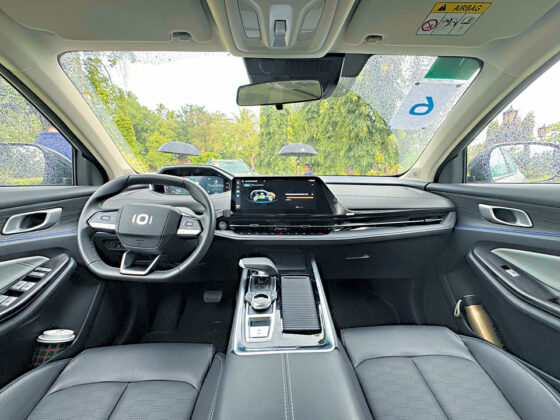
Meanwhile, the Hunter K50 range-extended EV is the world’s first range-extended electric pickup. And in the Philippines, it is the first 4WD electric pickup. Matching its capabilities are its commanding exterior presence and urban-lifestyle kind of ruggedness. The media team that drove it shared that the ride comfort is dreamy for a pickup — and that in itself is a big deal. It also comes with a 7.5-inch digital instrument cluster, 12.3-inch touchscreen with wireless Apple CarPlay and Android Auto (and the Q05 comes with wireless Apple CarPlay and Android Auto, too), an eight-speaker sound system, wireless charging pad, and leather-covered power seats — not to mention a 540-degree panoramic camera and other safety features such as Lateral Stability Control, Collision Auto Unlock (important for electric vehicles), and Collision Auto Fuel Cut-off.

The 4×4 variant has Eco, Comfort, Sport, Traction, Custom, Creep, Snow, Mud, Sand and Off-Road driving modes, and its 31.18-kWh battery is rated to provide 131-km driving range on pure electric, which can rise to 1,031km with the range extender. It also offers a V2L (vehicle to load) feature, which basically means that it has dual 220-V outlets which users can exploit to power their appliances. And being a pickup, it has a 2.5-ton towing capacity.

Lastly, Changan’s latest Nevo A05 plug-in hybrid was also part of our media convoy. It comes with a flat-fold rear backrest, six-way electrically adjustable driver seat, six-speaker audio system, moonroof, and multifunction steering wheel — among other features. It gets several EV powertrain modes, such as BEV, PHEV, REEV and iEM. Additionally, you can choose from the more familiar drive modes: Eco, Normal, Sport and Custom. The SRP of the A05 is P1.195 million.

It was an enjoyable opportunity to test the real-world driving experience of the Changan Nevo line. In the end, it says a lot about how far Changan has gone in developing and building their products. After all, they’ve had 160 years of global industrial expertise — 65 of which were dedicated to automotive innovation. Today, we get to enjoy them on our roads, too.

Market Opportunity
PAID Network Logo
PAID Network Price(PAID)
$0.0038
$0.0038$0.0038
+0.52%
USD
PAID Network (PAID) Live Price Chart
Disclaimer: The articles reposted on this site are sourced from public platforms and are provided for informational purposes only. They do not necessarily reflect the views of MEXC. All rights remain with the original authors. If you believe any content infringes on third-party rights, please contact [email protected] for removal. MEXC makes no guarantees regarding the accuracy, completeness, or timeliness of the content and is not responsible for any actions taken based on the information provided. The content does not constitute financial, legal, or other professional advice, nor should it be considered a recommendation or endorsement by MEXC.

You May Also Like

Son of filmmaker Rob Reiner charged with homicide for death of his parents

Son of filmmaker Rob Reiner charged with homicide for death of his parents

FILE PHOTO: Rob Reiner, director of "The Princess Bride," arrives for a special 25th anniversary viewing of the film during the New York Film Festival in New York
Share
Rappler2025/12/16 09:59
Addressing the sustainability question: The Web3 energy narrative

Addressing the sustainability question: The Web3 energy narrative

The post Addressing the sustainability question: The Web3 energy narrative appeared on BitcoinEthereumNews.com. contributor Posted: September 22, 2025 The environmental impact of blockchain technology remains a significant public concern in September 2025. For Web3 to achieve widespread legitimacy, it must present a credible narrative and technological path towards sustainability. The models pioneered by Oraichain, Pinlink, and RSS3 showcase how decentralized networks can be designed for efficiency and can contribute to a more sustainable digital economy. Oraichain, as a sovereign Layer 1, is built on a Delegated Proof-of-Stake (DPoS) consensus mechanism. This is inherently more energy-efficient than the Proof-of-Work systems that drew early criticism. By design, its security model relies on economic staking rather than raw computational power, allowing the network to process complex AI computations with a minimal energy footprint compared to its predecessors, aligning its operations with a greener Web3. Pinlink’s DePIN model promotes a more efficient use of existing hardware resources. The relentless construction of massive, power-hungry data centers by tech giants is a major source of energy consumption. Pinlink’s approach is to unlock the value in dormant or underutilized GPUs already in circulation around the world. This “recycling” of computing capacity reduces the need for new hardware manufacturing and makes the overall digital infrastructure ecosystem more resource-efficient. RSS3 contributes to sustainability through its distributed and lightweight design. Unlike a centralized data indexer that requires massive, concentrated server farms, the RSS3 network is run by a global collection of independent nodes. These nodes can be operated on low-power, consumer-grade hardware, distributing the energy load and avoiding the inefficiencies of large-scale, centralized data centers. This architectural choice makes its information layer inherently more sustainable and resilient. Disclaimer: This is a paid post and should not be treated as news/advice. Next: As Bitcoin’s sell pressure grows, are investors seeking safety in altcoins? Source: https://ambcrypto.com/addressing-the-sustainability-question-the-web3-energy-narrative/
Share
BitcoinEthereumNews2025/09/23 09:02
Alcohol Still Leads Restaurant Beverage Orders, According To Harris Poll

Alcohol Still Leads Restaurant Beverage Orders, According To Harris Poll

The post Alcohol Still Leads Restaurant Beverage Orders, According To Harris Poll appeared on BitcoinEthereumNews.com. A new Harris Poll reveals millennials and Gen X still drive alcohol sales in restaurants, while Gen Z mixes drinks, formats, and expectations. Alcohol may still be the default for many American diners, but the latest Harris Poll suggests drinking habits are shifting. While older generations continue to reach for beer, wine, and cocktails, Gen Z is redefining what it means to drink out, focusing more on flexibility, aesthetics, and mood than tradition. Millennials are still loyal alcohol buyers when dining out, but Gen Z’s beverage habits are harder to pin down, according to new Harris Poll data. getty What the new Harris Poll reveals about U.S. beverage behavior In a nationally representative survey conducted by Harris in partnership with eMarketer, 36 percent of Americans reported that alcohol is their preferred restaurant beverage, slightly ahead of soda at 29 percent and water at 21 percent. But in practice, the most commonly ordered items are still non-alcoholic: 89 percent said they ordered water in the past 30 days, and 78 percent ordered soda. Alcohol remains a strong presence, with 69 percent of diners saying they ordered at least one alcoholic drink recently. Cocktails topped the alcohol category, followed by beer, spirits, and wine. While the overall preference is clear, the details begin to diverge once you look at generational breakdowns. Millennials still drive alcohol sales, especially with repeat orders Millennials continue to be the most reliable customers for restaurants selling alcohol. Fifty percent say alcohol is their default drink when dining out, compared to just 25 percent of Gen Z. They also reported significantly more repeat orders over the past month—especially for beer, spirits, and wine. This makes millennials a priority for alcohol brands and on-premise sales strategies. Libby Rodney, the Chief Strategy Officer at The Harris Poll, explained it this…
Share
BitcoinEthereumNews2025/09/24 02:21