Hyperliquid has unveiled its "combined margin" feature. Will it bring in additional funds?
Author: Jaleel Jia Liu
This is one of the most important upgrades Hyperliquid has made in a long time.
In the past, various DeFi protocols and upgrades to Perp DEX in the crypto market have all been addressing the same problem: how to maximize liquidity with limited funds. Traditional financial derivatives markets once had an extremely effective solution: Portfolio Margin. This mechanism brought over $7 trillion in incremental volume to the traditional derivatives market, completely changing the rules of the game for institutional trading.
Now, Hyperliquid has moved it on-chain. In today's liquidity crunch, this could be a turning point for a new boom in the on-chain derivatives market.
What is Hyperliquid's Portfolio Margin?
Let's start with the most obvious change.
In the past, most CEXs and Perp DEXs distinguished between "spot accounts," "contract accounts," "lending accounts," and so on, with each account having its own calculation method. However, after Hyperliquid enabled Portfolio Margin, these accounts no longer need to be distinguished.
With the same funds, you can hold spot assets while simultaneously using them as collateral for contracts. If your available balance is insufficient when placing an order, the system will automatically determine if you have eligible assets in your account and then borrow the necessary funds within a safe range to complete the transaction. The entire process is virtually seamless.
Even better, the "idle money" in the account will automatically accrue interest.
In a Portfolio Margin account, as long as an asset is available for lending and is not currently tied up in trading or margin, the system automatically treats it as available capital and begins accruing interest based on the current capital utilization rate. Most HIP-3 DEXs include this in portfolio margin calculations, eliminating the need to deposit assets into a separate lending pool or frequently switch between different protocols.
In conjunction with HyperEVM, this mechanism opens up even more possibilities: more on-chain lending protocols can be integrated in the future, and new asset classes and derivatives of HyperCore will gradually support portfolio margining. The entire ecosystem is becoming an organic whole.
Naturally, the methods of liquidation also changed.
Hyperliquid no longer sets liquidation thresholds for individual positions; instead, it monitors the overall account security. As long as the combined spot value, contract positions, and lending relationships meet the minimum maintenance requirements, the account is secure. Short-term fluctuations in a single position will not immediately trigger liquidation; the system will only intervene when the overall account risk exposure exceeds a certain threshold.
Of course, Hyperliquid is also being quite restrained in its current pre-alpha phase. There are caps on lendable assets, available collateral, and the amount each account can lend; once these caps are reached, it automatically reverts to normal mode. Currently, only USDC can be borrowed, and HYPE is the sole collateral asset. The next phase will add USDH as a lendable asset and BTC as collateral. However, this phase is more suitable for using small accounts to familiarize oneself with the process rather than pursuing a large-scale strategy.
Before discussing the significance of Hyperliquid's Portfolio Margin upgrade, we need to look back at what the Portfolio Margin mechanism has undergone in traditional finance and the extent of its impact in order to better understand why this is one of Hyperliquid's most important upgrades in the long run.
How Portfolio Margin Saved the Traditional Financial Derivatives Market
The Great Crash of 1929 was another well-known systemic financial collapse that preceded the 2008 financial crisis.
In the 1920s, the United States was experiencing post-war prosperity and accelerated industrialization. Automobiles, electricity, steel, radio—almost every emerging industry showcased the booming development of the era. The stock market became the most direct way for ordinary people to participate in that boom, and the use of leverage was perhaps even more prevalent than it is today.
Back then, a very common practice when buying stocks was called "on margin." You didn't need to pay the full amount upfront; you only needed to put up about 10% in cash, and the rest was lent to you by the brokerage firm. The problem was that this leverage had virtually no upper limit and almost no unified regulation. Banks, brokerage firms, and brokers were all intertwined, with layers of loans nested together. Much of the borrowed money was itself borrowed from other short-term sources. A single stock could be backed by several layers of debt.
Beginning in the spring and summer of 1929, the market had already experienced several sharp fluctuations, and some funds began to quietly withdraw. However, the prevailing sentiment at the time was: "This is just a healthy correction. After all, the US economy is so strong, industry is expanding, and production is growing; how could the stock market really crash?"
However, market crashes are difficult to predict. On October 24, 1929, the market opened with unprecedented selling pressure. Stock prices plummeted, and brokerages began issuing margin calls to margin accounts. But for investors, this was extremely difficult to accomplish. This resulted in massive forced liquidations, causing prices to fall further, which in turn triggered even more forced liquidations. This chain reaction caused the market to spiral out of control, with stock prices being hammered down layer by layer without any buffer.
Unlike 2008, the collapse of 1929 wasn't caused by a single iconic institution like Lehman Brothers; rather, it was almost the entire financing system that collapsed. The stock market crash quickly spread to brokerages, and then to banks. Banks failed due to securities losses and bank runs, and businesses, deprived of financing, began laying off workers and closing factories. The stock market crash didn't stop at the financial system; it directly dragged the US economy into the Great Depression, which lasted for several years.
It is against this backdrop that regulators have developed an almost instinctive fear of "leverage." For those who experienced that generation's collapse, the only reliable solution is to simply and brutally restrict everyone's ability to borrow money.
In 1934, the U.S. government established a regulatory framework centered on "limiting leverage," mandating minimum margin requirements. Like many regulatory measures, this policy was well-intentioned but overly simplistic, ultimately stifling liquidity. It can be said that for a long time afterward, the U.S. derivatives market was "shackled."
The contradictions of this constraint were not addressed until the 1980s.
The rapid development of futures, options, and interest rate derivatives has led institutional traders to move beyond simply betting on direction, and instead heavily utilize hedging, arbitrage, spread trading, and combination strategies. While these strategies themselves are low-risk and low-volatility, they rely on high turnover, resulting in extremely low capital efficiency. If this approach continues, the growth ceiling for the derivatives market will be very low.
It was against this backdrop that the Chicago Mercantile Exchange (CME) took a crucial step in 1988 by implementing the Portfolio Margin mechanism.
This had an immediate impact on market structure. Subsequent statistics showed that the Portfolio Margin mechanism ultimately brought at least $7.2 trillion in incremental revenue to the derivatives market within the traditional financial system.
This increase is enormous, considering that the total market capitalization of cryptocurrencies today is only $3 trillion.
What does this mean for the on-chain derivatives market?
Now, Hyperliquid has brought this mechanism on-chain. This marks the first time Portfolio Margin has truly entered the realm of on-chain derivatives.
The first impact of this is a significant improvement in the efficiency of crypto funds. The same amount of money can support more trading activities and more complex strategy structures under the Portfolio Margin system.
More importantly, this change has allowed a large number of institutions that previously "only did traditional finance" to see more possibilities on the blockchain. After all, as mentioned earlier, most professional market makers and institutional funds are not concerned with how much they make on a single transaction, but rather with the overall efficiency of their funds over a long period of time.
If a market doesn't support portfolio margin, their hedging positions will be treated as high-risk positions, resulting in high margin requirements and returns that cannot compare to traditional trading platforms. In this situation, even if they are interested in on-chain markets, it will be difficult for them to actually invest large amounts of capital.
This is why, in the traditional financial system, portfolio margin is considered a "basic requirement" for derivatives trading platforms. It enables institutions to support long-term liquidity and institutional strategies. Hyperliquid's upgrade is essentially aimed at attracting these traditional institutions and funds.
When this type of capital enters the market, the impact is not limited to an increase in trading volume. A deeper change is the transformation of the market structure. The proportion of hedging, arbitrage, and market-making funds increases, resulting in thicker order books, narrower bid-ask spreads, and more controllable and resilient depth during extreme market conditions.
You May Also Like

OpenVPP accused of falsely advertising cooperation with the US government; SEC commissioner clarifies no involvement
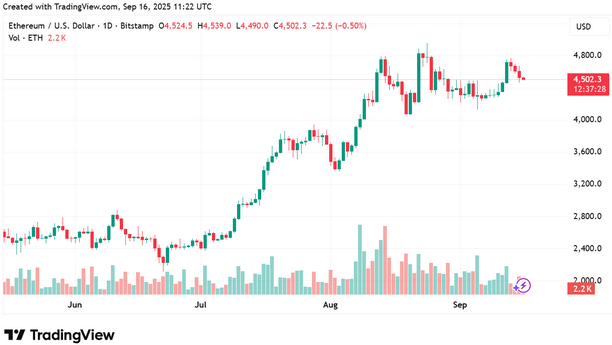
Ethereum Price Prediction: ETH Targets $10,000 In 2026 But Layer Brett Could Reach $1 From $0.0058