Flare Network launched a new yield-bearing XRP product called earnXRP in an effort to bring more tokens into decentralized finance and increase its onchain utilityFlare Network launched a new yield-bearing XRP product called earnXRP in an effort to bring more tokens into decentralized finance and increase its onchain utility

Flare launches yield-bearing XRP product to expand DeFi use

2025/12/23 23:01
4 min read

Flare Network launched a new yield-bearing XRP product called earnXRP in an effort to bring more tokens into decentralized finance and increase its onchain utility.

earnXRP, which officially went live on Monday, was developed through a collaboration between Upshift Finance, Clearstar, and Flare Network, a Layer 1 blockchain supporting XRP-focused decentralized applications (dapps). 

The yield-earning project allows users to deposit FXRP, a wrapped version of XRP issued on Flare, into a single vault that automatically deploys funds on several onchain strategies. The FXRP then generates yield denominated in Ripple’s token, according to the teams behind the product.

Upshift provides the yield vault infrastructure for earnXRP, Clearstar is the onchain risk manager overseeing how capital is allocated, and Flare supplies the underlying blockchain infrastructure.

Ethan Luc, growth lead at Upshift, said only a small fraction of XRP has been used in decentralized finance. He cited data showing that only 0.1% of the token’s circulating supply is currently active in defi protocols, even though XRP is the fifth-largest crypto by market capitalization.

Crypto platforms launch yield product to boost ‘XRPFi’ 

The earnXRP launch comes on the heels of two other XRP-specific financial products that are similar to the yield farming tokens in Ethereum and other smart contract platforms.  

In September, Cryptopolitan reported that tokenization platform Midas unveiled mXRP in partnership with Interop Labs, the developer behind the Axelar interoperability protocol, and risk curator Hyperithm. Midas’ website shows mXRP has accumulated roughly $20 million in total value locked since its inception.

Earlier in December, Firelight Finance launched an XRP staking protocol on Flare that issues a liquid token known as stXRP, in which holders can earn rewards through a DeFi insurance-based model.

Luc reiterated that stXRP is a receipt token representing deposits made directly into Firelight, but earnXRP functions as a vault token that allocates capital in trading protocols, including Firelight.

Users who deposit FXRP receive earnXRP tokens representing their share of the vault, which can be redeemed at any time for FXRP. earnXRP allocates funds to carry trades, staking, and cover underwriting through Firelight at launch, alongside providing concentrated liquidity on automated market makers. 

The initial deposit cap has been set at 5 million FXRP, with no individual user limits, and all protocol fees are waived for the first 30 days following launch.

EarnXRP is targeting returns between 4% and 10%, depending on the size of the vault and overall capital inflows. Jashiel Alamo, head of research at Clearstar Labs, said mid-sized vaults could support higher yields due to strategy flexibility and liquidity conditions.

For vaults holding between $1 million and $10 million in assets, target returns in the 7% to 10% range are considered achievable. He added that vaults reaching $50 million to $100 million in size would likely see returns fall to around 3% to 4%.

Crypto industry pushes back on stablecoin yield limits 

The launch of earnXRP comes as the crypto industry is in a policy fight in Washington over the treatment of yield-bearing digital assets.

Several crypto companies and advocacy groups are asking lawmakers on the Senate Banking Committee to reject any calls for imposing new restrictions on stablecoin rewards in upcoming legislation.

In a letter led by the Blockchain Association sent last Thursday, more than 125 crypto organizations opposed reinterpreting and expanding an existing ban on stablecoin interest contained in the GENIUS Act.

Signatories included the Bitcoin Policy Institute, Crypto Council for Innovation, DeFi Education Fund, Solana Policy Institute, the Digital Chamber, a16z Crypto, Coinbase, Gemini, Kraken, and Ripple.

The GENIUS Act, signed into law by President Trump in July, includes a provision prohibiting stablecoin issuers from giving “any form of interest or yield” directly to holders.

That language is now a point of contention between the crypto and banking sectors, with disagreements over how the interest ban should be applied and if lawmakers should amend the statute before regulators finalize the rules.

“The idea that we reopen [the issue] before we even start rulemaking just doesn’t make any sense,” Blockchain Association CEO Summer Mersinger told US publication The Hill. “When Congress passes a bill, and it gets signed into law, if you can reopen it right away, you’ve got a question about how much certainty is that really bringing to the market.”

Join a premium crypto trading community free for 30 days - normally $100/mo.

Market Opportunity
XRP Logo
XRP Price(XRP)
$1.4222
$1.4222$1.4222
+0.82%
USD
XRP (XRP) Live Price Chart
Disclaimer: The articles reposted on this site are sourced from public platforms and are provided for informational purposes only. They do not necessarily reflect the views of MEXC. All rights remain with the original authors. If you believe any content infringes on third-party rights, please contact [email protected] for removal. MEXC makes no guarantees regarding the accuracy, completeness, or timeliness of the content and is not responsible for any actions taken based on the information provided. The content does not constitute financial, legal, or other professional advice, nor should it be considered a recommendation or endorsement by MEXC.

You May Also Like

HitPaw API is Integrated by Comfy for Professional Image and Video Enhancement to Global Creators

HitPaw API is Integrated by Comfy for Professional Image and Video Enhancement to Global Creators

SAN FRANCISCO, Feb. 7, 2026 /PRNewswire/ — HitPaw, a leader in AI-powered visual enhancement solutions, announced Comfy, a global content creation platform, is
Share
AI Journal2026/02/08 09:15
Journalist gives brutal review of Melania movie: 'Not a single person in the theater'
Journalist gives brutal review of Melania movie: 'Not a single person in the theater'

A Journalist gave a brutal review of the new Melania documentary, which has been criticized by those who say it won't make back the huge fees spent to make it,
Share
Rawstory2026/02/08 09:08
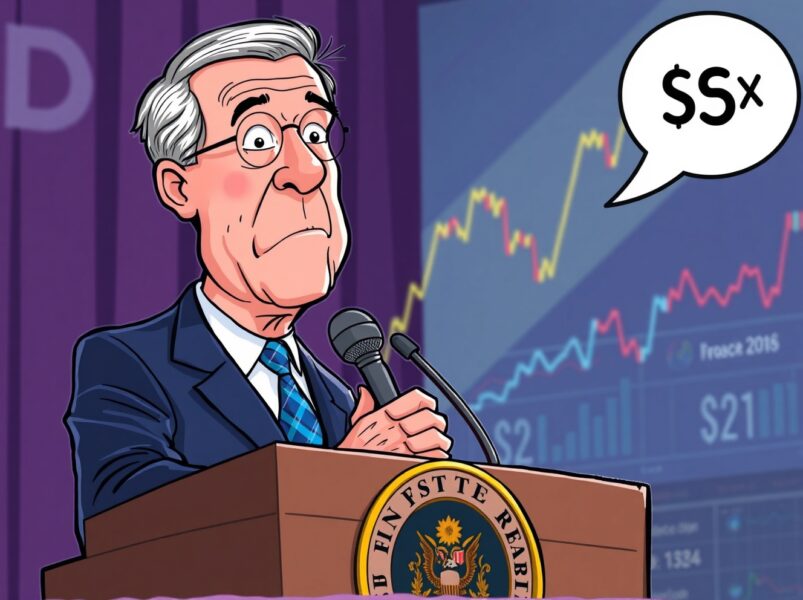
Jerome Powell’s Press Conference: Crucial Insights Unveiled for the Market’s Future

Jerome Powell’s Press Conference: Crucial Insights Unveiled for the Market’s Future

BitcoinWorld Jerome Powell’s Press Conference: Crucial Insights Unveiled for the Market’s Future The financial world, including the dynamic cryptocurrency market, often hangs on every word from the Federal Reserve. Recently, Jerome Powell’s press conference following the Federal Open Market Committee (FOMC) meeting concluded, leaving investors and analysts dissecting his remarks for clues about the future economic direction. This event is always a pivotal moment, shaping expectations for inflation, interest rates, and the overall stability of global markets. What Were the Key Takeaways from Jerome Powell’s Press Conference? During Jerome Powell’s press conference, the Fed Chair provided an update on the central bank’s monetary policy decisions and its economic outlook. His statements often reiterate the Fed’s dual mandate: achieving maximum employment and stable prices. This time was no different, with a strong emphasis on managing persistent inflation. Key points from the recent discussion included: Inflation Control: Powell emphasized the Fed’s unwavering commitment to bringing inflation back down to its 2% target. He reiterated that the fight against rising prices remains the top priority, even if it entails some economic slowdown. Interest Rate Policy: While the Fed’s stance on future interest rate adjustments was discussed, the path remains data-dependent. Powell indicated that decisions would continue to be made meeting-by-meeting, based on incoming economic data. Economic Projections: The updated Summary of Economic Projections (SEP) offered insights into the Fed’s forecasts for GDP growth, unemployment, and inflation. These projections help market participants gauge the central bank’s expectations for the economy’s trajectory. Quantitative Tightening (QT): The ongoing process of reducing the Fed’s balance sheet, known as quantitative tightening, was also a topic. This reduction in liquidity in the financial system has broad implications for asset prices. How Did Jerome Powell’s Remarks Impact Cryptocurrency Markets? The conclusion of Jerome Powell’s press conference often sends ripples through traditional financial markets, and cryptocurrencies are increasingly sensitive to these macroeconomic shifts. Digital assets, once thought to be uncorrelated, now frequently react to the Fed’s monetary policy signals. Higher interest rates, for instance, tend to make riskier assets like cryptocurrencies less attractive. This is because investors might prefer safer, interest-bearing investments. Consequently, we often see increased volatility in Bitcoin (BTC) and Ethereum (ETH) prices immediately following such announcements. The tightening of financial conditions, driven by the Fed, reduces overall liquidity in the system, which can put downward pressure on asset valuations across the board. However, some argue that this growing correlation signifies crypto’s increasing integration into the broader financial ecosystem. It suggests that institutional investors and mainstream finance are now paying closer attention to digital assets, treating them more like other risk-on investments. Navigating the Economic Landscape After Jerome Powell’s Press Conference For cryptocurrency investors, understanding the implications of Jerome Powell’s press conference is crucial for making informed decisions. The Fed’s policy trajectory directly influences the availability of capital and investor sentiment, which are key drivers for crypto valuations. Here are some actionable insights for navigating this environment: Stay Informed: Regularly monitor Fed announcements and economic data releases. Understanding the macroeconomic backdrop is as important as analyzing individual crypto projects. Assess Risk Tolerance: In periods of economic uncertainty and tighter monetary policy, a reassessment of personal risk tolerance is wise. Diversification within your crypto portfolio and across different asset classes can mitigate potential downsides. Focus on Fundamentals: While market sentiment can be swayed by macro news, projects with strong fundamentals, clear use cases, and robust development teams tend to perform better in the long run. Long-Term Perspective: Cryptocurrency markets are known for their volatility. Adopting a long-term investment horizon can help weather short-term fluctuations driven by macro events like Fed meetings. The challenges include potential continued volatility and reduced liquidity. However, opportunities may arise from market corrections, allowing strategic investors to accumulate assets at lower prices. In summary, Jerome Powell’s press conference provides essential guidance on the Fed’s economic strategy. Its conclusions have a profound impact on financial markets, including the dynamic world of cryptocurrencies. Staying informed, understanding the nuances of monetary policy, and maintaining a strategic investment approach are paramount for navigating the evolving economic landscape. The Fed’s actions underscore the interconnectedness of traditional finance and the burgeoning digital asset space. Frequently Asked Questions (FAQs) Q1: What is the Federal Open Market Committee (FOMC)? A1: The FOMC is the monetary policy-making body of the Federal Reserve System. It sets the federal funds rate target and directs open market operations, influencing the availability of money and credit in the U.S. economy. Q2: How do the Fed’s interest rate decisions typically affect cryptocurrency markets? A2: Generally, when the Fed raises interest rates, it makes borrowing more expensive and reduces liquidity in the financial system. This often leads investors to shy away from riskier assets like cryptocurrencies, potentially causing prices to decline. Conversely, lower rates can stimulate investment in riskier assets. Q3: What does “data-dependent” mean in the context of Fed policy? A3: “Data-dependent” means that the Federal Reserve’s future monetary policy decisions, such as interest rate adjustments, will primarily be based on the latest economic data. This includes inflation reports, employment figures, and GDP growth, rather than a predetermined schedule. Q4: Should I change my cryptocurrency investment strategy based on Jerome Powell’s press conference? A4: While it’s crucial to be aware of the macroeconomic environment shaped by Jerome Powell’s press conference, drastic changes to a well-researched investment strategy may not always be necessary. It’s recommended to review your portfolio, assess your risk tolerance, and consider if your strategy aligns with the current economic outlook, focusing on long-term fundamentals. If you found this analysis helpful, please consider sharing it with your network! Your insights and shares help us reach more readers interested in the intersection of traditional finance and the exciting world of cryptocurrencies. Spread the word! To learn more about the latest crypto market trends, explore our article on key developments shaping Bitcoin price action. This post Jerome Powell’s Press Conference: Crucial Insights Unveiled for the Market’s Future first appeared on BitcoinWorld.
Share
Coinstats2025/09/18 16:25
