In 2025, investors started treating BTC like infrastructure rather than a trade. Crypto’s un-festive season is here, that time of cycle when investors storIn 2025, investors started treating BTC like infrastructure rather than a trade. Crypto’s un-festive season is here, that time of cycle when investors stor

Bitcoin’s Most Important Moves Last Year Happened Off The Price Chart

2026/01/10 14:06
5 min read

In 2025, investors started treating BTC like infrastructure rather than a trade.

Crypto’s un-festive season is here, that time of cycle when investors store their coins away in hopes of locking up supply, farming points for future airdrops, or simply lying in wait for the next bull run to begin.

This time round, institutions are signalling the transition. BoA is advising wealth clients that up to 4% exposure to crypto could make sense. Not Bitcoin specifically, or Ether, or even risk-managed exposure through ETFs. Just “crypto.”

A few years ago, Wall Street was dismissive of digital assets. Banks don’t pivot away from traditional guidance unless they’re preparing for big changes.

Texas plants the flag

Late last year Texas moved $10 million of state capital into Bitcoin exposure: half into BlackRock’s spot ETF, half into IBIT. The amount wasn’t large, but state governments rarely take a directional position in volatile assets. When they do, it suggests a new policy is forming.

Once a state treasury gets involved in an asset, political incentives change. No governor or federal agency wants headlines about taxpayer losses on digital coins. Whether anyone admits it or not, state exposure creates a soft backstop. Sovereign losses make for very bad optics, so politicians are incentivized to avoid them by design

Wisconsin’s State Investment Board, which bought Bitcoin ETFs early and sold too soon, now looks like it left the table before the cards were even dealt. That, too, is a data point.

Ark’s $1.5M Call Started a Countdown

ARK’s Cathie Wood said last week that Bitcoin could reach $1.5 million over the next decade. Retail traders might roll their eyes given the recent slump, but institutions treat it like a scenario model. Wood is one of the few major fund managers who bought earlier, held longer, and won.

Her number implies a stop on the way — around the $200k–$250k zone — where Bitcoin historically flips investor psychology. It’s the level where people stop thinking about “exposure” and start thinking about “how to get one whole coin.”

Most late entrants repeat the same cycle: hesitation at $30k, disbelief at $60k, fear at $100k, FOMO at $200k. Then — when a full coin slips out of reach — they gravitate toward “next Bitcoin” narratives, overextended leverage, and illiquid tokens.

The setup doesn’t change, but the participants do.

When TradFi Blinked

Vanguard, the lodestar of conservative retirement money, quietly opened access to crypto ETFs. Surrender from the most risk-averse shop on the block is a signal in itself, especially for latecomers who need institutional cover before they make the leap.

At the same time, the IMF and BlackRock are publicly framing tokenization as the next phase of settlement infrastructure.

Remember: recent drawdowns hit ETFs, corporate treasuries, and risk funds simultaneously. Spreads widened, NAVs slipped, and models were stress tested. Retail wobbled for the same reason it always does: Main Street doesn’t have access to quants and sophisticated forecasting models. But institutional capital does. It stayed put, and re-positioned.

A Story Nobody Wants to Narrate — Yet

DeFi vaults are the natural successor to stablecoins. With stables hovering around $310B, it’s vital to track when their different liquidities start following similar patterns.

Last December, stablecoin supply and DeFi TVL briefly crossed at $136B. It barely registered in the headlines. But to anyone watching how crypto positions were evolving, it marked a rebalancing of on-chain liquidity, the slow migration of yield products into standardized vault frameworks, and the beginning of a new competition between passive and active crypto dollars.

The next 12 months will tell us whether that convergence was just noise, or an inflection point.

The Bigger Picture

Banks are preparing clients. States are dipping in. ETFs are normalizing access. Tokenization is moving from theory to project plans. And vaults are positioning as the next layer of on-chain financial plumbing.

So is it all presaging the next bull market, or a systemic re-build?

Institutions that used to dismiss crypto are now trying to arrive early — just without being seen as early. The window between those two positions is where the next cycle usually takes shape.

Quick Hits

Watchlist: Track upcoming flows into spot Bitcoin ETFs, particularly state-level allocations and pension-fund disclosures. Any shift in participation from Texas, Wisconsin, or emerging municipal programs could signal whether sovereign players are treating Bitcoin as policy ballast or short-term positioning.

Hot Take: The real stress test for U.S. crypto adoption will come when a major institution marks a Bitcoin position at a loss. Once public funds are involved, political incentives override market logic. The question is how far policymakers will go to avoid bad optics.

Pro Tip: When evaluating institutional interest, separate access from conviction. Vanguard enabling ETF trading isn’t the same as Vanguard endorsing the asset class. The delta between those two positions could reveal where the next wave of late-arrival capital will come from.

Disclaimer: Not financial advice. Always do your own research.


Bitcoin’s Most Important Moves Last Year Happened Off The Price Chart was originally published in Coinmonks on Medium, where people are continuing the conversation by highlighting and responding to this story.

Disclaimer: The articles reposted on this site are sourced from public platforms and are provided for informational purposes only. They do not necessarily reflect the views of MEXC. All rights remain with the original authors. If you believe any content infringes on third-party rights, please contact [email protected] for removal. MEXC makes no guarantees regarding the accuracy, completeness, or timeliness of the content and is not responsible for any actions taken based on the information provided. The content does not constitute financial, legal, or other professional advice, nor should it be considered a recommendation or endorsement by MEXC.

You May Also Like

What Are the Latest Trends in Coinbase Clone Script Development?

What Are the Latest Trends in Coinbase Clone Script Development?

In this Article about What Are the Latest Trends in Coinbase Clone Script Development?What Are the Latest Trends in Coinbase Clone Script Development? Introduction The cryptocurrency exchange industry is experiencing a geometric development with the use of digital assets becoming mainstream. In order to venture into this competitive market within a short time and in the most effective way, companies are resorting more to the Coinbase clone scripts. Such scripts provide an available search platform to start a crypto trading site like Coinbase with a reduced cost and time. This Article discusses the recent developments in the development of Coinbase clone scripts and the future of these solutions. What is Coinbase Clone Script Development? A Coinbase clone script is an off-the-shelf, configuration-friendly software application, which imitates the functionality of Coinbase, one of the largest cryptocurrency exchanges in the world. It is usually application-based with such features as user registration, crypto wallets, multi-currency trading, security protocols, and administrator dashboards. Companies count on such scripts in order to initiate their interactions in the shortest time, without much development efforts, and still provide effective and safe trading experiences to their customers. Latest Trends in Coinbase Clone Script Development DeFi and NFT Integration Existing clone scripts have been integrating NFT and Decentralized Finance (DeFi). This enables the users to stake, lend or trade the tokenized assets along with the traditional cryptocurrencies. This kind of integration will draw more users and make exchanges competitive in 2025. Multi-Blockchain Support and CrossChain. In order to support different cryptocurrencies, developers are making cross-chain compatibility possible. The support of multi-blockchains will enable customers to trade in assets without any issues across networks and increase the liquidity and flexibility of international users. Machine Learning and Artificial Intelligence Trading Analytics. Trading engines are being loaded with Artificial Intelligence (AI) and Machine Learning (ML). They have predictive analytics, personalised-recommendations, and automated trading strategies, which enhance user experience and engagement. Enhanced KYC/AML Compliance The world is becoming stricter with regulations, and the exchanges must implement the best KYC/AML solutions. In modern clone scripts, decentralized identity (DID) authentication, biometric authentication and real-time monitoring are utilized to ensure adherence without infringing on user privacy. Advanced Security Measures Security remains a priority. The new scripts also have multi-layer encryption, two-factor authentication, smart contract audits, and real-time monitoring. These steps save the hacks, fraud, and data breaches, and gain the trust of users. Future Outlook of Coinbase Clone Scripts The future of the Coinbase clone scripts is bright. With an increasing number of companies joining the crypto market, the need to have customized, secure, and featureful exchange platforms will increase. It will keep being integrated with DeFi, NFTs, and AI-powered tools, and the regulatory compliance and cross-chain interoperability will determine the next generation of clone scripts. Cryptocurrency Exchange Clone scripts are expected to keep being one of the important remedies to startups and businesses seeking to introduce crypto exchanges effectively and at a competitive cost. Conclusion The process of writing the coinbase cloning scripts is changing at a high pace in order to satisfy the demand of the new crypto market. These scripts are increasingly sophisticated and more adaptable, with DeFi and NFT integrations and AI trading analytics as well as added security. Businesses can enter the crypto exchange faster, remain in the market, and deliver a smooth experience to their users with the right clone script, which makes them an essential ingredient in the cryptocurrency world. What Are the Latest Trends in Coinbase Clone Script Development? was originally published in Coinmonks on Medium, where people are continuing the conversation by highlighting and responding to this story
Share
Medium2025/09/23 22:02
Forward Industries Bets Big on Solana With $4B Capital Plan
Forward Industries Bets Big on Solana With $4B Capital Plan

The firm has filed with the U.S. Securities and Exchange Commission to launch a $4 billion at-the-market (ATM) equity program, […] The post Forward Industries Bets Big on Solana With $4B Capital Plan appeared first on Coindoo.
Share
Coindoo2025/09/18 04:15
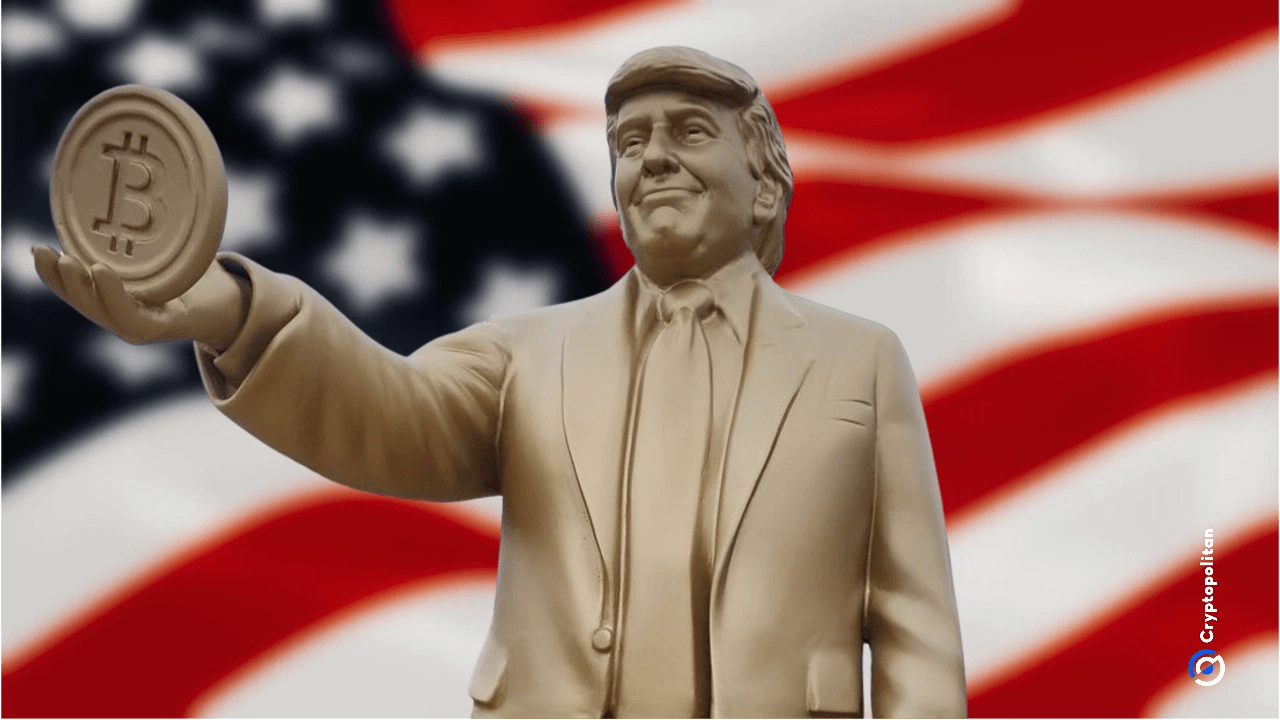
Golden Trump statue remains uninstalled amid $92,000 balance issue

Golden Trump statue remains uninstalled amid $92,000 balance issue

The post Golden Trump statue remains uninstalled amid $92,000 balance issue appeared on BitcoinEthereumNews.com. The golden statue of United States President Donald
Share
BitcoinEthereumNews2026/02/07 17:10