Ethereum co-founder Vitalik Buterin has reopened debate over the role of stablecoins in Ethereum’s future, warning that the network’s long-term independence mayEthereum co-founder Vitalik Buterin has reopened debate over the role of stablecoins in Ethereum’s future, warning that the network’s long-term independence may

Vitalik Buterin: Ethereum’s Independence Hinges on Better Decentralized Stablecoins — Here’s Why

2026/01/12 19:09
3 min read

Ethereum co-founder Vitalik Buterin has reopened debate over the role of stablecoins in Ethereum’s future, warning that the network’s long-term independence may depend on developing decentralized alternatives that rely less on the U.S. dollar and centralized issuers.

Stablecoins have become core infrastructure for crypto markets, with a combined market value of about $307.8 billion, but yet the sector remains heavily concentrated around centralized, dollar-backed products.

Tether’s USDT dominates the market with roughly $186.8 billion in circulation, accounting for more than 60% of total supply, while Circle’s USDC follows at about $74.6 billion.
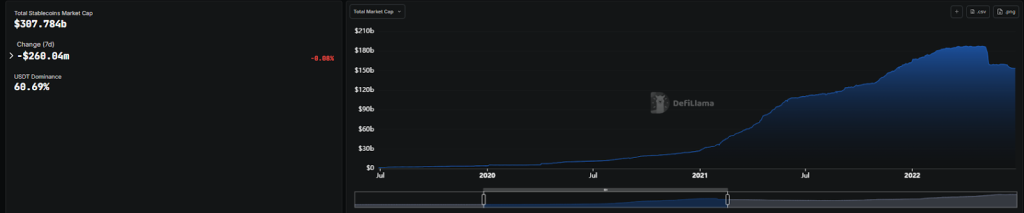
Source: DefiLlama

Decentralized stablecoins remain far smaller by comparison with Ethena’s USDe and Sky Dollar, each hovering around $6.3 billion in market value, while Dai, once Ethereum’s flagship decentralized stablecoin, has declined to roughly $4.5 billion in circulation after years of contraction.

Buterin Highlights Hidden Risks Behind Dollar-Pegged Stablecoins

Buterin’s comments came in response to Gabriel Shapiro of Delphi Labs, who described Ethereum as an increasingly “contrarian bet” against venture-backed trends.

While acknowledging the short-term usefulness of dollar-pegged assets, Buterin argued that deeper reliance on the U.S. dollar exposes Ethereum-based finance to monetary policy decisions and geopolitical risks beyond its control.

Over a longer horizon, he has questioned what happens if the dollar experiences sustained inflation or loses credibility, noting that Ethereum’s vision of nation-state resilience implies independence even from dominant fiat price references.

Beyond the peg itself, Buterin identified two deeper technical challenges that have repeatedly undermined decentralized stablecoins.

The first is oracle design, which stablecoins rely on price feeds to manage collateral and liquidations, but if those feeds can be manipulated by well-funded actors, protocols must resort to expensive economic defenses.

Buterin noted that those costs are often passed on to users through higher fees, inflation, or aggressive value extraction, weakening usability and trust.

Another issue is Ethereum’s staking economy, with rising staking yields competing directly with stablecoin designs that require ETH as collateral, making it less appealing to lock assets unless protocols can offset or integrate those returns.

Lessons From Terra Still Shape Stablecoin Design

Buterin outlined possible paths forward, ranging from sharply reducing staking yields to creating new staking categories with lower slashing risk to redesigning collateral systems so staking and stablecoin use are compatible.

He also emphasized that stablecoins cannot rely on fixed collateral ratios and must be able to rebalance during sharp market moves, even if that means temporarily sacrificing yield.

The debate is not theoretical, as past attempts at decentralized stablecoins have ended badly.

Terra’s UST collapse in 2022 wiped out tens of billions of dollars, and Terraform Labs founder Do Kwon was sentenced last month to 15 years in prison, reinforcing skepticism around high-yield, algorithmic designs.

Since then, progress has been cautious, with MakerDAO’s DAI remaining widely used, but its growth has slowed, and newer designs have yet to reach a comparable scale.

Reflexer’s RAI, an ETH-backed stablecoin not pegged to fiat, was once praised by Buterin as an ideal model, yet its limited adoption and trade-offs around staking yield highlighted how difficult these designs are to sustain.

The comments sparked wide discussion within the Ethereum community, with some developers and users arguing that non-USD stablecoins are conceptually appealing but lack real demand, pointing out that most users still default to dollar-pegged assets for payments and savings.

Others pushed back, saying the difficulty of the problem does not make it unsolvable and that a truly decentralized, free-floating stablecoin with resilient oracles is consistent with Ethereum’s long-term mission, even if mass adoption remains years away.

Disclaimer: The articles reposted on this site are sourced from public platforms and are provided for informational purposes only. They do not necessarily reflect the views of MEXC. All rights remain with the original authors. If you believe any content infringes on third-party rights, please contact [email protected] for removal. MEXC makes no guarantees regarding the accuracy, completeness, or timeliness of the content and is not responsible for any actions taken based on the information provided. The content does not constitute financial, legal, or other professional advice, nor should it be considered a recommendation or endorsement by MEXC.

You May Also Like

Mystake Review 2023 – Unveil the Gaming Experience

Mystake Review 2023 – Unveil the Gaming Experience

Cryptsy - Latest Cryptocurrency News and Predictions Cryptsy - Latest Cryptocurrency News and Predictions - Experts in Crypto Casinos Did you know Mystake Casino
Share
Cryptsy2026/02/07 11:32
Strategic Move Sparks Market Analysis

Strategic Move Sparks Market Analysis

The post Strategic Move Sparks Market Analysis appeared on BitcoinEthereumNews.com. Trend Research Deposits $816M In ETH To Binance: Strategic Move Sparks Market
Share
BitcoinEthereumNews2026/02/07 11:13
Unprecedented Surge: Gold Price Hits Astounding New Record High

Unprecedented Surge: Gold Price Hits Astounding New Record High

BitcoinWorld Unprecedented Surge: Gold Price Hits Astounding New Record High While the world often buzzes with the latest movements in Bitcoin and altcoins, a traditional asset has quietly but powerfully commanded attention: gold. This week, the gold price has once again made headlines, touching an astounding new record high of $3,704 per ounce. This significant milestone reminds investors, both traditional and those deep in the crypto space, of gold’s enduring appeal as a store of value and a hedge against uncertainty. What’s Driving the Record Gold Price Surge? The recent ascent of the gold price to unprecedented levels is not a random event. Several powerful macroeconomic forces are converging, creating a perfect storm for the precious metal. Geopolitical Tensions: Escalating conflicts and global instability often drive investors towards safe-haven assets. Gold, with its long history of retaining value during crises, becomes a preferred choice. Inflation Concerns: Persistent inflation in major economies erodes the purchasing power of fiat currencies. Consequently, investors seek assets like gold that historically maintain their value against rising prices. Central Bank Policies: Many central banks globally are accumulating gold at a significant pace. This institutional demand provides a strong underlying support for the gold price. Furthermore, expectations around interest rate cuts in the future also make non-yielding assets like gold more attractive. These factors collectively paint a picture of a cautious market, where investors are looking for stability amidst a turbulent economic landscape. Understanding Gold’s Appeal in Today’s Market For centuries, gold has held a unique position in the financial world. Its latest record-breaking performance reinforces its status as a critical component of a diversified portfolio. Gold offers a tangible asset that is not subject to the same digital vulnerabilities or regulatory shifts that can impact cryptocurrencies. While digital assets offer exciting growth potential, gold provides a foundational stability that appeals to a broad spectrum of investors. Moreover, the finite supply of gold, much like Bitcoin’s capped supply, contributes to its perceived value. The current market environment, characterized by economic uncertainty and fluctuating currency values, only amplifies gold’s intrinsic benefits. It serves as a reliable hedge when other asset classes, including stocks and sometimes even crypto, face downward pressure. How Does This Record Gold Price Impact Investors? A soaring gold price naturally raises questions for investors. For those who already hold gold, this represents a significant validation of their investment strategy. For others, it might spark renewed interest in this ancient asset. Benefits for Investors: Portfolio Diversification: Gold often moves independently of other asset classes, offering crucial diversification benefits. Wealth Preservation: It acts as a robust store of value, protecting wealth against inflation and economic downturns. Liquidity: Gold markets are highly liquid, allowing for relatively easy buying and selling. Challenges and Considerations: Opportunity Cost: Investing in gold means capital is not allocated to potentially higher-growth assets like equities or certain cryptocurrencies. Volatility: While often seen as stable, gold prices can still experience significant fluctuations, as evidenced by its rapid ascent. Considering the current financial climate, understanding gold’s role can help refine your overall investment approach. Looking Ahead: The Future of the Gold Price What does the future hold for the gold price? While no one can predict market movements with absolute certainty, current trends and expert analyses offer some insights. Continued geopolitical instability and persistent inflationary pressures could sustain demand for gold. Furthermore, if global central banks continue their gold acquisition spree, this could provide a floor for prices. However, a significant easing of inflation or a de-escalation of global conflicts might reduce some of the immediate upward pressure. Investors should remain vigilant, observing global economic indicators and geopolitical developments closely. The ongoing dialogue between traditional finance and the emerging digital asset space also plays a role. As more investors become comfortable with both gold and cryptocurrencies, a nuanced understanding of how these assets complement each other will be crucial for navigating future market cycles. The recent surge in the gold price to a new record high of $3,704 per ounce underscores its enduring significance in the global financial landscape. It serves as a powerful reminder of gold’s role as a safe haven asset, a hedge against inflation, and a vital component for portfolio diversification. While digital assets continue to innovate and capture headlines, gold’s consistent performance during times of uncertainty highlights its timeless value. Whether you are a seasoned investor or new to the market, understanding the drivers behind gold’s ascent is crucial for making informed financial decisions in an ever-evolving world. Frequently Asked Questions (FAQs) Q1: What does a record-high gold price signify for the broader economy? A record-high gold price often indicates underlying economic uncertainty, inflation concerns, and geopolitical instability. Investors tend to flock to gold as a safe haven when they lose confidence in traditional currencies or other asset classes. Q2: How does gold compare to cryptocurrencies as a safe-haven asset? Both gold and some cryptocurrencies (like Bitcoin) are often considered safe havens. Gold has a centuries-long history of retaining value during crises, offering tangibility. Cryptocurrencies, while newer, offer decentralization and can be less susceptible to traditional financial system failures, but they also carry higher volatility and regulatory risks. Q3: Should I invest in gold now that its price is at a record high? Investing at a record high requires careful consideration. While the price might continue to climb due to ongoing market conditions, there’s also a risk of a correction. It’s crucial to assess your personal financial goals, risk tolerance, and consider diversifying your portfolio rather than putting all your capital into a single asset. Q4: What are the main factors that influence the gold price? The gold price is primarily influenced by global economic uncertainty, inflation rates, interest rate policies by central banks, the strength of the U.S. dollar, and geopolitical tensions. Demand from jewelers and industrial uses also play a role, but investment and central bank demand are often the biggest drivers. Q5: Is gold still a good hedge against inflation? Historically, gold has proven to be an effective hedge against inflation. When the purchasing power of fiat currencies declines, gold tends to hold its value or even increase, making it an attractive asset for preserving wealth during inflationary periods. To learn more about the latest crypto market trends, explore our article on key developments shaping Bitcoin’s price action. This post Unprecedented Surge: Gold Price Hits Astounding New Record High first appeared on BitcoinWorld.
Share
Coinstats2025/09/18 02:30