The firm plans to list on NYSE Arca pending approval. The Grayscale NEAR Trust, which trades on OTCQB under the ticker GSNR, holds about $900,000 in assets and The firm plans to list on NYSE Arca pending approval. The Grayscale NEAR Trust, which trades on OTCQB under the ticker GSNR, holds about $900,000 in assets and

Grayscale Files to Convert NEAR Trust Into ETF

2026/01/21 19:00
4 min read

The firm plans to list on NYSE Arca pending approval. The Grayscale NEAR Trust, which trades on OTCQB under the ticker GSNR, holds about $900,000 in assets and has seen its net asset value decline roughly 45% since launch. The underlying NEAR Protocol token is also more than 90% below its 2022 peak. At the same time, US spot crypto ETFs experienced large outflows. According to SoSoValue, spot Bitcoin and Ethereum ETFs recorded a combined $713 million in net outflows in a single day. These outflows were led by withdrawals from Grayscale’s GBTC, Fidelity’s FBTC, and BlackRock’s ETHA. 

Grayscale Expands ETF Lineup

Crypto asset manager Grayscale took another step in expanding its exchange-traded product lineup after filing with the US Securities and Exchange Commission (SEC) to convert its existing NEAR Protocol Trust into an exchange-traded fund (ETF). 

The company submitted a preliminary prospectus on Tuesday for the Grayscale NEAR Trust, which currently offers investors exposure to NEAR Protocol tokens through shares representing fractional ownership of the underlying asset. Grayscale intends for the converted product to trade on NYSE Arca, pending regulatory approval.

The filing follows a familiar playbook for Grayscale, which historically launched crypto investment products as private trusts, transitioned them to over-the-counter markets, and later sought conversion into fully listed exchange-traded products. That approach gained traction in 2025, when the firm successfully converted several vehicles into ETFs, including its Digital Large Cap Fund, its Chainlink Trust, and its XRP Trust. More recently, Grayscale also formed new Delaware statutory trusts tied to potential future products linked to Binance Coin and Hyperliquid.

The Grayscale NEAR Trust currently trades under the ticker GSNR on OTCQB, a secondary market operated by OTC Markets Group. Since beginning public trading in September, the trust accumulated roughly $900,000 in assets under management. However, its performance has reflected the weakness across altcoin markets. The trust’s net asset value per share stands at about $2.19, which is a decline of roughly 45% since launch.

Grayscale Near Trust fact sheet

The underlying NEAR token has faced even steeper losses over a longer time frame. NEAR Protocol, which is a high-performance, AI-native blockchain designed for decentralized applications and autonomous agents, saw its token surge above $20 at the peak of the 2022 AI-driven market rally. Since then, prices have fallen by more than 90%, with NEAR currently trading close to $1.53. 

NEAR’s price action over the past year (Source: CoinCodex)

If approved, the conversion of the NEAR Trust into an ETF would be another milestone in Grayscale’s effort to bring a wider range of digital assets into traditional investment markets.

Bitcoin and Ethereum ETFs Shed $713M in One Day

In other crypto ETF news, US spot Bitcoin and Ethereum ETFs saw heavy selling pressure on Tuesday, and recorded a combined net outflow of roughly $713 million thanks to macroeconomic and geopolitical uncertainty. Data from SoSoValue shows that spot Bitcoin ETFs accounted for the majority of the outflows, with $483.4 million exiting eight funds in a single session.

Among Bitcoin products, Grayscale’s flagship GBTC recorded the largest daily outflow at $160.8 million, followed closely by Fidelity’s FBTC, which shed $152 million. The latest figures build on last Friday’s selling wave, when spot Bitcoin ETFs collectively lost $395 million.

Bitcoin ETF flows (Source: SoSoValue)

Spot Ethereum ETFs also reversed course after several days of inflows by posting $230 million in net outflows across six funds and snapping a five-day positive streak. BlackRock’s ETHA led Ether-related losses, with $92.3 million leaving the fund in one day. The ETF drawdowns coincided with broader weakness in the crypto market, as Bitcoin slipped below $89,000 after trading above $97,000 just a week earlier, while Ethereum fell under the $3,000 level.

Ethereum ETF flows (Source: SoSoValue)

Analysts attribute the pullback to macro-driven stress rather than crypto-specific fundamentals. Ongoing geopolitical friction, particularly the unresolved trade dispute between the United States and the European Union over Greenland, contributed to investor caution. 

Presto Research Head of Research Peter Chung pointed out that panic selling of Japanese government bonds by domestic investors tightened global liquidity conditions, pressuring equities and digital assets. BTSE COO Jeff Mei said markets reacted negatively to renewed tariff threats from US President Donald Trump, though some traders still expect the rhetoric to soften to avoid broader economic fallout.

Despite the ETF outflows, several analysts argue the moves reflect short-term institutional de-risking rather than a structural shift away from crypto. LVRG Research Director Nick Ruck described current conditions as a healthy consolidation phase following early-2026 volatility, pointing to strong institutional infrastructure that could support renewed inflows once macro signals stabilize.

Market Opportunity
NEAR Logo
NEAR Price(NEAR)
$1.083
$1.083$1.083
+1.88%
USD
NEAR (NEAR) Live Price Chart
Disclaimer: The articles reposted on this site are sourced from public platforms and are provided for informational purposes only. They do not necessarily reflect the views of MEXC. All rights remain with the original authors. If you believe any content infringes on third-party rights, please contact [email protected] for removal. MEXC makes no guarantees regarding the accuracy, completeness, or timeliness of the content and is not responsible for any actions taken based on the information provided. The content does not constitute financial, legal, or other professional advice, nor should it be considered a recommendation or endorsement by MEXC.

You May Also Like

Cashing In On University Patents Means Giving Up On Our Innovation Future

Cashing In On University Patents Means Giving Up On Our Innovation Future

The post Cashing In On University Patents Means Giving Up On Our Innovation Future appeared on BitcoinEthereumNews.com. “It’s a raid on American innovation that would deliver pennies to the Treasury while kneecapping the very engine of our economic and medical progress,” writes Pipes. Getty Images Washington is addicted to taxing success. Now, Commerce Secretary Howard Lutnick is floating a plan to skim half the patent earnings from inventions developed at universities with federal funding. It’s being sold as a way to shore up programs like Social Security. In reality, it’s a raid on American innovation that would deliver pennies to the Treasury while kneecapping the very engine of our economic and medical progress. Yes, taxpayer dollars support early-stage research. But the real payoff comes later—in the jobs created, cures discovered, and industries launched when universities and private industry turn those discoveries into real products. By comparison, the sums at stake in patent licensing are trivial. Universities collectively earn only about $3.6 billion annually in patent income—less than the federal government spends on Social Security in a single day. Even confiscating half would barely register against a $6 trillion federal budget. And yet the damage from such a policy would be anything but trivial. The true return on taxpayer investment isn’t in licensing checks sent to Washington, but in the downstream economic activity that federally supported research unleashes. Thanks to the bipartisan Bayh-Dole Act of 1980, universities and private industry have powerful incentives to translate early-stage discoveries into real-world products. Before Bayh-Dole, the government hoarded patents from federally funded research, and fewer than 5% were ever licensed. Once universities could own and license their own inventions, innovation exploded. The result has been one of the best returns on investment in government history. Since 1996, university research has added nearly $2 trillion to U.S. industrial output, supported 6.5 million jobs, and launched more than 19,000 startups. Those companies pay…
Share
BitcoinEthereumNews2025/09/18 03:26
China Blocks Nvidia’s RTX Pro 6000D as Local Chips Rise
China Blocks Nvidia’s RTX Pro 6000D as Local Chips Rise

The post China Blocks Nvidia’s RTX Pro 6000D as Local Chips Rise appeared on BitcoinEthereumNews.com. China Blocks Nvidia’s RTX Pro 6000D as Local Chips Rise China’s internet regulator has ordered the country’s biggest technology firms, including Alibaba and ByteDance, to stop purchasing Nvidia’s RTX Pro 6000D GPUs. According to the Financial Times, the move shuts down the last major channel for mass supplies of American chips to the Chinese market. Why Beijing Halted Nvidia Purchases Chinese companies had planned to buy tens of thousands of RTX Pro 6000D accelerators and had already begun testing them in servers. But regulators intervened, halting the purchases and signaling stricter controls than earlier measures placed on Nvidia’s H20 chip. Image: Nvidia An audit compared Huawei and Cambricon processors, along with chips developed by Alibaba and Baidu, against Nvidia’s export-approved products. Regulators concluded that Chinese chips had reached performance levels comparable to the restricted U.S. models. This assessment pushed authorities to advise firms to rely more heavily on domestic processors, further tightening Nvidia’s already limited position in China. China’s Drive Toward Tech Independence The decision highlights Beijing’s focus on import substitution — developing self-sufficient chip production to reduce reliance on U.S. supplies. “The signal is now clear: all attention is focused on building a domestic ecosystem,” said a representative of a leading Chinese tech company. Nvidia had unveiled the RTX Pro 6000D in July 2025 during CEO Jensen Huang’s visit to Beijing, in an attempt to keep a foothold in China after Washington restricted exports of its most advanced chips. But momentum is shifting. Industry sources told the Financial Times that Chinese manufacturers plan to triple AI chip production next year to meet growing demand. They believe “domestic supply will now be sufficient without Nvidia.” What It Means for the Future With Huawei, Cambricon, Alibaba, and Baidu stepping up, China is positioning itself for long-term technological independence. Nvidia, meanwhile, faces…
Share
BitcoinEthereumNews2025/09/18 01:37
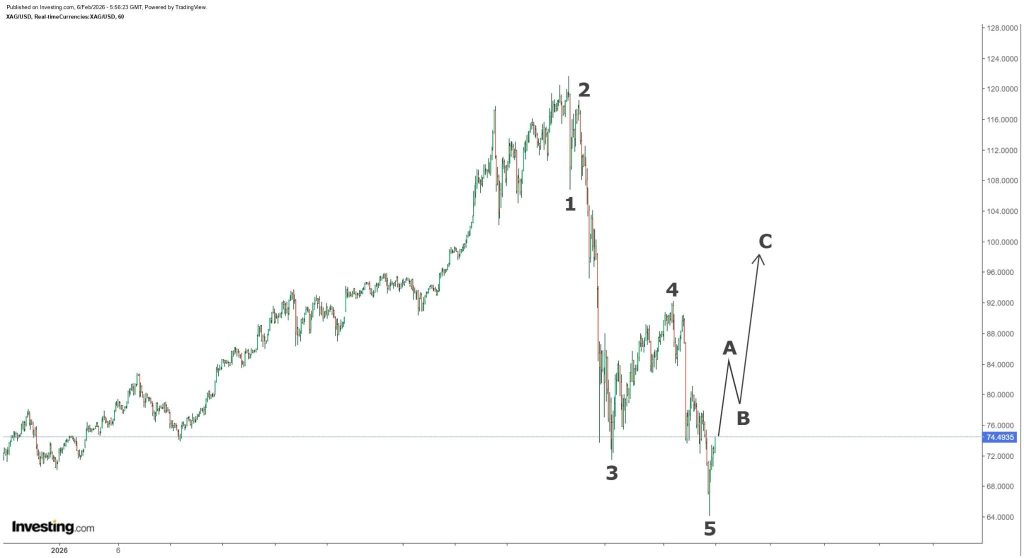
Silver Price Crash Is Over “For Real This Time,” Analyst Predicts a Surge Back Above $90

Silver Price Crash Is Over “For Real This Time,” Analyst Predicts a Surge Back Above $90

Silver has been taking a beating lately, and the Silver price hasn’t exactly been acting like a safe haven. After running up into the highs, the whole move reversed
Share
Captainaltcoin2026/02/07 03:15