TLDRs: Brent and WTI crude fall nearly 5%, pressuring Shell stock. Investors await Shell’s Feb. 5 Q4 results, dividend, and buyback update. OPEC+ keeps March outputTLDRs: Brent and WTI crude fall nearly 5%, pressuring Shell stock. Investors await Shell’s Feb. 5 Q4 results, dividend, and buyback update. OPEC+ keeps March output

Shell (SHEL) Stock; Falls Modestly on U.S.-Iran Thaw and Lower Crude Prices

2026/02/02 17:43
3 min read

TLDRs:

  • Brent and WTI crude fall nearly 5%, pressuring Shell stock.

  • Investors await Shell’s Feb. 5 Q4 results, dividend, and buyback update.

  • OPEC+ keeps March output unchanged, maintaining oil market uncertainty.

  • Dollar strength and geopolitical shifts continue to affect energy markets.

Shell Plc’s U.S.-listed shares (SHEL) saw a modest decline on Monday, closing at $77.03, down 0.6% from last week’s levels, with after-hours trades dipping further to $76.97. The drop comes as oil prices tumbled nearly 5% amid signs of thawing tensions between Washington and Tehran, removing some of the geopolitical risk premium that had previously buoyed crude markets.


SHEL Stock Card
Shell plc, SHEL

The slight decline positions Shell roughly $1 below its 52-week high of $78.17, highlighting that investors remain cautious ahead of key corporate announcements this week. Analysts note that this movement largely reflects a recalibration of market expectations rather than any underlying operational concerns at Shell itself.

Investors Focus on Upcoming Earnings and Dividend

All eyes are on Shell as the company prepares to release its fourth-quarter results on February 5. Alongside the earnings report, Shell will announce a 2025 interim dividend and provide an update on its $3.5 billion share buyback plan. The upcoming webcast for analysts could offer clarity on shareholder returns and financial outlook, serving as a critical reference point for investors after the recent volatility in oil prices.

“The market is adjusting to a lower oil price environment, and Shell’s upcoming announcements will likely shape sentiment for the next quarter,” said Priyanka Sachdeva, an energy analyst at Phillip Nova.

Crude Prices Retreat Amid Global Developments

Brent crude futures, the international benchmark, fell $3.38 or 4.9% to $65.94 per barrel, while U.S. West Texas Intermediate (WTI) declined $3.33 or 5.1% to $61.88. Analysts attribute part of the decline to a stronger U.S. dollar, which can make oil more expensive for buyers outside the United States.

Tony Sycamore, a market analyst at IG, described the price slide as an “encouraging step back from confrontation,” noting that easing geopolitical tensions prompted profit-taking across the sector. The decline demonstrates how sensitive energy stocks are to global political developments and currency fluctuations.

OPEC+ Holds Steady, Market Watches Ahead

The OPEC+ group, including OPEC members and allies led by Russia, announced that it would keep March production levels unchanged. While this decision avoids immediate disruption, it leaves the market uncertain about the medium-term supply trajectory.

Rystad Energy’s Jorge Leon highlighted that the lack of guidance beyond March keeps “all options firmly on the table,” signaling potential volatility in the weeks ahead.

For Shell, and energy peers like BP, lower crude prices can influence investor sentiment on dividends and buybacks, even if long-term contracts cushion immediate financial impact. Traders will be watching closely to see if crude prices stabilize or continue to move in response to geopolitical headlines, dollar fluctuations, and broader commodity market trends.

Looking Ahead: Feb. 5 as Key Date

The next few days will test the resilience of Shell’s stock amid fluctuating oil prices. Feb. 5, when the company reports earnings and dividend plans, represents a critical date for investors to gauge how management will address recent price swings and shareholder returns.

A rebound in oil could relieve some pressure, while further declines may heighten focus on buybacks and dividends as market support.For now, Shell’s modest fall reflects a market in cautious recalibration, balancing easing geopolitical tensions with the company’s upcoming financial disclosures.

The post Shell (SHEL) Stock; Falls Modestly on U.S.-Iran Thaw and Lower Crude Prices appeared first on CoinCentral.

Disclaimer: The articles reposted on this site are sourced from public platforms and are provided for informational purposes only. They do not necessarily reflect the views of MEXC. All rights remain with the original authors. If you believe any content infringes on third-party rights, please contact [email protected] for removal. MEXC makes no guarantees regarding the accuracy, completeness, or timeliness of the content and is not responsible for any actions taken based on the information provided. The content does not constitute financial, legal, or other professional advice, nor should it be considered a recommendation or endorsement by MEXC.

You May Also Like

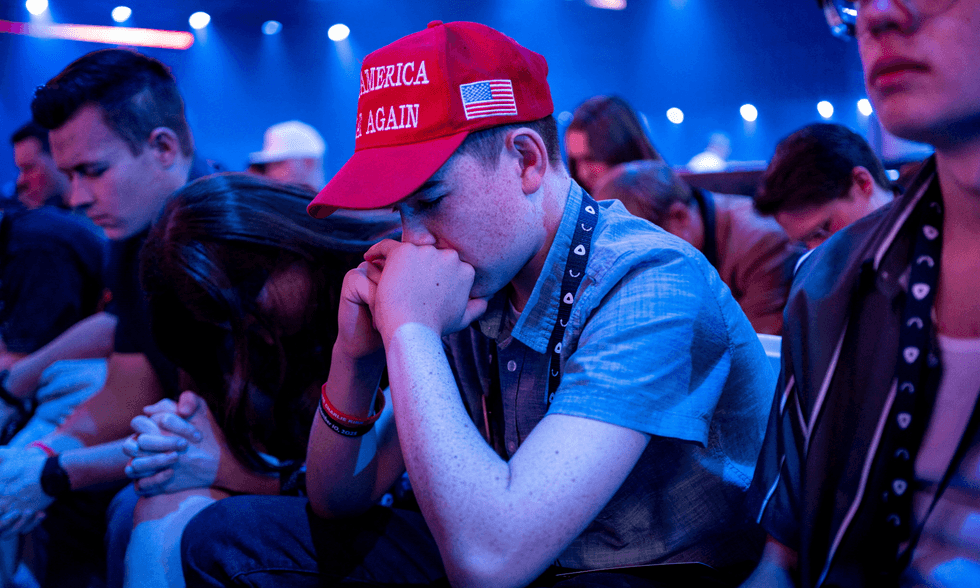
Young Republicans were more proud to be American under Obama than under Trump: data analyst
Young Republicans were more proud to be American under Obama than under Trump: data analyst

CNN data analyst Harry Enten sorts through revealing polls and surveys of American attitudes, looking for shifts, and his latest finding is an indictment of President
Share
Alternet2026/02/10 22:18
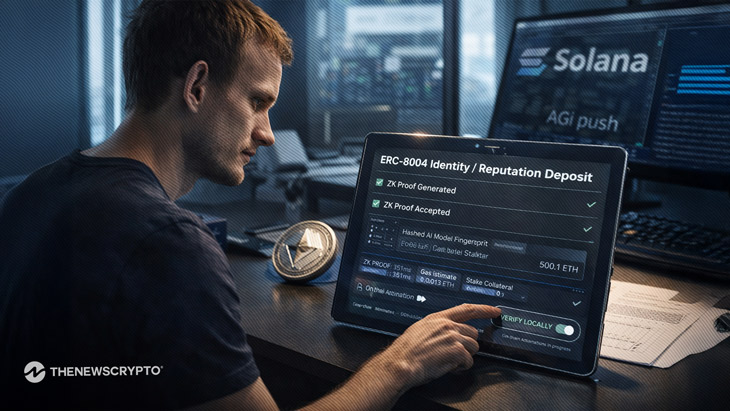
Vitalik Buterin Outlines Ethereum’s AI Framework, Pushes Back Against Solana’s Acceleration Thesis

Vitalik Buterin Outlines Ethereum’s AI Framework, Pushes Back Against Solana’s Acceleration Thesis

Ethereum co-founder Vitalik Buterin has reacted to Solana’s artificial general intelligence acceleration initiative. He did this through the establishment of his
Share
Thenewscrypto2026/02/10 18:40
Vitalik Buterin Reveals Ethereum’s Bold Plan to Stay Quantum-Secure and Simple!

Vitalik Buterin Reveals Ethereum’s Bold Plan to Stay Quantum-Secure and Simple!

Buterin unveils Ethereum’s strategy to tackle quantum security challenges ahead. Ethereum focuses on simplifying architecture while boosting security for users. Ethereum’s market stability grows as Buterin’s roadmap gains investor confidence. Ethereum founder Vitalik Buterin has unveiled his long-term vision for the blockchain, focusing on making Ethereum quantum-secure while maintaining its simplicity for users. Buterin presented his roadmap at the Japanese Developer Conference, and splits the future of Ethereum into three phases: short-term, mid-term, and long-term. Buterin’s most ambitious goal for Ethereum is to safeguard the blockchain against the threats posed by quantum computing.  The danger of such future developments is that the future may call into question the cryptographic security of most blockchain systems, and Ethereum will be able to remain ahead thanks to more sophisticated mathematical techniques to ensure the safety and integrity of its protocols. Buterin is committed to ensuring that Ethereum evolves in a way that not only meets today’s security challenges but also prepares for the unknowns of tomorrow. Also Read: Ethereum Giant The Ether Machine Takes Major Step Toward Going Public! However, in spite of such high ambitions, Buterin insisted that Ethereum also needed to simplify its architecture. An important aspect of this vision is to remove unnecessary complexity and make Ethereum more accessible and maintainable without losing its strong security capabilities. Security and simplicity form the core of Buterin’s strategy, as they guarantee that the users of Ethereum experience both security and smooth processes. Focus on Speed and Efficiency in the Short-Term In the short term, Buterin aims to enhance Ethereum’s transaction efficiency, a crucial step toward improving scalability and reducing transaction costs. These advantages are attributed to the fact that, within the mid-term, Ethereum is planning to enhance the speed of transactions in layer-2 networks. According to Butterin, this is part of Ethereum’s expansion, particularly because there is still more need to use blockchain technology to date. The other important aspect of Ethereum’s development is the layer-2 solutions. Buterin supports an approach in which the layer-2 networks are dependent on layer-1 to perform some essential tasks like data security, proof, and censorship resistance. This will enable the layer-2 systems of Ethereum to be concerned with verifying and sequencing transactions, which will improve the overall speed and efficiency of the network. Ethereum’s Market Stability Reflects Confidence in Long-Term Strategy Ethereum’s market performance has remained solid, with the cryptocurrency holding steady above $4,000. Currently priced at $4,492.15, Ethereum has experienced a slight 0.93% increase over the last 24 hours, while its trading volume surged by 8.72%, reaching $34.14 billion. These figures point to growing investor confidence in Ethereum’s long-term vision. The crypto community remains optimistic about Ethereum’s future, with many predicting the price could rise to $5,500 by mid-October. Buterin’s clear, forward-thinking strategy continues to build trust in Ethereum as one of the most secure and scalable blockchain platforms in the market. Also Read: Whales Dump 200 Million XRP in Just 2 Weeks – Is XRP’s Price on the Verge of Collapse? The post Vitalik Buterin Reveals Ethereum’s Bold Plan to Stay Quantum-Secure and Simple! appeared first on 36Crypto.
Share
Coinstats2025/09/18 01:22