Many people active in crypto have come across Telegram mini-games, which exploded in popularity between 2024 and 2025. Games like Notcoin, Hamster Kombat, and Yescoin pulled in millions of users practically overnight. All it took was the Telegram app and a tap on a mini-app. No wallets, complex onboarding, or understanding of Web3 were needed. People tapped buttons, earned coins, shared with friends, and climbed leaderboards. TON made that easy. Telegram’s mini-app ecosystem is fast, simple, and social by design. For most users, these viral games became their first step into crypto – not through yield farming or staking, but through memes and games. It was onboarding by accident, and it worked. But under the hood, most of these games remain extremely basic. They’re often idle clickers or time-based actions with little competitive depth. Wins don’t always feel earned, and the token mechanics are still early, sometimes even nonexistent. Where Tapzi Brings Serious GameFi Structure Tapzi is a skill-based , simple yet strategic gaming platform. It does not try to ride the wave of casual games or social tapping but builds something more serious. This project just launched a presale for its native token – $TAPZI . Players stake TAPZI tokens and face off in head-to-head matches. Every match has something at stake: the winner takes the prize, while the loser walks away with nothing. Games include, among others, Chess, Checkers, Tic Tac Toe, and Rock-Paper-Scissors. These games are skill-driven and not about chance. There’s no randomness, no bots, and no idle mechanics. Tapzi puts players on equal footing and rewards them based on performance. While Telegram games reward clicks, Tapzi rewards real competition. The platform includes ranked matchmaking, seasonal tournaments, and loyalty perks to reward consistent play. Tapzi’s Hybrid Engine vs TON Simplicity The reason Telegram games are so addictive is that they’re smooth. However, this simplicity comes with trade-offs, as most TON games run entirely off-chain. Tokens may be held in temporary accounts, and users don’t really own anything in the Web3 sense. Tapzi uses a hybrid model. It keeps gameplay fast by running matches off-chain. But once a match ends, the results are signed by both players and posted on-chain using smart contracts on the BNB Smart Chain. The rewards are then distributed automatically based on the outcome. This way, it combines the speed of Web2 with the trust of Web3. This also opens up anti-cheat measures. Tapzi uses replay tools, cryptographic validation, and on-chain records to ensure every match is fair. Players can’t fake wins or use bots to exploit the system. Launchpad for Web3 Game Developers Tapzi also opens the door for Web3 game developers. Through its integrated launchpad, Tapzi allows indie studios to publish their own skill-based games inside the platform. Developers get access to ready-made SDKs, smart contract templates, staking integration, and exposure to a growing community of Web3 gamers. With this plug-and-play infrastructure, Tapzi makes it easier than ever to build, launch, and monetize skill-based PvP games – all within one seamless ecosystem. Token Purpose: TAPZI vs Simple Tap-to-Earn Coins TON games have become famous, but their tokens are often delayed, limited, or unclear in utility. Notcoin launched after it already had millions of players, and Hamster Kombat is still teasing what its token will be used for. Many of these projects give out points, but not purpose. Tapzi launched with a token utility at its core. You use TAPZI to enter matches and win the token when you beat opponents. You can stake it for perks, and in future phases, TAPZI will unlock cosmetic NFTs and exclusive features. The token is not a reward that gets handed out freely; it is built to make the platform work. More importantly, Tapzi’s prize pools come from other players, not from emissions or inflation. This keeps the token economy balanced and self-contained. The value loop is clean and competitive – if you win, you earn; if you lose, you don’t – that’s the game. How to Buy in the Tapzi Presale Before the Full Launch Tapzi isn’t a whitepaper promise but a working game platform with a token built for use, not just speculation. As Telegram games continue to go viral, Tapzi is quietly building the next step. It doesn’t just want to entertain but also to compete. This might be what makes it TON’s first real gaming rival. Tapzi is still in presale . More than 4.7 million TAPZI tokens have already been sold, and the current entry price is $0.0035. That’s well below the $0.009 listing target. To join, visit the Tapzi site , connect your wallet, and choose your payment method. ETH, MATIC, BNB, and bank cards are accepted. This early access comes with perks. You get priority entry into tournaments, unlock rewards before the general public, and hold a token that already powers a live product. VISIT Tapzi (TAPZI) Community : Website | X (Twitter) | TelegramMany people active in crypto have come across Telegram mini-games, which exploded in popularity between 2024 and 2025. Games like Notcoin, Hamster Kombat, and Yescoin pulled in millions of users practically overnight. All it took was the Telegram app and a tap on a mini-app. No wallets, complex onboarding, or understanding of Web3 were needed. People tapped buttons, earned coins, shared with friends, and climbed leaderboards. TON made that easy. Telegram’s mini-app ecosystem is fast, simple, and social by design. For most users, these viral games became their first step into crypto – not through yield farming or staking, but through memes and games. It was onboarding by accident, and it worked. But under the hood, most of these games remain extremely basic. They’re often idle clickers or time-based actions with little competitive depth. Wins don’t always feel earned, and the token mechanics are still early, sometimes even nonexistent. Where Tapzi Brings Serious GameFi Structure Tapzi is a skill-based , simple yet strategic gaming platform. It does not try to ride the wave of casual games or social tapping but builds something more serious. This project just launched a presale for its native token – $TAPZI . Players stake TAPZI tokens and face off in head-to-head matches. Every match has something at stake: the winner takes the prize, while the loser walks away with nothing. Games include, among others, Chess, Checkers, Tic Tac Toe, and Rock-Paper-Scissors. These games are skill-driven and not about chance. There’s no randomness, no bots, and no idle mechanics. Tapzi puts players on equal footing and rewards them based on performance. While Telegram games reward clicks, Tapzi rewards real competition. The platform includes ranked matchmaking, seasonal tournaments, and loyalty perks to reward consistent play. Tapzi’s Hybrid Engine vs TON Simplicity The reason Telegram games are so addictive is that they’re smooth. However, this simplicity comes with trade-offs, as most TON games run entirely off-chain. Tokens may be held in temporary accounts, and users don’t really own anything in the Web3 sense. Tapzi uses a hybrid model. It keeps gameplay fast by running matches off-chain. But once a match ends, the results are signed by both players and posted on-chain using smart contracts on the BNB Smart Chain. The rewards are then distributed automatically based on the outcome. This way, it combines the speed of Web2 with the trust of Web3. This also opens up anti-cheat measures. Tapzi uses replay tools, cryptographic validation, and on-chain records to ensure every match is fair. Players can’t fake wins or use bots to exploit the system. Launchpad for Web3 Game Developers Tapzi also opens the door for Web3 game developers. Through its integrated launchpad, Tapzi allows indie studios to publish their own skill-based games inside the platform. Developers get access to ready-made SDKs, smart contract templates, staking integration, and exposure to a growing community of Web3 gamers. With this plug-and-play infrastructure, Tapzi makes it easier than ever to build, launch, and monetize skill-based PvP games – all within one seamless ecosystem. Token Purpose: TAPZI vs Simple Tap-to-Earn Coins TON games have become famous, but their tokens are often delayed, limited, or unclear in utility. Notcoin launched after it already had millions of players, and Hamster Kombat is still teasing what its token will be used for. Many of these projects give out points, but not purpose. Tapzi launched with a token utility at its core. You use TAPZI to enter matches and win the token when you beat opponents. You can stake it for perks, and in future phases, TAPZI will unlock cosmetic NFTs and exclusive features. The token is not a reward that gets handed out freely; it is built to make the platform work. More importantly, Tapzi’s prize pools come from other players, not from emissions or inflation. This keeps the token economy balanced and self-contained. The value loop is clean and competitive – if you win, you earn; if you lose, you don’t – that’s the game. How to Buy in the Tapzi Presale Before the Full Launch Tapzi isn’t a whitepaper promise but a working game platform with a token built for use, not just speculation. As Telegram games continue to go viral, Tapzi is quietly building the next step. It doesn’t just want to entertain but also to compete. This might be what makes it TON’s first real gaming rival. Tapzi is still in presale . More than 4.7 million TAPZI tokens have already been sold, and the current entry price is $0.0035. That’s well below the $0.009 listing target. To join, visit the Tapzi site , connect your wallet, and choose your payment method. ETH, MATIC, BNB, and bank cards are accepted. This early access comes with perks. You get priority entry into tournaments, unlock rewards before the general public, and hold a token that already powers a live product. VISIT Tapzi (TAPZI) Community : Website | X (Twitter) | Telegram

Tapzi vs Telegram Mini-Games: Why This Web3 Presale Project Could Be TON’s Next Big Rival

5 min read

Many people active in crypto have come across Telegram mini-games, which exploded in popularity between 2024 and 2025. Games like Notcoin, Hamster Kombat, and Yescoin pulled in millions of users practically overnight.

All it took was the Telegram app and a tap on a mini-app. No wallets, complex onboarding, or understanding of Web3 were needed. People tapped buttons, earned coins, shared with friends, and climbed leaderboards.

TON made that easy. Telegram’s mini-app ecosystem is fast, simple, and social by design. For most users, these viral games became their first step into crypto – not through yield farming or staking, but through memes and games.

It was onboarding by accident, and it worked. But under the hood, most of these games remain extremely basic. They’re often idle clickers or time-based actions with little competitive depth. Wins don’t always feel earned, and the token mechanics are still early, sometimes even nonexistent.

Where Tapzi Brings Serious GameFi Structure

Tapzi is a skill-based, simple yet strategic gaming platform. It does not try to ride the wave of casual games or social tapping but builds something more serious.

This project just launched a presale for its native token – $TAPZI.

Players stake TAPZI tokens and face off in head-to-head matches. Every match has something at stake: the winner takes the prize, while the loser walks away with nothing. Games include, among others, Chess, Checkers, Tic Tac Toe, and Rock-Paper-Scissors.

These games are skill-driven and not about chance. There’s no randomness, no bots, and no idle mechanics. Tapzi puts players on equal footing and rewards them based on performance.

While Telegram games reward clicks, Tapzi rewards real competition. The platform includes ranked matchmaking, seasonal tournaments, and loyalty perks to reward consistent play.

Tapzi’s Hybrid Engine vs TON Simplicity

The reason Telegram games are so addictive is that they’re smooth. However, this simplicity comes with trade-offs, as most TON games run entirely off-chain. Tokens may be held in temporary accounts, and users don’t really own anything in the Web3 sense.

Tapzi uses a hybrid model. It keeps gameplay fast by running matches off-chain. But once a match ends, the results are signed by both players and posted on-chain using smart contracts on the BNB Smart Chain. The rewards are then distributed automatically based on the outcome. This way, it combines the speed of Web2 with the trust of Web3.

This also opens up anti-cheat measures. Tapzi uses replay tools, cryptographic validation, and on-chain records to ensure every match is fair. Players can’t fake wins or use bots to exploit the system.

Launchpad for Web3 Game Developers

Tapzi also opens the door for Web3 game developers. Through its integrated launchpad, Tapzi allows indie studios to publish their own skill-based games inside the platform.

Developers get access to ready-made SDKs, smart contract templates, staking integration, and exposure to a growing community of Web3 gamers. With this plug-and-play infrastructure, Tapzi makes it easier than ever to build, launch, and monetize skill-based PvP games – all within one seamless ecosystem.

Token Purpose: TAPZI vs Simple Tap-to-Earn Coins

TON games have become famous, but their tokens are often delayed, limited, or unclear in utility. Notcoin launched after it already had millions of players, and Hamster Kombat is still teasing what its token will be used for. Many of these projects give out points, but not purpose.

Tapzi launched with a token utility at its core. You use TAPZI to enter matches and win the token when you beat opponents. You can stake it for perks, and in future phases, TAPZI will unlock cosmetic NFTs and exclusive features. The token is not a reward that gets handed out freely; it is built to make the platform work.
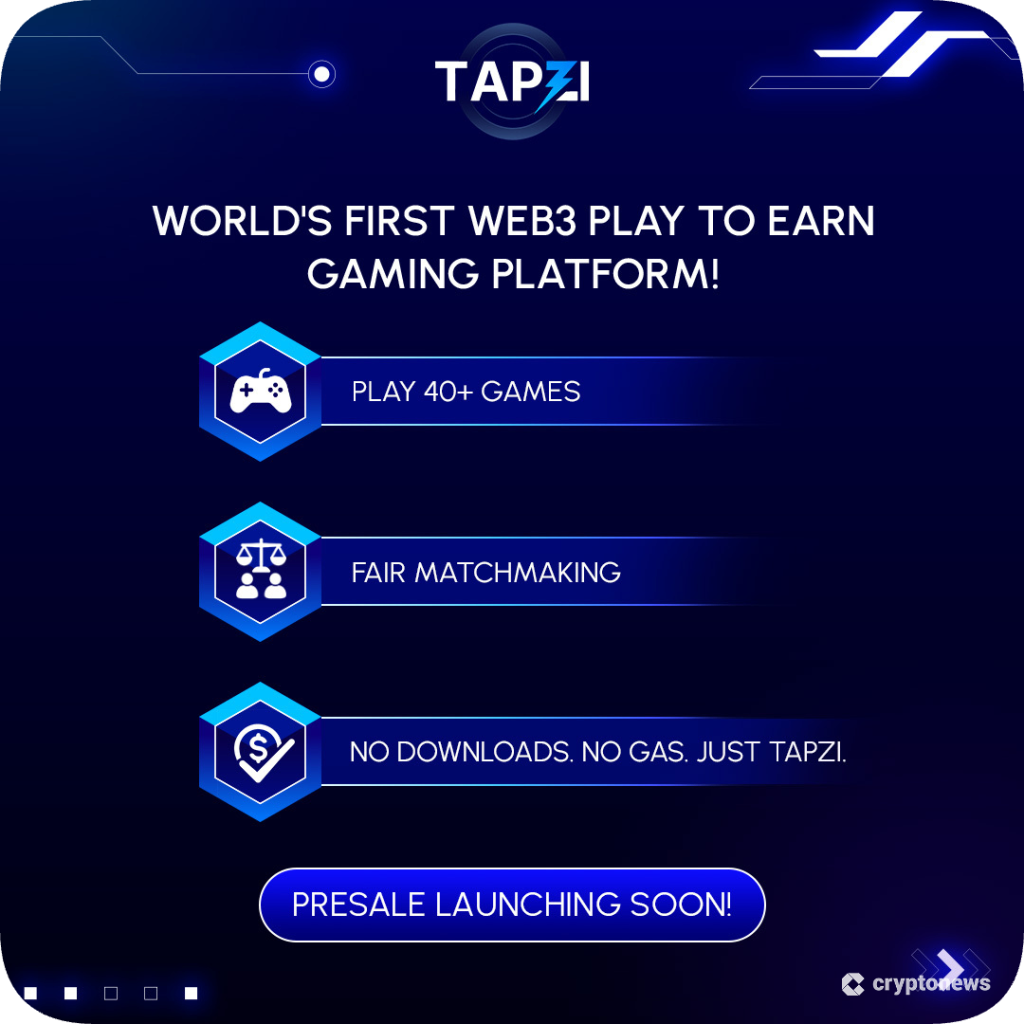
More importantly, Tapzi’s prize pools come from other players, not from emissions or inflation. This keeps the token economy balanced and self-contained. The value loop is clean and competitive – if you win, you earn; if you lose, you don’t – that’s the game.

How to Buy in the Tapzi Presale Before the Full Launch

Tapzi isn’t a whitepaper promise but a working game platform with a token built for use, not just speculation. As Telegram games continue to go viral, Tapzi is quietly building the next step. It doesn’t just want to entertain but also to compete. This might be what makes it TON’s first real gaming rival.

Tapzi is still in presale. More than 4.7 million TAPZI tokens have already been sold, and the current entry price is $0.0035. That’s well below the $0.009 listing target. To join, visit the Tapzi site, connect your wallet, and choose your payment method. ETH, MATIC, BNB, and bank cards are accepted.

This early access comes with perks. You get priority entry into tournaments, unlock rewards before the general public, and hold a token that already powers a live product.

VISIT Tapzi (TAPZI) Community:

Website | X (Twitter) | Telegram

Market Opportunity
Threshold Logo
Threshold Price(T)
$0.008154
$0.008154$0.008154
+0.24%
USD
Threshold (T) Live Price Chart
Disclaimer: The articles reposted on this site are sourced from public platforms and are provided for informational purposes only. They do not necessarily reflect the views of MEXC. All rights remain with the original authors. If you believe any content infringes on third-party rights, please contact [email protected] for removal. MEXC makes no guarantees regarding the accuracy, completeness, or timeliness of the content and is not responsible for any actions taken based on the information provided. The content does not constitute financial, legal, or other professional advice, nor should it be considered a recommendation or endorsement by MEXC.

You May Also Like

Galaxy Digital’s 2025 Loss: SOL Bear Market

Galaxy Digital’s 2025 Loss: SOL Bear Market

The post Galaxy Digital’s 2025 Loss: SOL Bear Market appeared on BitcoinEthereumNews.com. Galaxy Digital, a digital assets and artificial intelligence infrastructure
Share
BitcoinEthereumNews2026/02/04 09:49
Michael Saylor Pushes Digital Capital Narrative At Bitcoin Treasuries Unconference

Michael Saylor Pushes Digital Capital Narrative At Bitcoin Treasuries Unconference

The post Michael Saylor Pushes Digital Capital Narrative At Bitcoin Treasuries Unconference appeared on BitcoinEthereumNews.com. The suitcoiners are in town.  From a low-key, circular podium in the middle of a lavish New York City event hall, Strategy executive chairman Michael Saylor took the mic and opened the Bitcoin Treasuries Unconference event. He joked awkwardly about the orange ties, dresses, caps and other merch to the (mostly male) audience of who’s-who in the bitcoin treasury company world.  Once he got onto the regular beat, it was much of the same: calm and relaxed, speaking freely and with confidence, his keynote was heavy on the metaphors and larger historical stories. Treasury companies are like Rockefeller’s Standard Oil in its early years, Michael Saylor said: We’ve just discovered crude oil and now we’re making sense of the myriad ways in which we can use it — the automobile revolution and jet fuel is still well ahead of us.  Established, trillion-dollar companies not using AI because of “security concerns” make them slow and stupid — just like companies and individuals rejecting digital assets now make them poor and weak.  “I’d like to think that we understood our business five years ago; we didn’t.”  We went from a defensive investment into bitcoin, Saylor said, to opportunistic, to strategic, and finally transformational; “only then did we realize that we were different.” Michael Saylor: You Come Into My Financial History House?! Jokes aside, Michael Saylor is very welcome to the warm waters of our financial past. He acquitted himself honorably by invoking the British Consol — though mispronouncing it, and misdating it to the 1780s; Pelham’s consolidation of debts happened in the 1750s and perpetual government debt existed well before then — and comparing it to the gold standard and the future of bitcoin. He’s right that Strategy’s STRC product in many ways imitates the consols; irredeemable, perpetual debt, issued at par, with…
Share
BitcoinEthereumNews2025/09/18 02:12
HKMA Launches Fintech Blueprint with AI, DLT, Quantum and Cybersecurity Focus

HKMA Launches Fintech Blueprint with AI, DLT, Quantum and Cybersecurity Focus

The Hong Kong Monetary Authority (HKMA) published a Fintech Promotion Blueprint to support responsible innovation and fintech development in the banking sector.
Share
Fintechnews2026/02/04 10:20