Bitcoin (BTC) Price: Capitulation Talk Explodes as Whales Buy the Dip
TLDR
- Bitcoin dropped to $60,000 on February 5, 2026, its lowest level since October 2024, before finding support around $68,970
- US Bitcoin ETFs saw $358.5 million in outflows for the week ending February 6, extending a three-week streak of institutional selling
- The Crypto Fear & Greed Index fell to 7, deep in “Extreme Fear” territory, with some analysts viewing this as a potential bottom signal
- Glassnode data shows accumulation across all Bitcoin holder cohorts for the first time since November, with wallets holding 10-100 BTC buying aggressively
- Weaker US labor market data and concerns over AI spending by tech companies like Amazon triggered the selloff, though Fed rate cut expectations remain at 75% for June
Bitcoin fell to $60,000 on Thursday, February 5, marking its lowest price since October 2024. The cryptocurrency has since recovered slightly to trade around $68,970 as of February 8.
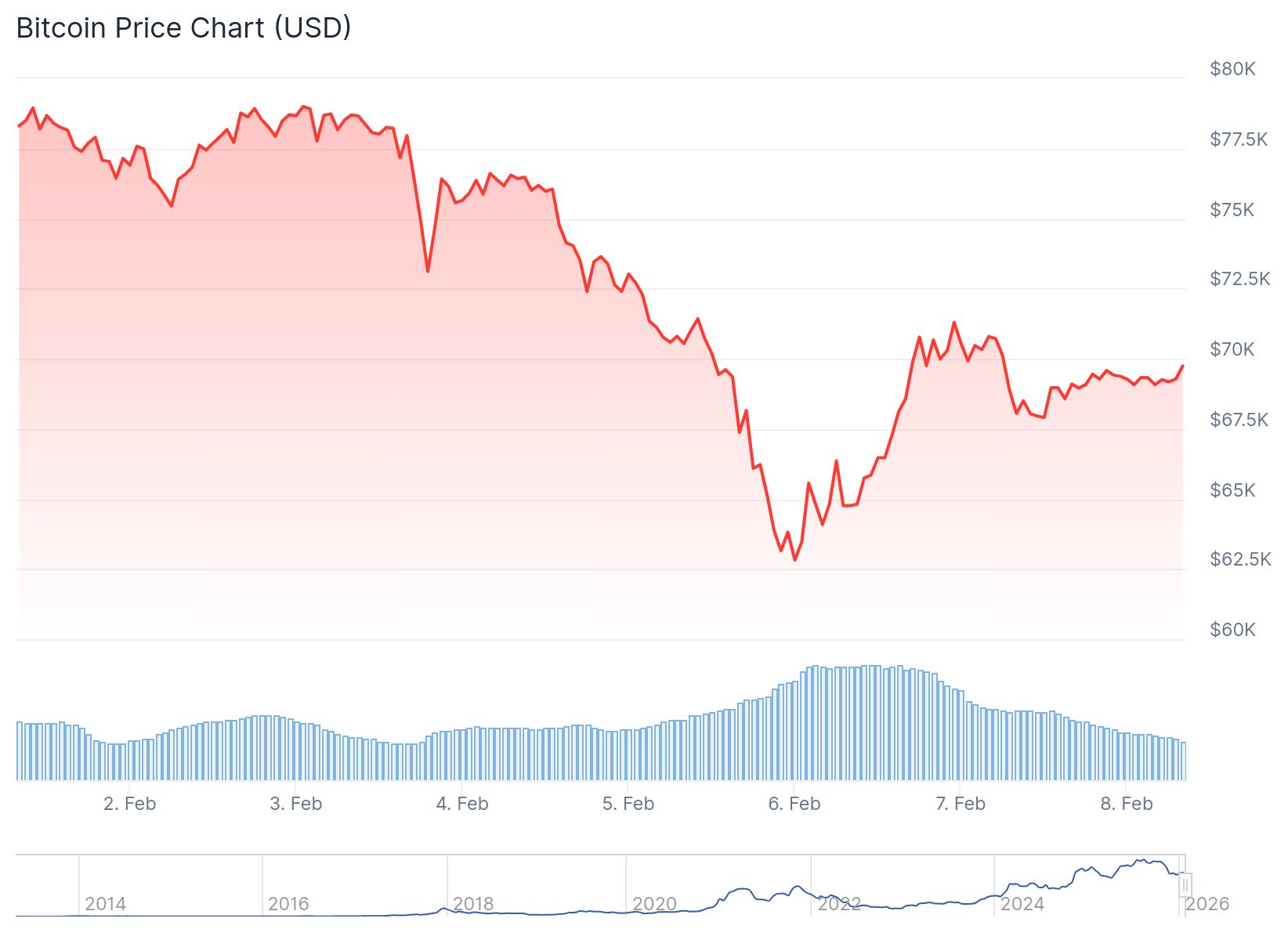 Bitcoin (BTC) Price
The drop represents a 24.27% decline over the past 30 days. Bitcoin is now down 11.9% year-to-date and more than 50% from its October all-time high.
US Bitcoin ETFs recorded $358.5 million in net outflows during the week ending February 6. This marks the third consecutive week of outflows from institutional investors.
The iShares Bitcoin Trust lost $115.1 million while Fidelity Wise Origin Bitcoin Fund saw $191.3 million exit. Grayscale Bitcoin Trust reported $173.8 million in outflows.
Year-to-date, Bitcoin ETFs have seen $1.96 billion leave the funds. Four ETF issuers reported weekly outflows compared to six with inflows.
Weaker than expected US labor market data contributed to the selloff. Jobless claims jumped from 209,000 to 231,000 in the week ending January 31.
Job openings fell from 6.928 million in November to 6.542 million in December. Amazon’s announcement of $200 billion in AI spending for 2026 added to market concerns.
The Crypto Fear & Greed Index dropped from 20 to 6 on Saturday before rising slightly to 7 on Sunday. The index remains deep in “Extreme Fear” territory.
Signs of Accumulation Emerge
Despite the price drop, on-chain data shows buying activity across all Bitcoin holder groups. Glassnode’s Accumulation Trend Score by cohort climbed above 0.5 to reach 0.68.
 Source: Glassnode
This marks the first time since late November that broad accumulation has been observed across different wallet sizes. The previous instance coincided with Bitcoin forming a local bottom near $80,000.
Wallets holding between 10 and 100 Bitcoin have been the most aggressive buyers during the decline. These holders stepped in as prices approached $60,000.
Crypto sentiment platform Santiment notes retail investors are searching for signs the market has bottomed. The word “capitulation” has become a top trending term on social media.
Google Trends data shows searches for “crypto capitulation” rose from a score of 11 to 58 between the weeks ending February 1 and February 8. Santiment suggests if everyone is waiting for capitulation, the bottom may have already occurred.
Market analyst Caleb Franzen warned that bear markets typically experience multiple capitulation events. Not all analysts believe the cycle bottom has been reached.
Bloomberg Intelligence analyst Eric Balchunas pointed out that both stocks and Bitcoin have a 100% record of recovering from downturns to hit new all-time highs. More than 90% of Bitcoin ETF assets remain invested despite recent outflows.
The CME FedWatch Tool shows the chances of a June rate cut increased from 67.3% on January 30 to 75% on February 6. Lower borrowing costs typically boost demand for risk assets like Bitcoin.
Retail sales data and the US jobs report scheduled for February 11 will provide further insight into economic conditions. Economists expect average hourly earnings to rise 3.6% year-on-year in January, down from 3.8% in December.
The unemployment rate is forecast to remain at 4.4%. Data in line with forecasts could support Bitcoin’s recovery in the coming weeks.
The post Bitcoin (BTC) Price: Capitulation Talk Explodes as Whales Buy the Dip appeared first on CoinCentral.
You May Also Like

Spanish man allegedly committed sex crimes in exchange for crypto

China Bans Nvidia’s RTX Pro 6000D Chip Amid AI Hardware Push