Bitcoin analysts warn that a quantum‑resistant upgrade could force the network to confront whether millions of long‑dormant coins—including those attributed to Bitcoin analysts warn that a quantum‑resistant upgrade could force the network to confront whether millions of long‑dormant coins—including those attributed to

Quantum Threat Puts Millions Of Dormant Bitcoins—and Satoshi’s Holdings—at the Center Of A High‑Stakes Upgrade Debate
2026/02/18 16:20
3 min read
Quantum Threat Puts Millions Of Dormant Bitcoins—and Satoshi’s Holdings—at the Center Of A High‑Stakes Upgrade Debate

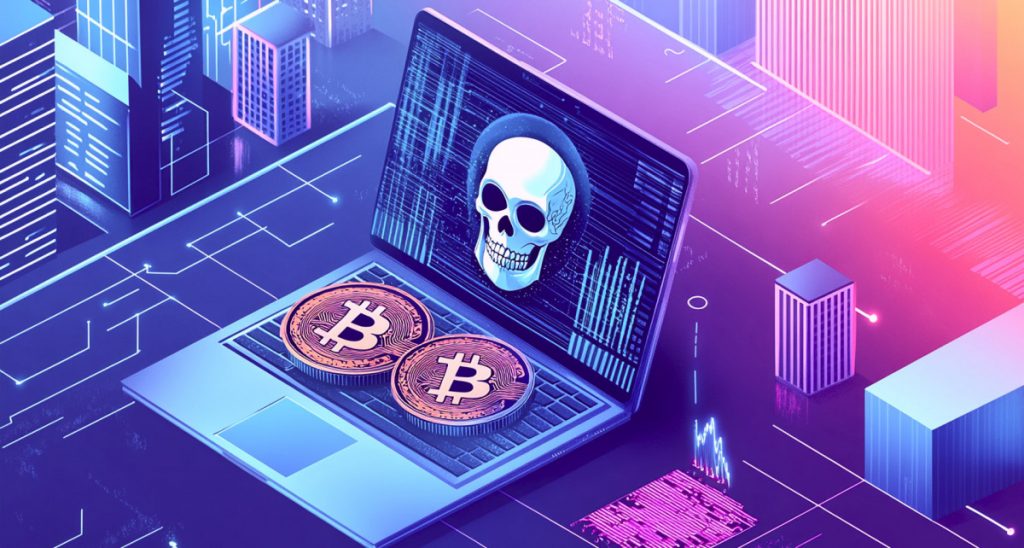
CryptoQuant CEO Ki Young Ju has outlined what he describes as one of the most uncomfortable realities surrounding a potential quantum‑resistant upgrade for Bitcoin: such a transition could require freezing roughly one million coins attributed to Satoshi Nakamoto, along with millions more held in older address formats. 

In this view, the threat extends far beyond a single early holder. Any address type that exposes a public key becomes vulnerable, meaning coins could be frozen by design or seized through quantum attacks. The long‑standing stories of lost coins being recovered would likely disappear, and even securely stored keys could become unusable if their owners fail to adopt a future protocol upgrade.

Bitcoin’s security model is built on cryptography that classical computers cannot feasibly break. Quantum computing challenges that assumption. Under the right conditions, a sufficiently advanced quantum machine could derive a private key from any public key that has appeared on‑chain. This would turn coins that seem secure today into potential targets tomorrow. 

Once a public key is exposed, the vulnerability is permanent, and estimates suggest that nearly 6.9 million BTC fall into this category. Around 1.91 million BTC use early address formats where public keys are inherently visible, while up to 4.98 million BTC may have had their public keys exposed through previous spending activity. Bitcoin’s security has always relied on the assumption that attacks remain too expensive to execute; cheap quantum attacks would overturn that premise entirely.

A large portion of these coins—about 3.4 million BTC—has been dormant for more than a decade, including the holdings widely believed to belong to Satoshi. At current valuations, this represents hundreds of billions of dollars and a powerful incentive for exploitation. The scale of the risk raises a deeper question: how would the Bitcoin community respond if protecting the network required freezing long‑untouched coins?

Debating The Future Of Dormant Coins

Reaching agreement on such a decision would be extraordinarily difficult. The Bitcoin ecosystem has a long history of contentious debates, from the multi‑year block size conflict to the failed SegWit2x proposal. Any attempt to freeze dormant coins would collide directly with Bitcoin’s philosophical foundations and would likely face intense resistance. Technical solutions can be developed quickly, but social consensus moves slowly, and the gap between the two widens as quantum technology advances. The possibility of rival forks emerging cannot be dismissed if the community fails to agree on a unified path forward.

The central issue is not whether quantum‑level threats arrive in five or ten years. The real challenge is that consensus may not form in time. Developers are not the bottleneck; the community is. The debate over whether freezing dormant coins—including Satoshi’s—would protect Bitcoin or violate its core ethos illustrates how divisive the topic already is. If this question alone creates such a split, the broader quantum discussion cannot be postponed.

The post Quantum Threat Puts Millions Of Dormant Bitcoins—and Satoshi’s Holdings—at the Center Of A High‑Stakes Upgrade Debate appeared first on Metaverse Post.

Market Opportunity
QUANTUM Logo
QUANTUM Price(QUANTUM)
$0.002985
$0.002985$0.002985
-1.12%
USD
QUANTUM (QUANTUM) Live Price Chart
Disclaimer: The articles reposted on this site are sourced from public platforms and are provided for informational purposes only. They do not necessarily reflect the views of MEXC. All rights remain with the original authors. If you believe any content infringes on third-party rights, please contact [email protected] for removal. MEXC makes no guarantees regarding the accuracy, completeness, or timeliness of the content and is not responsible for any actions taken based on the information provided. The content does not constitute financial, legal, or other professional advice, nor should it be considered a recommendation or endorsement by MEXC.
Tags:

You May Also Like

Wormhole launches reserve tying protocol revenue to token

Wormhole launches reserve tying protocol revenue to token

The post Wormhole launches reserve tying protocol revenue to token appeared on BitcoinEthereumNews.com. Wormhole is changing how its W token works by creating a new reserve designed to hold value for the long term. Announced on Wednesday, the Wormhole Reserve will collect onchain and offchain revenues and other value generated across the protocol and its applications (including Portal) and accumulate them into W, locking the tokens within the reserve. The reserve is part of a broader update called W 2.0. Other changes include a 4% targeted base yield for tokenholders who stake and take part in governance. While staking rewards will vary, Wormhole said active users of ecosystem apps can earn boosted yields through features like Portal Earn. The team stressed that no new tokens are being minted; rewards come from existing supply and protocol revenues, keeping the cap fixed at 10 billion. Wormhole is also overhauling its token release schedule. Instead of releasing large amounts of W at once under the old “cliff” model, the network will shift to steady, bi-weekly unlocks starting October 3, 2025. The aim is to avoid sharp periods of selling pressure and create a more predictable environment for investors. Lockups for some groups, including validators and investors, will extend an additional six months, until October 2028. Core contributor tokens remain under longer contractual time locks. Wormhole launched in 2020 as a cross-chain bridge and now connects more than 40 blockchains. The W token powers governance and staking, with a capped supply of 10 billion. By redirecting fees and revenues into the new reserve, Wormhole is betting that its token can maintain value as demand for moving assets and data between chains grows. This is a developing story. This article was generated with the assistance of AI and reviewed by editor Jeffrey Albus before publication. Get the news in your inbox. Explore Blockworks newsletters: Source: https://blockworks.co/news/wormhole-launches-reserve
Share
BitcoinEthereumNews2025/09/18 01:55
Strategy's Bitcoin holding cost has fallen for the first time in nearly two and a half years.

Strategy's Bitcoin holding cost has fallen for the first time in nearly two and a half years.

PANews reported on February 18th that, according to Arkham monitoring, Strategy recently increased its Bitcoin holdings by $168.4 million, reducing MSTR's average
Share
PANews2026/02/18 18:05
UK Disinflation: Optimistic Path to 2% CPI Target Confirmed by Deutsche Bank Analysis

UK Disinflation: Optimistic Path to 2% CPI Target Confirmed by Deutsche Bank Analysis

BitcoinWorld UK Disinflation: Optimistic Path to 2% CPI Target Confirmed by Deutsche Bank Analysis LONDON, March 2025 – Recent analysis from Deutsche Bank confirms
Share
bitcoinworld2026/02/18 18:25