President Donald Trump's retribution campaign is being systematically derailed by federal judges who are striking down high-profile indictments and blocking grandPresident Donald Trump's retribution campaign is being systematically derailed by federal judges who are striking down high-profile indictments and blocking grand

Trump derailed as campaign of retribution hits 'profound problem': report

2026/03/16 19:07
3 min read
For feedback or concerns regarding this content, please contact us at [email protected]

President Donald Trump's retribution campaign is being systematically derailed by federal judges who are striking down high-profile indictments and blocking grand jury subpoenas targeting political adversaries, the New York Times reported Monday.

The cascade of judicial rejections signals that, despite Trump's control over the Justice Department, the courts remain a significant constraint on his ability to weaponize law enforcement.

Judge James E. Boasberg of Federal District Court in Washington, D.C., quashed grand jury subpoenas targeting Federal Reserve Chair Jerome Powell on Friday. The subpoenas sought information about renovations at the central bank's headquarters and Powell's congressional testimony. Boasberg ruled there was "essentially zero evidence to suspect Chair Powell of a crime."

The judge characterized the investigation as politically motivated, writing, "The subpoenas' dominant (if not sole) purpose is to harass and pressure Powell either to yield to the president, or to resign and make way for a Fed chair who will." Boasberg explicitly acknowledged Trump's revenge campaign, citing a Supreme Court case to note that "judges are not required to exhibit a naïveté from which ordinary citizens are free."

U.S. Attorney Jeanine Pirro, Trump's longtime ally, has vowed to appeal the decision.

This ruling represents the latest setback in a broader pattern of judicial resistance, the Times reported. In November, a judge dismissed indictments against former FBI Director James Comey and New York Attorney General Letitia James after determining that the prosecutor who brought charges, Lindsey Halligan, had been illegally appointed. Subsequently, two grand juries refused to bring fresh indictments against James.

In February, a Washington grand jury rejected efforts to indict six Democratic lawmakers whom Trump wanted prosecuted for sedition after they released a video reminding military personnel of their obligation to refuse illegal orders.

"Officials at the Justice Department have encountered an even more profound problem," the Times reported. "Prosecutors are floundering in the most basic steps of criminal investigations into those President Trump wants scrutinized."

The pattern reflects eroding trust between federal courts and Justice Department lawyers. Traditionally enjoying presumption of regularity — a legal concept granting prosecutors deference — DOJ attorneys have lost this credibility through repeated violations of court orders, contempt findings, and vindictive prosecutions, the Times wrote. Several prosecutors have resigned in protest.

Facing repeated grand jury rejections, prosecutors in Pirro's office have begun shelving weak investigations rather than present them to courts. An inquiry into whether former President Biden violated laws using an autopen for document signatures was quietly abandoned after Trump pressured prosecutors to pursue charges. Despite Trump's demands, prosecutors could not identify what laws had been broken.

Judge Lorna Schofield in New York similarly blocked subpoenas targeting Attorney General James, ruling the U.S. attorney who issued them held his position unlawfully.

A Minnesota judge is currently considering whether to quash subpoenas issued as part of an investigation into whether Democratic officials—including Governor Tim Walz and Minneapolis Mayor Jacob Frey—conspired to impede federal immigration enforcement agents.

When Trump began his second term, he sought indictments, trials, convictions, and imprisonment for his rivals.

Market Opportunity
OFFICIAL TRUMP Logo
OFFICIAL TRUMP Price(TRUMP)
$3.897
$3.897$3.897
+1.82%
USD
OFFICIAL TRUMP (TRUMP) Live Price Chart
Disclaimer: The articles reposted on this site are sourced from public platforms and are provided for informational purposes only. They do not necessarily reflect the views of MEXC. All rights remain with the original authors. If you believe any content infringes on third-party rights, please contact [email protected] for removal. MEXC makes no guarantees regarding the accuracy, completeness, or timeliness of the content and is not responsible for any actions taken based on the information provided. The content does not constitute financial, legal, or other professional advice, nor should it be considered a recommendation or endorsement by MEXC.

You May Also Like

And the Big Day Has Arrived: The Anticipated News for XRP and Dogecoin Tomorrow
And the Big Day Has Arrived: The Anticipated News for XRP and Dogecoin Tomorrow

The first-ever ETFs for XRP and Dogecoin are expected to launch in the US tomorrow. Here's what you need to know. Continue Reading: And the Big Day Has Arrived: The Anticipated News for XRP and Dogecoin Tomorrow
Share
Coinstats2025/09/18 04:33
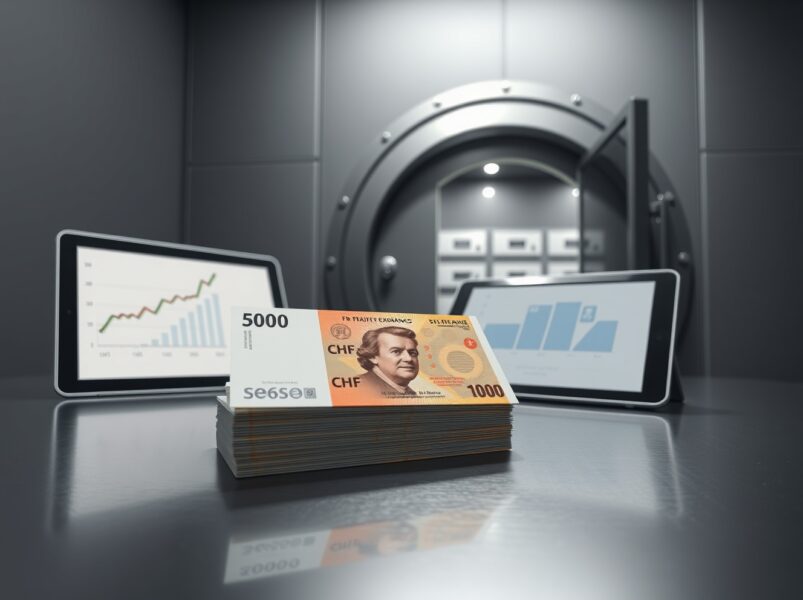
Swiss Franc Intervention: Critical Analysis of SNB’s 2025 Policy and Safe-Haven Resilience

Swiss Franc Intervention: Critical Analysis of SNB’s 2025 Policy and Safe-Haven Resilience

BitcoinWorld Swiss Franc Intervention: Critical Analysis of SNB’s 2025 Policy and Safe-Haven Resilience ZURICH, March 2025 – The Swiss National Bank faces mounting
Share
bitcoinworld2026/03/16 23:10
Cashing In On University Patents Means Giving Up On Our Innovation Future

Cashing In On University Patents Means Giving Up On Our Innovation Future

The post Cashing In On University Patents Means Giving Up On Our Innovation Future appeared on BitcoinEthereumNews.com. “It’s a raid on American innovation that would deliver pennies to the Treasury while kneecapping the very engine of our economic and medical progress,” writes Pipes. Getty Images Washington is addicted to taxing success. Now, Commerce Secretary Howard Lutnick is floating a plan to skim half the patent earnings from inventions developed at universities with federal funding. It’s being sold as a way to shore up programs like Social Security. In reality, it’s a raid on American innovation that would deliver pennies to the Treasury while kneecapping the very engine of our economic and medical progress. Yes, taxpayer dollars support early-stage research. But the real payoff comes later—in the jobs created, cures discovered, and industries launched when universities and private industry turn those discoveries into real products. By comparison, the sums at stake in patent licensing are trivial. Universities collectively earn only about $3.6 billion annually in patent income—less than the federal government spends on Social Security in a single day. Even confiscating half would barely register against a $6 trillion federal budget. And yet the damage from such a policy would be anything but trivial. The true return on taxpayer investment isn’t in licensing checks sent to Washington, but in the downstream economic activity that federally supported research unleashes. Thanks to the bipartisan Bayh-Dole Act of 1980, universities and private industry have powerful incentives to translate early-stage discoveries into real-world products. Before Bayh-Dole, the government hoarded patents from federally funded research, and fewer than 5% were ever licensed. Once universities could own and license their own inventions, innovation exploded. The result has been one of the best returns on investment in government history. Since 1996, university research has added nearly $2 trillion to U.S. industrial output, supported 6.5 million jobs, and launched more than 19,000 startups. Those companies pay…
Share
BitcoinEthereumNews2025/09/18 03:26