The Rise of RWA (Real-World Assets) in Crypto: Why Tokenized Assets Are the Next Big Wave
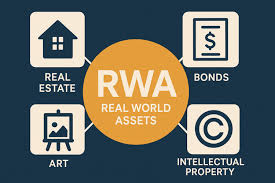
If you’ve been following the latest market trends in 2025, you’ll notice more investors, institutions, and even governments talking about tokenization. Why? Because RWAs are bridging traditional finance (TradFi) and Web3 in ways that could reshape how we save, invest, and build wealth.
Think about it owning a piece of real estate in Dubai, a fraction of a Picasso painting, or a slice of U.S. Treasury bonds, all from your phone. That’s not science fiction anymore. It’s happening right now through tokenization, and it might just be the foundation of the next big wave in crypto adoption.
So, let’s break it down: what RWAs are, why they matter, the benefits, the risks, and the projects leading the charge.
1.What Exactly Are Real World Assets (RWAs)?
Real-World Assets are physical or financial assets represented digitally on a blockchain.
This could include:
Real estate (apartments, houses, commercial property)
Commodities (gold, silver, oil)
Government and corporate bonds
Equities (stocks)
Carbon credits and renewable energy assets
Art, collectibles, and luxury goods.
Unlike Bitcoin or Ethereum, which exist entirely in the digital world, RWAs are grounded in real world value. The token on the blockchain acts like a digital certificate that proves ownership of the underlying asset.
For example: instead of buying a $1 million building, you could own 0.1% of it in the form of a token. That token represents your share and can be traded, used as collateral in DeFi, or even sold instantly without waiting months for legal paperwork.
That combination of familiarity and flexibility makes RWAs appealing both to traditional investors and crypto native users.

2.Why RWAs Are Exploding in 2025
2.1 Institutional Adoption
Big players are moving in. BlackRock, Franklin Templeton, and JPMorgan are actively experimenting with tokenization. For institutions, RWAs offer yield, stability, and new markets something crypto badly needed after years of being labeled too volatile or speculative.
2.2 Market Growth
According to Token Terminal, RWAs are already approaching $300 billion in value tokenized. This milestone wasn’t expected until 2030, but the pace has accelerated thanks to investor demand and regulatory support.
2.3 Regulatory Clarity
Governments are catching up. In the U.S., the GENIUS Act is shaping clearer frameworks for stablecoins and tokenized assets. Meanwhile, Europe’s Savings and Investment Union is pushing for tokenized equities and bonds. This progress is critical it builds trust and reassures institutions and retail investors that RWAs aren’t just another passing trend. Together, these three factors, institutions, market growth, and clearer laws are fueling the surge of RWAs in 2025.
2.4 Why Tokenization Is a Game Changer
RWAs aren’t just a cool idea they bring tangible benefits that solve long standing problems in finance.
Accessibility: Imagine being able to invest in a $100 million office building in New York with just $100. Fractional ownership makes high value assets available to anyone, not just the wealthy.
Liquidity: Traditionally, assets like real estate, fine art, or bonds take months (sometimes years) to sell. Tokenization turns them into digital tokens you can trade 24/7, unlocking liquidity.
Transparency & Security: Every transaction and ownership record is stored on chain, reducing fraud and disputes. Smart contracts automate agreements, making transfers smoother and more reliable.
Efficiency & Cost Reduction: Tokenized transactions cut out middlemen like brokers and banks. Settlement can take minutes instead of weeks, saving time and reducing costs.
Think of it as finance upgraded faster, fairer, and open to anyone with an internet connection.

3.Top RWA Projects Making Noise in 2025
Some of the most exciting innovations in crypto today are coming from RWA 2focused projects. Here are a few leading the pack:
Centrifuge : Helps businesses access financing by tokenizing realworld credit assets.
Maple Finance : Builds tokenized lending and credit markets, connecting institutional borrowers with crypto liquidity.
Ondo Finance : Famous for tokenized U.S. Treasuries like USDY, offering safe, yield generating assets onchain.
Polymesh : A blockchain purpose built for regulated securities, making it easier for institutions to issue and trade tokenized assets.
And beyond these, we’re seeing buzz around MEXC backed initiatives exploring everything from fractionalize Dubai service apartments to tokenized franchise businesses offering retail investors access to previously exclusive opportunities.

4.Challenges and Risks to Keep in Mind
Of course, no innovation comes without hurdles. RWAs face some real challenges:
Regulation Isn’t Global Yet: While the U.S. and EU are moving forward, many countries still lack clear frameworks, slowing adoption.
Counterparty Risk: Does the token really represent the underlying asset? If custodians fail, investors could be left exposed.
Smart Contract Bugs: Like any blockchain project, vulnerabilities in code can lead to hacks or asset losses.
Adoption Barriers: Traditional investors still see crypto as complex, and it will take time (and education) for RWAs to gain mainstream acceptance.
Market Mismatch Risks: Real-world assets move slowly, but blockchain trades move instantly. If markets overheat, we could see an “on chain subprime” crisis where digital demand outpaces the stability of the underlying assets.
These risks don’t erase the potential of RWAs, but they remind us to approach the space with caution and proper due diligence.
5.The Future of RWAs in Web3
So where is this all heading? If we zoom out, the potential is massive.
Trillion Dollar Opportunity: Analysts predict tokenized assets could surpass $10 trillion by 2030.
Integration with DeFi: RWAs are being added to lending pools, yield farms, and stablecoin systems creating hybrid models of TradFi and DeFi.
Mainstream Gateway: RWAs might become the bridge that brings traditional investors into crypto. Owning U.S. Treasuries onchain feels safer for many than speculating on meme coins.
Everything Becomes Tokenized: From property to credit, art to renewable energy, tokenization could transform the way we perceive ownership itself.
In many ways, RWAs aren’t just a new trend they’re a necessary step toward making Web3 practical, sustainable, and inclusive.
6.Conclusion
The crypto industry has always thrived on innovation. RWAs are the latest chapter, offering a bridge between the familiar world of traditional finance and the flexible future of blockchain.
For investors, they unlock access to assets that were once out of reach. For institutions, they bring efficiency and transparency. And for the global financial system, they promise a shift toward a more inclusive, programmable economy.
Of course, challenges remain from regulations to risks but the direction is clear: tokenized RWAs are here to stay. They’re not just a passing buzzword. They could well be the foundation of the next generation of finance.
So whether you’re a seasoned trader, a curious beginner, or an institution exploring Web3, RWAs are worth watching closely. The future of crypto may be less about speculation and more about building real, sustainable value through tokenization.
Disclaimer: This content is for educational and reference purposes only and does not constitute any investment advice. Digital asset investments carry high risk. Please evaluate carefully and assume full responsibility for your own decisions.
You May Also Like
Gold Price Breaks $4,300 as Traders Reprice the Fed, Oil Risk, and Safety Demand
Tether real estate tokenization enters Saudi Arabia
Remixpoint Turns Bitcoin Treasury Into Yield Engine