

France Accounts for 70% of Crypto Wrench Attacks, New Report Finds
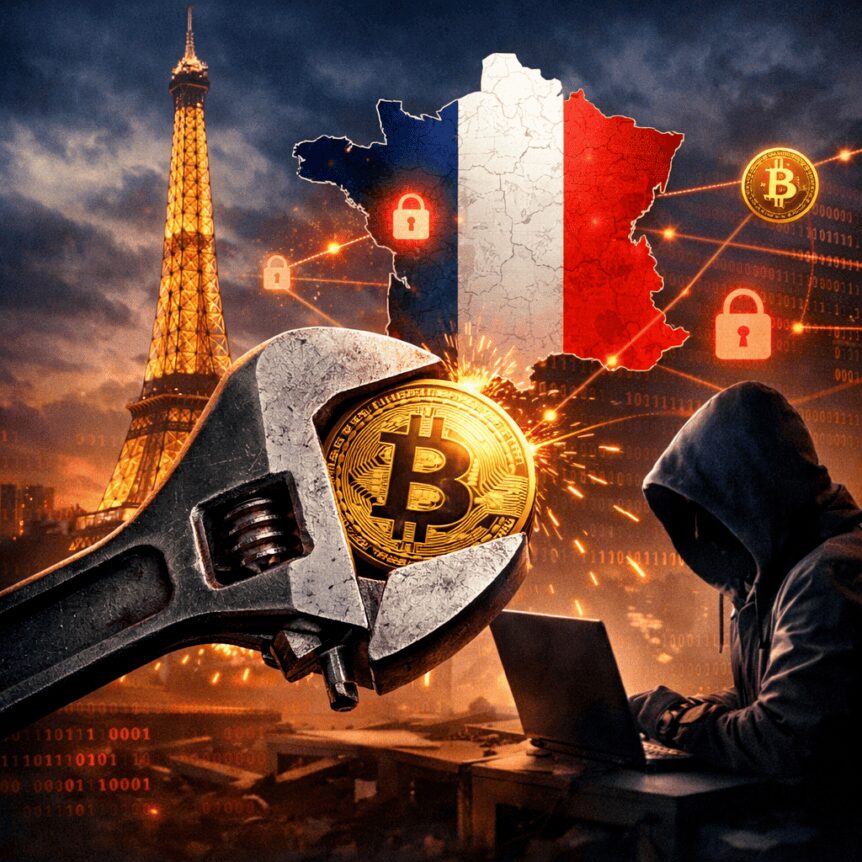
France is grappling with a troubling rise in wrench attacks—violent robberies aimed at crypto holders to steal digital assets. Bitcoin journalist Joe Nakamoto estimates that roughly 70% of these incidents occur in France, a figure he links to the country’s centralized data practices and the exposure of personal information in data breaches.
According to Nakamoto, 41 crypto-related kidnappings have been recorded in France so far in 2026, equating to about one attack every two and a half days. The surge, he argues, is fueled by compromised Know-Your-Customer data stored on centralized servers, exposing home addresses and other personally identifiable information that attackers can weaponize against individuals holding crypto.
The ledger of data abuses in the crypto ecosystem further underscores the vulnerability. Nakamoto notes the 2020 Ledger data breach, which exposed the identities, home addresses and emails of more than 270,000 customers worldwide, as a watershed moment in the risk landscape for holders. In a candid appraisal, Jameson Lopp, CEO of Casa, described France as “the canary in the coal mine,” suggesting that financial regulations surrounding data and privacy can unintentionally magnify harms to bitcoin holders.
As the crypto community weighs the implications of these events, opposition to broad data collection and centralized storage of user information has intensified. The wrench-attack phenomenon continues to unfold even as authorities pursue individuals involved in these crimes and as calls for heightened security measures by custodians and the broader industry grow louder.
Key takeaways
- About 70% of wrench attacks are reported to occur in France, a trend linked to centralized KYC data practices and subsequent data breaches.
- In 2026, Nakamoto estimates 41 crypto-related kidnappings in France, roughly one attack every 2.5 days.
- The Ledger data breach in 2020 exposed the identities, home addresses and emails of more than 270,000 customers, highlighting the risks of centralized crypto data stores.
- Industry voices stress practical safeguards for holders, including custody features to verify active attacks, asset freezing capabilities, and strategic use of decoy wallets.
- France reports ongoing enforcement actions, with at least 88 individuals arrested in connection with wrench attacks, signaling continued legal pursuit of perpetrators.
Wrench attacks, data exposure, and what it means for holders
The attacks described by Nakamoto are typically coordinated by criminals operating from abroad, who recruit local associates in France to execute physical raids on crypto owners. This pattern complicates policing and raises the stakes for individual security practices. In response, custodial and key-management providers are increasingly advocating layered defense mechanisms that can be activated in real time when a crisis is detected.
Among the recommended measures is the use of custody services that incorporate a pre-agreed security word or phrase. Such a credential can alert a custodian or asset manager that an attack is underway, enabling rapid asset freezes to prevent unauthorized access and, when appropriate, the timely involvement of law enforcement. The approach aims to curb the immediate theft risk while preserving the possibility of recovering assets through official channels.
Experts also emphasize practical risk-reduction techniques, including maintaining a “decoy” wallet with a small balance that can be handed over if confronted by attackers, thereby reducing the likelihood of a larger loss from a direct confrontation. The broader guidance urges holders to minimize public visibility of their holdings—avoiding overt disclosures online that could flag them as targets—and to coordinate with trusted security partners to establish incident-response playbooks.
For researchers and practitioners tracking these incidents, a community-maintained resource has emerged to catalog known wrench attacks and support risk assessment efforts. The repository at jlopp’s GitHub page documents cases and helps inform safer practices across the ecosystem: GitHub.
Public safety and regulatory responses continue to unfold in France. Vanessa Perrée, the national prosecutor for organized crime, has indicated that at least 88 individuals have been arrested in connection with crypto wrench attacks. The figures underscore a sustained law-enforcement focus on the intersection of physical crime and digital asset ownership, as authorities seek to deter attackers and reassure the crypto community.
Industry observers argue that France’s experience highlights a broader tension in crypto security: the balance between regulatory data requirements and the protection of individual privacy. The push for more stringent data controls and tighter security standards for custodians could help blunt the ability of criminals to identify and premeditate attacks, though critics contend that such measures must not come at the expense of legitimate financial privacy and innovation.
Looking ahead, investors, users and builders will want to monitor both policy developments and practical security enhancements. If the data-privacy debate tilts toward greater protection, we could see a reduction in targeted wrench attacks alongside improved incident-response capabilities from custodians. If, however, data vulnerabilities persist or regulatory regimes inadvertently widen surveillance reach, the risk profile for crypto ownership could remain elevated, especially in jurisdictions with dense central-data ecosystems.
Readers should keep an eye on how custodians evolve their safety features, how law enforcement collaborations evolve, and whether new regulatory frameworks emerge to strike a more robust balance between privacy and security in crypto ownership. The evolving dynamics will shape risk management strategies for individuals and institutions alike in the months ahead.
This article was originally published as France Accounts for 70% of Crypto Wrench Attacks, New Report Finds on Crypto Breaking News – your trusted source for crypto news, Bitcoin news, and blockchain updates.


Ayrıca Şunları da Beğenebilirsiniz

Why epigenetics, mental health matter in typhoon season

'My god': Mike Johnson ridiculed mercilessly after new 'embarrassing' omission

Questions about Trump's criminal liability arise as Mueller prosecutor sees immunity crack


Popüler Haberler
Daha fazla
