

South Korea’s KT Targets Blockchain Growth With Token Factory and Stablecoin
South Korean telecommunications company KT has unveiled plans to introduce two blockchain-focused businesses—a Token Factory platform and a stablecoin service—as part of a broader transformation strategy aimed at expanding beyond its traditional telecom operations. The initiative reflects the company’s ambition to evolve into an AI-driven platform enterprise while strengthening its position in the rapidly developing digital asset sector.
Chief Executive Officer Park Yoon-young outlined the strategy during his first press conference since assuming office, where he presented a three-year investment plan worth approximately 12 trillion won, or about $8.7 billion. The investment is expected to support information security, IT infrastructure, and network expansion, forming the technological foundation for KT’s next phase of growth.
The company plans to integrate its proprietary telecommunications network and security infrastructure across the entire digital asset lifecycle, including token issuance, custody, settlement, network transmission, and real-world blockchain applications, creating a vertically integrated blockchain ecosystem.
The planned Token Factory platform is intended to simplify the creation, management, and distribution of blockchain-based digital tokens. Such tokens can represent a wide range of assets, including loyalty rewards, digital ownership rights, and other transferable units of value. By providing these capabilities, KT aims to support businesses seeking to adopt tokenization while leveraging its existing technological infrastructure.
Alongside the Token Factory, KT is preparing to enter the stablecoin market, signaling its intention to expand into blockchain-enabled financial services. Industry observers believe the company’s extensive subscriber base, established billing systems, and advanced cybersecurity capabilities could enable it to integrate digital payment services directly into its telecommunications offerings. Such an approach may create additional revenue opportunities while extending financial services to millions of existing customers.
KT’s blockchain strategy seeks to combine telecommunications infrastructure with financial technology, allowing the company to deliver integrated digital asset services that extend beyond conventional telecom offerings.
The company’s move into tokenization and stablecoins also reflects a broader trend in which telecommunications providers are increasingly exploring blockchain technologies to diversify their business models. As digital assets become more widely adopted, established telecom operators possess significant advantages through their trusted customer relationships, nationwide infrastructure, and secure identity management systems.
The initiative could also influence South Korea’s evolving regulatory framework for digital assets. Market analysts suggest KT’s entry into stablecoin issuance may encourage policymakers to provide greater clarity regarding licensing requirements, reserve management standards, consumer protection measures, and other rules governing blockchain-based financial services. The growing overlap between telecommunications and financial services is expected to receive increased regulatory attention as more large technology companies pursue similar strategies.
KT’s latest announcement positions the company alongside financial institutions and fintech firms that are investing heavily in blockchain infrastructure and tokenized financial products. Its substantial capital commitment indicates that the company views digital assets as a long-term strategic growth opportunity rather than an experimental business segment.
Backed by a three-year investment of approximately $8.7 billion, KT is positioning itself as a major participant in South Korea’s digital asset market, with the success of its strategy expected to depend on regulatory clarity, user adoption, and effective execution across multiple blockchain and financial services.
The announcement underscores the accelerating convergence of telecommunications, blockchain technology, and financial services in South Korea. By leveraging its existing infrastructure and customer reach, KT is seeking to establish a competitive position in an increasingly crowded market where traditional telecom companies, fintech firms, and financial institutions are all pursuing blockchain-powered business models.
The post South Korea’s KT Targets Blockchain Growth With Token Factory and Stablecoin appeared first on CoinTrust.


Ayrıca Şunları da Beğenebilirsiniz

Robotics Automation Prototyping: Engineering Kinetic Agility into End-Effectors
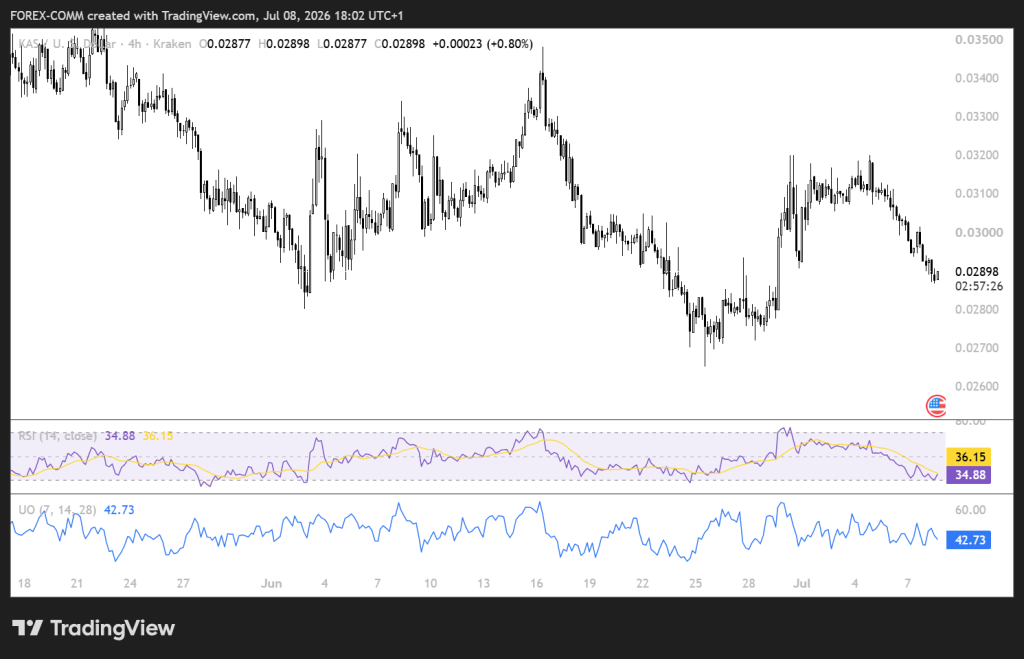
Kaspa Price News: On-Chain Metrics Signals a Potential Bottom as Whale Buys 1 Million KAS

Super Micro Computer, Inc. (SMCI) Stock: Surge as Red Hat Deal Boosts Edge AI Momentum


Popüler Haberler
Daha fazla
