The post NZD/USD dives further, nears 0.5700 on weak Chinese data, risk aversion appeared on BitcoinEthereumNews.com. The New Zealand Dollar (NZD) is trading lower for the third consecutive day on Friday, trading at 1.1720 at the time of writing and on track for a 0.45% weekly decline, after having been rejected at 0.5800 earlier in the week. A combination of weak manufacturing data from China, a stronger US Dollar following a hawkish message from the Fed, and a mild risk aversion is weighing on the Kiwi. The Chinese NBS Purchasing Managers Index, released earlier on Friday, revealed that factory activity contracted to a 49.0 reading in October, from 49.8 in September, and below market expectations of a 49.6 reading, weighed by a decline in domestic demand, supply chain disruptions, and global economic pressures. RBNZ’s Gai warns about New Zealand’s economic outlook Somewhat later, the Reserve Bank of New Zealand (RBNZ) Monetary Policy Committee member Prasanna Gai added bearish pressure on the NZD, assessing that US tariffs are a “negative demand shock” for New Zealand and that they are acting as headwinds to an already restrained economic growth. Gai affirmed in an event in Melbourne that these shocks, coupled with the high global uncertainty, have offset some of the central bank’s monetary easing cycle, strengthening the case for further rate cuts in the near term. The US Dollar, on the other hand, remains bid following the hawkish message by the Federal Reserve Chairman, Jerome Powell, following a widely expected interest rate cut on Wednesday. Powell said that a rate cut in December is dar from a foregone conclusion, boosting US Treasury yields and dragging the US Dollar higher with them. RBNZ FAQs The Reserve Bank of New Zealand (RBNZ) is the country’s central bank. Its economic objectives are achieving and maintaining price stability – achieved when inflation, measured by the Consumer Price Index (CPI), falls within the… The post NZD/USD dives further, nears 0.5700 on weak Chinese data, risk aversion appeared on BitcoinEthereumNews.com. The New Zealand Dollar (NZD) is trading lower for the third consecutive day on Friday, trading at 1.1720 at the time of writing and on track for a 0.45% weekly decline, after having been rejected at 0.5800 earlier in the week. A combination of weak manufacturing data from China, a stronger US Dollar following a hawkish message from the Fed, and a mild risk aversion is weighing on the Kiwi. The Chinese NBS Purchasing Managers Index, released earlier on Friday, revealed that factory activity contracted to a 49.0 reading in October, from 49.8 in September, and below market expectations of a 49.6 reading, weighed by a decline in domestic demand, supply chain disruptions, and global economic pressures. RBNZ’s Gai warns about New Zealand’s economic outlook Somewhat later, the Reserve Bank of New Zealand (RBNZ) Monetary Policy Committee member Prasanna Gai added bearish pressure on the NZD, assessing that US tariffs are a “negative demand shock” for New Zealand and that they are acting as headwinds to an already restrained economic growth. Gai affirmed in an event in Melbourne that these shocks, coupled with the high global uncertainty, have offset some of the central bank’s monetary easing cycle, strengthening the case for further rate cuts in the near term. The US Dollar, on the other hand, remains bid following the hawkish message by the Federal Reserve Chairman, Jerome Powell, following a widely expected interest rate cut on Wednesday. Powell said that a rate cut in December is dar from a foregone conclusion, boosting US Treasury yields and dragging the US Dollar higher with them. RBNZ FAQs The Reserve Bank of New Zealand (RBNZ) is the country’s central bank. Its economic objectives are achieving and maintaining price stability – achieved when inflation, measured by the Consumer Price Index (CPI), falls within the…

NZD/USD dives further, nears 0.5700 on weak Chinese data, risk aversion

2025/10/31 17:32

The New Zealand Dollar (NZD) is trading lower for the third consecutive day on Friday, trading at 1.1720 at the time of writing and on track for a 0.45% weekly decline, after having been rejected at 0.5800 earlier in the week. A combination of weak manufacturing data from China, a stronger US Dollar following a hawkish message from the Fed, and a mild risk aversion is weighing on the Kiwi.

The Chinese NBS Purchasing Managers Index, released earlier on Friday, revealed that factory activity contracted to a 49.0 reading in October, from 49.8 in September, and below market expectations of a 49.6 reading, weighed by a decline in domestic demand, supply chain disruptions, and global economic pressures.

RBNZ’s Gai warns about New Zealand’s economic outlook

Somewhat later, the Reserve Bank of New Zealand (RBNZ) Monetary Policy Committee member Prasanna Gai added bearish pressure on the NZD, assessing that US tariffs are a “negative demand shock” for New Zealand and that they are acting as headwinds to an already restrained economic growth.

Gai affirmed in an event in Melbourne that these shocks, coupled with the high global uncertainty, have offset some of the central bank’s monetary easing cycle, strengthening the case for further rate cuts in the near term.

The US Dollar, on the other hand, remains bid following the hawkish message by the Federal Reserve Chairman, Jerome Powell, following a widely expected interest rate cut on Wednesday. Powell said that a rate cut in December is dar from a foregone conclusion, boosting US Treasury yields and dragging the US Dollar higher with them.

RBNZ FAQs

The Reserve Bank of New Zealand (RBNZ) is the country’s central bank. Its economic objectives are achieving and maintaining price stability – achieved when inflation, measured by the Consumer Price Index (CPI), falls within the band of between 1% and 3% – and supporting maximum sustainable employment.

The Reserve Bank of New Zealand’s (RBNZ) Monetary Policy Committee (MPC) decides the appropriate level of the Official Cash Rate (OCR) according to its objectives. When inflation is above target, the bank will attempt to tame it by raising its key OCR, making it more expensive for households and businesses to borrow money and thus cooling the economy. Higher interest rates are generally positive for the New Zealand Dollar (NZD) as they lead to higher yields, making the country a more attractive place for investors. On the contrary, lower interest rates tend to weaken NZD.

Employment is important for the Reserve Bank of New Zealand (RBNZ) because a tight labor market can fuel inflation. The RBNZ’s goal of “maximum sustainable employment” is defined as the highest use of labor resources that can be sustained over time without creating an acceleration in inflation. “When employment is at its maximum sustainable level, there will be low and stable inflation. However, if employment is above the maximum sustainable level for too long, it will eventually cause prices to rise more and more quickly, requiring the MPC to raise interest rates to keep inflation under control,” the bank says.

In extreme situations, the Reserve Bank of New Zealand (RBNZ) can enact a monetary policy tool called Quantitative Easing. QE is the process by which the RBNZ prints local currency and uses it to buy assets – usually government or corporate bonds – from banks and other financial institutions with the aim to increase the domestic money supply and spur economic activity. QE usually results in a weaker New Zealand Dollar (NZD). QE is a last resort when simply lowering interest rates is unlikely to achieve the objectives of the central bank. The RBNZ used it during the Covid-19 pandemic.

Source: https://www.fxstreet.com/news/nzd-usd-dives-further-nears-05700-on-weak-chinese-data-risk-aversion-202510310845
Sorumluluk Reddi: Bu sitede yeniden yayınlanan makaleler, halka açık platformlardan alınmıştır ve yalnızca bilgilendirme amaçlıdır. MEXC'nin görüşlerini yansıtmayabilir. Tüm hakları telif sahiplerine aittir. Herhangi bir içeriğin üçüncü taraf haklarını ihlal ettiğini düşünüyorsanız, kaldırılması için lütfen [email protected] ile iletişime geçin. MEXC, içeriğin doğruluğu, eksiksizliği veya güncelliği konusunda hiçbir garanti vermez ve sağlanan bilgilere dayalı olarak alınan herhangi bir eylemden sorumlu değildir. İçerik, finansal, yasal veya diğer profesyonel tavsiye niteliğinde değildir ve MEXC tarafından bir tavsiye veya onay olarak değerlendirilmemelidir.

Ayrıca Şunları da Beğenebilirsiniz

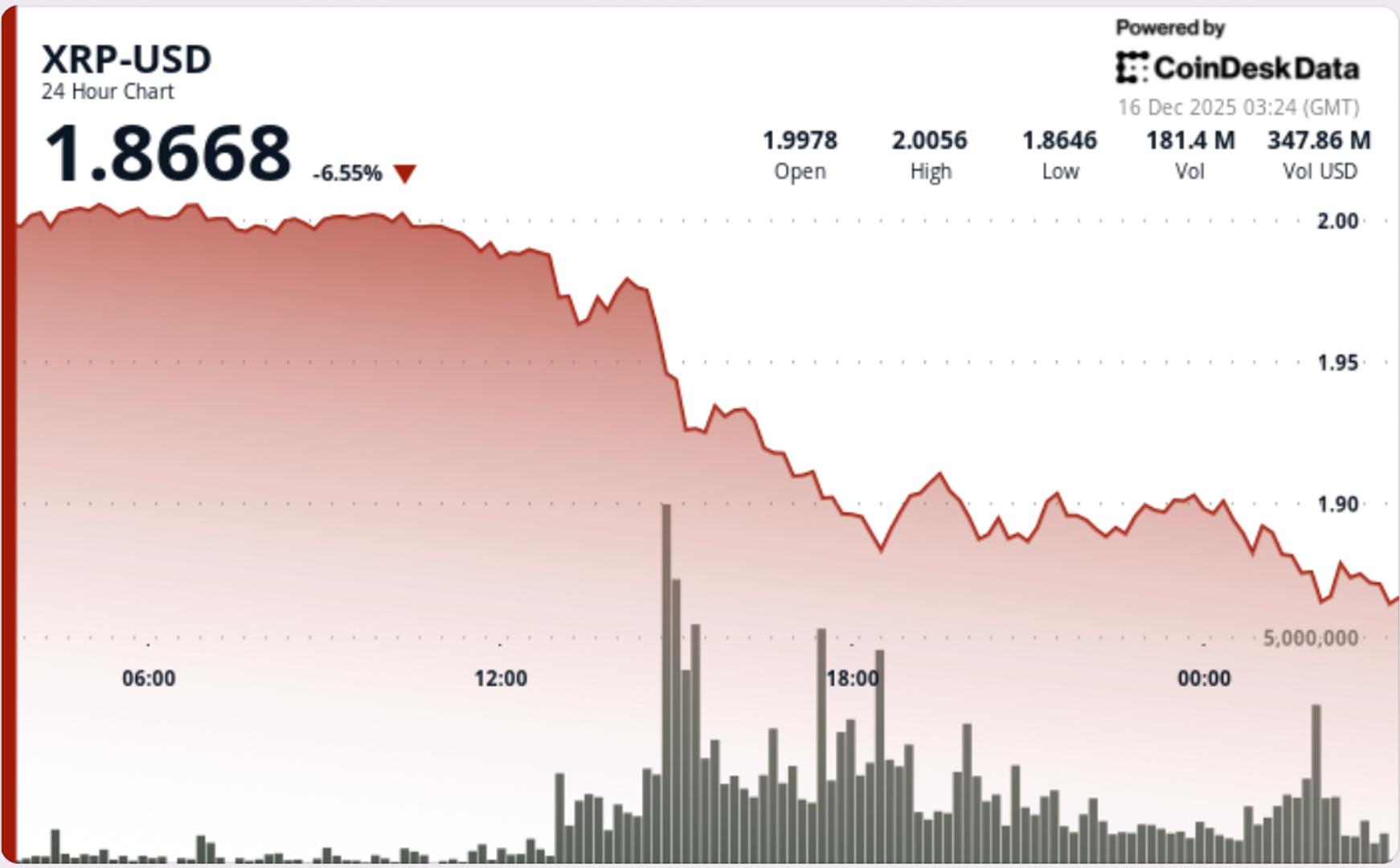
XRP price weakens at critical level, raising risk of deeper pullback

XRP price weakens at critical level, raising risk of deeper pullback

Markets Share Share this article
Copy linkX (Twitter)LinkedInFacebookEmail
XRP price weakens at critical level, raising
Paylaş
Coindesk2025/12/16 11:34
Warsaw Stock Exchange Launches Poland's First Bitcoin ETF

Warsaw Stock Exchange Launches Poland's First Bitcoin ETF

PANews reported on September 19th that according to Cryptobriefing, the Warsaw Stock Exchange has launched Poland's first Bitcoin ETF, marking a significant step forward in the adoption of cryptocurrencies in Eastern Europe. The ETF allows Polish investors to gain exposure to Bitcoin through standard brokerage accounts.
Paylaş
PANews2025/09/19 08:52
Slate Milk Raises $23 Million Series B Round To Bolster Protein Drink’s Rapid Growth

Slate Milk Raises $23 Million Series B Round To Bolster Protein Drink’s Rapid Growth

The post Slate Milk Raises $23 Million Series B Round To Bolster Protein Drink’s Rapid Growth appeared on BitcoinEthereumNews.com. Slate Classic Chocolate milk shake Slate A new slate of functional beverages is about to dominate the ready-to-drink shelf, ushering in a more modern era of easily incorporating more protein in our diets. Today, Slate Milk cofounders Manny Lubin and Josh Belinsky reveal the brand has raised a $23 million Series B funding round. Led by Foundership, a new fund by Yasso frozen greek yogurt cofounders Drew Harrington and Amanda Klane, the money will allow Slate to continue its momentum towards ubiquity as it hits 100,000 points of distribution across 20,000 stores nationwide by the end of 2025. Slate also reveals that it is rolling out several line extensions including a 20 gram protein Strawberry milk at Sprouts Farmers Market, a 30 gram protein Cookies & Cream milk at Target, and a 30 gram protein Salted Caramel flavor at Walmart and Albertsons banner stores. New “Ultra” 42 gram protein options in Chocolate, Vanilla and Salted Caramel will also be available in retailers across the country. “Stores where we may have just had our ready-to-drink lattes, now we’re adding our shakes, and vice versa. We’re adding new partners and executing deeper with our existing partners,” Lubin tells me. The impressive growth is due to Slate’s early entry into the high-protein product space slightly before it caught mainstream attention–ready to execute immediately once consumers craved it most. Slate’s macronutrient ratios are practically unbeatable, largely due to the utilization of ultra-filtered milk. It’s a protein drink that writes a new script about who protein drinks are for. “We’re not sons of dairy farmers. We had no milk history,” Lubin says “We’re just a couple of dudes from the burbs of Boston who like chocolate milk.” Slate cofounder Manny Lubin Slate Another Clean Slate Slate’s brand has evolved significantly in just the past six…
Paylaş
BitcoinEthereumNews2025/09/19 03:08