The post Malicious worm compromises crypto domains in supply-chain attack appeared on BitcoinEthereumNews.com. On Nov. 24, security firm Aikido detected a second wave of the Shai-Hulud self-replicating npm worm, compromising 492 packages with a combined 132 million monthly downloads. The attack struck major ecosystems, including AsyncAPI, PostHog, Postman, Zapier, and ENS, exploiting the final weeks before npm’s Dec. 9 deadline to revoke legacy authentication tokens. Aikido’s triage queue flagged the intrusion around 3:16 AM UTC, as malicious versions of AsyncAPI’s go-template and 36 related packages began spreading across the registry. The attacker labeled stolen-credential repositories with the description “Sha1-Hulud: The Second Coming,” maintaining theatrical branding from the September campaign. The worm installs the Bun runtime during package setup, then executes malicious code that searches developer environments for exposed secrets using TruffleHog. Compromised API keys, GitHub tokens, and npm credentials are published to randomly named public repositories, and the malware attempts to propagate by pushing new infected versions to up to 100 additional packages, five times the scale of the September attack. Technical evolution and destructive payload The November iteration introduces several modifications from the September attack.The malware now creates repositories with randomly generated names for stolen data rather than using hardcoded names, complicating takedown efforts. Setup code installs Bun via setup_bun.js before executing the primary payload in bun_environment.js, which contains the worm logic and credential-exfiltration routines. The most destructive addition: if the malware cannot authenticate with GitHub or npm using stolen credentials, it wipes all files in the user’s home directory. Aikido’s analysis revealed execution errors that limited the attack’s spread. The bundling code that copies the full worm into new packages sometimes fails to include bun_environment.js, leaving only the Bun installation script without the malicious payload. Despite these failures, the initial compromises hit high-value targets with massive downstream exposure. AsyncAPI packages dominated the first wave, with 36 compromised releases including @asyncapi/cli, @asyncapi/parser,… The post Malicious worm compromises crypto domains in supply-chain attack appeared on BitcoinEthereumNews.com. On Nov. 24, security firm Aikido detected a second wave of the Shai-Hulud self-replicating npm worm, compromising 492 packages with a combined 132 million monthly downloads. The attack struck major ecosystems, including AsyncAPI, PostHog, Postman, Zapier, and ENS, exploiting the final weeks before npm’s Dec. 9 deadline to revoke legacy authentication tokens. Aikido’s triage queue flagged the intrusion around 3:16 AM UTC, as malicious versions of AsyncAPI’s go-template and 36 related packages began spreading across the registry. The attacker labeled stolen-credential repositories with the description “Sha1-Hulud: The Second Coming,” maintaining theatrical branding from the September campaign. The worm installs the Bun runtime during package setup, then executes malicious code that searches developer environments for exposed secrets using TruffleHog. Compromised API keys, GitHub tokens, and npm credentials are published to randomly named public repositories, and the malware attempts to propagate by pushing new infected versions to up to 100 additional packages, five times the scale of the September attack. Technical evolution and destructive payload The November iteration introduces several modifications from the September attack.The malware now creates repositories with randomly generated names for stolen data rather than using hardcoded names, complicating takedown efforts. Setup code installs Bun via setup_bun.js before executing the primary payload in bun_environment.js, which contains the worm logic and credential-exfiltration routines. The most destructive addition: if the malware cannot authenticate with GitHub or npm using stolen credentials, it wipes all files in the user’s home directory. Aikido’s analysis revealed execution errors that limited the attack’s spread. The bundling code that copies the full worm into new packages sometimes fails to include bun_environment.js, leaving only the Bun installation script without the malicious payload. Despite these failures, the initial compromises hit high-value targets with massive downstream exposure. AsyncAPI packages dominated the first wave, with 36 compromised releases including @asyncapi/cli, @asyncapi/parser,…

Malicious worm compromises crypto domains in supply-chain attack

2025/11/25 20:29

On Nov. 24, security firm Aikido detected a second wave of the Shai-Hulud self-replicating npm worm, compromising 492 packages with a combined 132 million monthly downloads.

The attack struck major ecosystems, including AsyncAPI, PostHog, Postman, Zapier, and ENS, exploiting the final weeks before npm’s Dec. 9 deadline to revoke legacy authentication tokens.

Aikido’s triage queue flagged the intrusion around 3:16 AM UTC, as malicious versions of AsyncAPI’s go-template and 36 related packages began spreading across the registry.

The attacker labeled stolen-credential repositories with the description “Sha1-Hulud: The Second Coming,” maintaining theatrical branding from the September campaign.

The worm installs the Bun runtime during package setup, then executes malicious code that searches developer environments for exposed secrets using TruffleHog.

Compromised API keys, GitHub tokens, and npm credentials are published to randomly named public repositories, and the malware attempts to propagate by pushing new infected versions to up to 100 additional packages, five times the scale of the September attack.

Technical evolution and destructive payload

The November iteration introduces several modifications from the September attack.
The malware now creates repositories with randomly generated names for stolen data rather than using hardcoded names, complicating takedown efforts.

Setup code installs Bun via setup_bun.js before executing the primary payload in bun_environment.js, which contains the worm logic and credential-exfiltration routines.

The most destructive addition: if the malware cannot authenticate with GitHub or npm using stolen credentials, it wipes all files in the user’s home directory.

Aikido’s analysis revealed execution errors that limited the attack’s spread. The bundling code that copies the full worm into new packages sometimes fails to include bun_environment.js, leaving only the Bun installation script without the malicious payload.

Despite these failures, the initial compromises hit high-value targets with massive downstream exposure.

AsyncAPI packages dominated the first wave, with 36 compromised releases including @asyncapi/cli, @asyncapi/parser, and @asyncapi/generator.

PostHog followed at 4:11 AM UTC, with infected versions of posthog-js, posthog-node, and dozens of plugins. Postman packages arrived at 5:09 AM UTC.

The Zapier compromise affected @zapier/zapier-sdk, zapier-platform-cli, and zapier-platform-core, while the ENS compromise affected @ensdomains/ensjs, @ensdomains/ens-contracts, and ethereum-ens.

GitHub branch creation suggests repository-level access

The AsyncAPI team discovered a malicious branch in their CLI repository created immediately before the compromised packages appeared on npm.

The branch contained a deployed version of the Shai-Hulud malware, indicating the attacker gained write access to the repository itself rather than simply hijacking npm tokens.

This escalation mirrors the technique used in the original Nx compromise, in which attackers modified source repositories to inject malicious code into legitimate build pipelines.

Aikido estimates that 26,300 GitHub repositories now contain stolen credentials marked with the “Sha1-Hulud: The Second Coming” description.

The repositories contain secrets exposed by developer environments that ran the compromised packages, including cloud service credentials, CI/CD tokens, and authentication keys for third-party APIs.

The public nature of the leaks amplifies the damage: any attacker monitoring the repositories can harvest credentials in real time and launch secondary attacks.

Attack timing and mitigation

The timing coincides with npm’s Nov. 15 announcement that it will revoke classic authentication tokens on Dec. 9.

The attacker’s choice to launch a final large-scale campaign before the deadline suggests they recognized the window for token-based compromises was closing. Aikido’s timeline shows the first Shai-Hulud wave began Sept. 16.

The Nov. 24 “Second Coming” represents the attacker’s last opportunity to exploit legacy tokens before npm’s migration cuts off that access.

Aikido recommends that security teams audit all dependencies from affected ecosystems, particularly the Zapier, ENS, AsyncAPI, PostHog, and Postman packages installed or updated after Nov. 24.

Organizations should rotate all GitHub, npm, cloud, and CI/CD secrets used in environments where these packages were present, and search GitHub for repositories with the “Sha1-Hulud: The Second Coming” description to determine if internal credentials were exposed.

Disabling npm postinstall scripts in CI pipelines prevents future install-time execution, and pinning package versions with lock files limits exposure to newly compromised releases.

Source: https://cryptoslate.com/malicious-worm-compromises-crypto-domains-in-supply-chain-attack/
Piyasa Fırsatı
MetaDOS Logosu
MetaDOS Fiyatı(SECOND)
$0.0000045
$0.0000045$0.0000045
0.00%
USD
MetaDOS (SECOND) Canlı Fiyat Grafiği
Sorumluluk Reddi: Bu sitede yeniden yayınlanan makaleler, halka açık platformlardan alınmıştır ve yalnızca bilgilendirme amaçlıdır. MEXC'nin görüşlerini yansıtmayabilir. Tüm hakları telif sahiplerine aittir. Herhangi bir içeriğin üçüncü taraf haklarını ihlal ettiğini düşünüyorsanız, kaldırılması için lütfen [email protected] ile iletişime geçin. MEXC, içeriğin doğruluğu, eksiksizliği veya güncelliği konusunda hiçbir garanti vermez ve sağlanan bilgilere dayalı olarak alınan herhangi bir eylemden sorumlu değildir. İçerik, finansal, yasal veya diğer profesyonel tavsiye niteliğinde değildir ve MEXC tarafından bir tavsiye veya onay olarak değerlendirilmemelidir.

Ayrıca Şunları da Beğenebilirsiniz

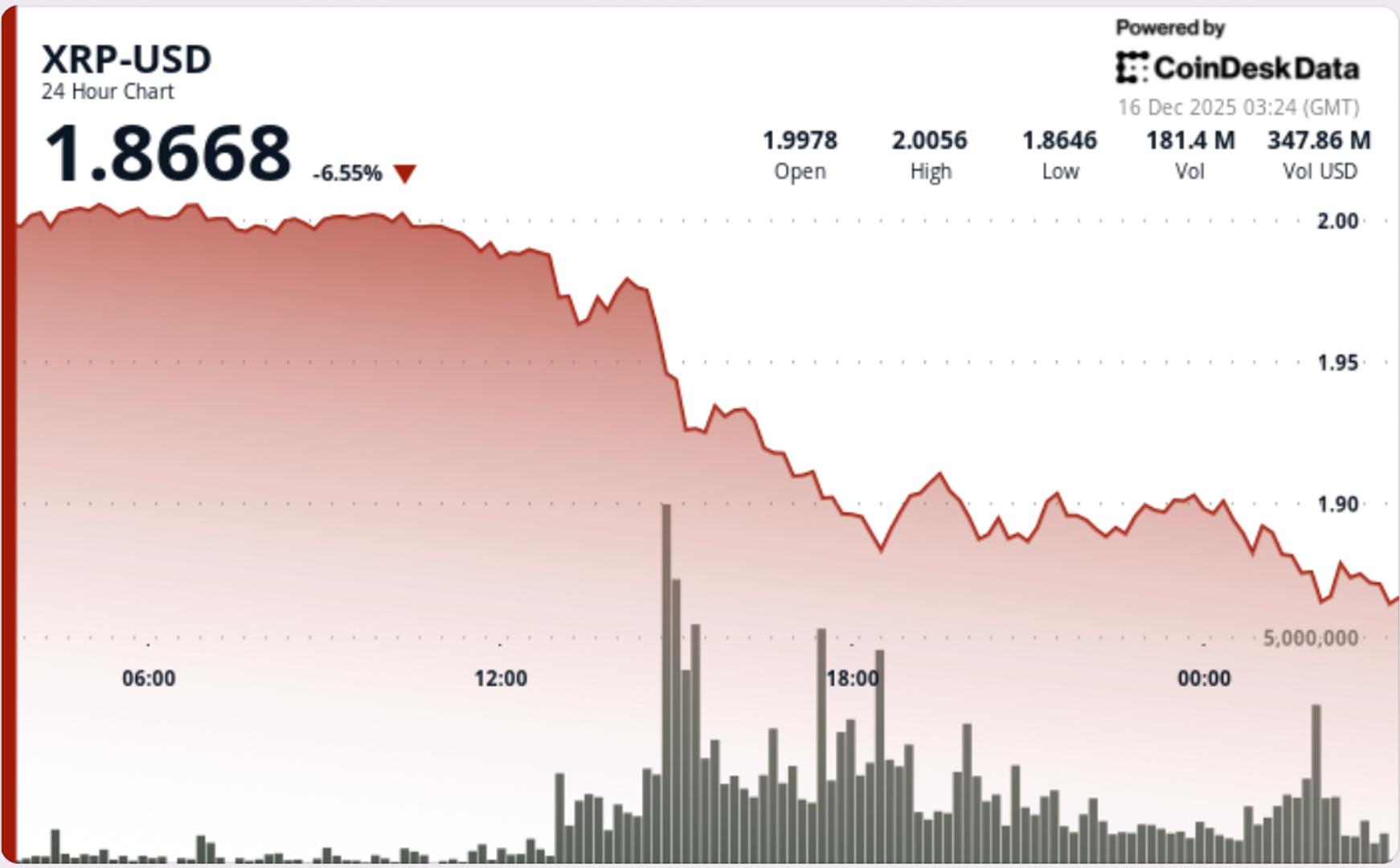
XRP price weakens at critical level, raising risk of deeper pullback

XRP price weakens at critical level, raising risk of deeper pullback

Markets Share Share this article
Copy linkX (Twitter)LinkedInFacebookEmail
XRP price weakens at critical level, raising
Paylaş
Coindesk2025/12/16 11:34
Warsaw Stock Exchange Launches Poland's First Bitcoin ETF

Warsaw Stock Exchange Launches Poland's First Bitcoin ETF

PANews reported on September 19th that according to Cryptobriefing, the Warsaw Stock Exchange has launched Poland's first Bitcoin ETF, marking a significant step forward in the adoption of cryptocurrencies in Eastern Europe. The ETF allows Polish investors to gain exposure to Bitcoin through standard brokerage accounts.
Paylaş
PANews2025/09/19 08:52
Slate Milk Raises $23 Million Series B Round To Bolster Protein Drink’s Rapid Growth

Slate Milk Raises $23 Million Series B Round To Bolster Protein Drink’s Rapid Growth

The post Slate Milk Raises $23 Million Series B Round To Bolster Protein Drink’s Rapid Growth appeared on BitcoinEthereumNews.com. Slate Classic Chocolate milk shake Slate A new slate of functional beverages is about to dominate the ready-to-drink shelf, ushering in a more modern era of easily incorporating more protein in our diets. Today, Slate Milk cofounders Manny Lubin and Josh Belinsky reveal the brand has raised a $23 million Series B funding round. Led by Foundership, a new fund by Yasso frozen greek yogurt cofounders Drew Harrington and Amanda Klane, the money will allow Slate to continue its momentum towards ubiquity as it hits 100,000 points of distribution across 20,000 stores nationwide by the end of 2025. Slate also reveals that it is rolling out several line extensions including a 20 gram protein Strawberry milk at Sprouts Farmers Market, a 30 gram protein Cookies & Cream milk at Target, and a 30 gram protein Salted Caramel flavor at Walmart and Albertsons banner stores. New “Ultra” 42 gram protein options in Chocolate, Vanilla and Salted Caramel will also be available in retailers across the country. “Stores where we may have just had our ready-to-drink lattes, now we’re adding our shakes, and vice versa. We’re adding new partners and executing deeper with our existing partners,” Lubin tells me. The impressive growth is due to Slate’s early entry into the high-protein product space slightly before it caught mainstream attention–ready to execute immediately once consumers craved it most. Slate’s macronutrient ratios are practically unbeatable, largely due to the utilization of ultra-filtered milk. It’s a protein drink that writes a new script about who protein drinks are for. “We’re not sons of dairy farmers. We had no milk history,” Lubin says “We’re just a couple of dudes from the burbs of Boston who like chocolate milk.” Slate cofounder Manny Lubin Slate Another Clean Slate Slate’s brand has evolved significantly in just the past six…
Paylaş
BitcoinEthereumNews2025/09/19 03:08