Robinhood has spent the past few years trying to outgrow its meme-stock reputation, and the clearest sign that it is thinking differently now sits far from MenloRobinhood has spent the past few years trying to outgrow its meme-stock reputation, and the clearest sign that it is thinking differently now sits far from Menlo

US crypto exchange constructs “regional triangle” that unlocks the one thing US regulators won’t permit

2025/12/14 15:30

Robinhood has spent the past few years trying to outgrow its meme-stock reputation, and the clearest sign that it is thinking differently now sits far from Menlo Park.

In early December, the company said it would buy PT Buana Capital Sekuritas, a small Indonesian brokerage, and PT Pedagang Aset Kripto, a licensed digital asset trader, with closing scheduled for the first half of 2026 once regulators agree.

On paper, the targets are modest. But, in practice, they plug Robinhood straight into a country with more than 19 million capital-market investors and roughly 17 million people already trading crypto, all reachable through the same phone in their hands.

That combination signals where the next stage of growth for brokers with a crypto angle is meant to come from.

Instead of filing a fresh license application from the US and waiting in line, Robinhood is buying its way into Indonesia’s regulatory perimeter. Buana Capital gives it a conventional securities license and a seat in the domestic stock market.

Pedagang Aset Kripto is already within the country’s current crypto regime as one of the supervised digital financial asset traders.

The company is also keeping majority owner Pieter Tanuri on as a strategic adviser, which means the foreign entrant arrives not just with paperwork but also with local relationships and context.

For a company that has already had long conversations with regulators in the UK and Europe, walking into Jakarta backed by a pair of approved entities and a local fixer is a deliberate choice, not a quirk of deal flow.

Buying a regulatory foothold in Indonesia

Indonesia is attractive because its core ingredients align almost perfectly with Robinhood’s design.

The country has a young population that lives on Android phones and treats the brokerage app as another social icon.

Equity investing has become part of everyday financial life for millions of people, helped by low minimums and highly online marketing. Crypto arrived on the same rails but moved even faster.

Penetration for digital assets now sits close to equity penetration, which is not a sentence you can write about many developed markets.

For an app that wants users to think of stocks and tokens as tiles on one dashboard, this is precisely the kind of market you want to wire in.

The rulebook has also moved in a direction that suits global brokers. For years, Indonesian crypto trading sat under Bappebti, the commodity futures regulator, which treated cryptocurrencies as any other asset.

Legislators then decided that the line between crypto and finance had blurred enough to warrant a more familiar framework and placed responsibility on Otoritas Jasa Keuangan, the financial services authority.

OJK has since drawn a clean map: one licensed crypto exchange, a central clearing and settlement house, a dedicated custodian, and a whitelist of assets that can trade on these venues.

It talks about digital assets using the same language it uses for other financial products, which means the expectations around segregation, custody, disclosure, and cybersecurity are the same as in the rest of the system.

Against that backdrop, buying a local broker and a local crypto trader is not just for speed. It is also a way to inherit teams that already live inside that system.

Robinhood still has to pass fit-and-proper checks and convince the OJK that it will not turn the retail market into a casino. Still, it no longer has to argue over whether its business model belongs within the perimeter at all.

The Indonesian licenses then sit neatly alongside the Bitstamp license in Singapore, which Robinhood picked up earlier in the year, to form a regional triangle: a crypto venue in a financial hub, a domestic brokerage, and a domestic crypto trader, all feeding into the same global app.

Once that plumbing is in place, the company can do what it already knows how to do: pipe US equities and options into a new audience, wrap them in a familiar mobile interface, and cross-sell between local and international markets.

Robinhood's Indonesia bet is a template, not an exception

Once you zoom out from Jakarta, the deal starts to look less like an isolated adventure and more like the draft of a playbook.

The countries that dominate crypto adoption charts these days are not your usual financial centers. India, Pakistan, Vietnam, and Brazil all sit near the top of grassroots usage rankings, with Nigeria, Indonesia, and the Philippines in the next bracket.

These are places where young populations live largely on mobile, where inflation or currency depreciation shapes how people think about savings, and where cross-border money is a normal part of family life.

That last point matters a lot to brokers because it makes stablecoins, dollar access, and FX rails more than just speculative tools.

In that environment, the old idea of “build first, license later” looks less attractive.

Regulators in these markets have already spent years dealing with local exchanges, peer-to-peer platforms, and the fallout from global blowups. They have learned, sometimes the hard way, what happens when platforms handle customer funds poorly or treat leverage as a marketing tool.

Most now keep a formal list of approved service providers and have no shortage of domestic players queuing up to join it.

For a foreign broker with shareholders watching the calendar, buying one of those companies beats waiting for a fresh application to crawl through the system.

You are still subject to local scrutiny, and you may inherit creaky back-office systems and legacy tech debt, but the core question of whether you belong in the market has already been answered.

The trade-offs are real. Small local shops often run on systems held together by habit and a few key staff. Hence, the buyer has to choose between slow, careful modernization and a faster rebuild that risks losing the institutional memory it just paid for.

Local relationships with banks, tax offices, and advertising regulators are often informal and personal, which makes staff retention more important than the headline customer count in an investor presentation.

Political sensitivities also loom large. Whenever a foreign broker arrives and starts pulling order flow, some part of the domestic industry will complain about capital leaving the country or young investors being targeted by outsiders, even when the foreign firm is operating under exactly the same rulebook.

The new map of crypto growth

What gives the Robinhood deal broader weight is what it says about the geography of crypto trading in the next few years.

For a long time, trading was concentrated in the US and a few Western European hubs. That era is fading as regulators in big economies tighten the screws and push more activity onshore.

The growth story now tilts toward countries that combine clear, if strict, licensing regimes with large pools of retail users who do not remember or do not know what finance looked like before smartphones.

Indonesia fits that profile neatly. So do Brazil, the Philippines, Nigeria, and Pakistan, though each has its own quirks.

For brokers and exchanges, this is less about chasing a single hot market and more about learning how to read a standard set of signals.

You watch for a regulator that has moved from blanket warnings to detailed supervision of digital assets. You look for mobile penetration that turns a new app into an overnight distribution channel.

You check adoption indexes and local exchange volumes to see whether people are already using crypto to solve daily problems rather than to punt on price.

When those boxes line up, the question is not whether someone will move in, but who will be first to find a willing license seller and stitch that license into a global stack.

Indonesia’s role in this story is to make that process concrete.

A US retail broker that grew up on meme stocks is now buying a small Jakarta broker and a local crypto trader, linking them to a Singapore crypto platform it already owns, and presenting the whole bundle through a single global app.

The deal shows how quickly a foreign firm can go from having zero standing in a market to sitting at the center of its retail investing experience, provided it is willing to pay for the right pieces of paper and do the integration work.

It also hints at what the next wave of press releases from Lagos, Karachi, or Manila will look like.

The names and acronyms will change, but the structure will feel familiar: local licenses, mobile-first users, and a foreign broker betting that this is where the real growth in crypto trading lives now.

The post US crypto exchange constructs “regional triangle” that unlocks the one thing US regulators won’t permit appeared first on CryptoSlate.

Piyasa Fırsatı
Talus Logosu
Talus Fiyatı(US)
$0.01491
$0.01491$0.01491
-11.77%
USD
Talus (US) Canlı Fiyat Grafiği
Sorumluluk Reddi: Bu sitede yeniden yayınlanan makaleler, halka açık platformlardan alınmıştır ve yalnızca bilgilendirme amaçlıdır. MEXC'nin görüşlerini yansıtmayabilir. Tüm hakları telif sahiplerine aittir. Herhangi bir içeriğin üçüncü taraf haklarını ihlal ettiğini düşünüyorsanız, kaldırılması için lütfen [email protected] ile iletişime geçin. MEXC, içeriğin doğruluğu, eksiksizliği veya güncelliği konusunda hiçbir garanti vermez ve sağlanan bilgilere dayalı olarak alınan herhangi bir eylemden sorumlu değildir. İçerik, finansal, yasal veya diğer profesyonel tavsiye niteliğinde değildir ve MEXC tarafından bir tavsiye veya onay olarak değerlendirilmemelidir.

Ayrıca Şunları da Beğenebilirsiniz

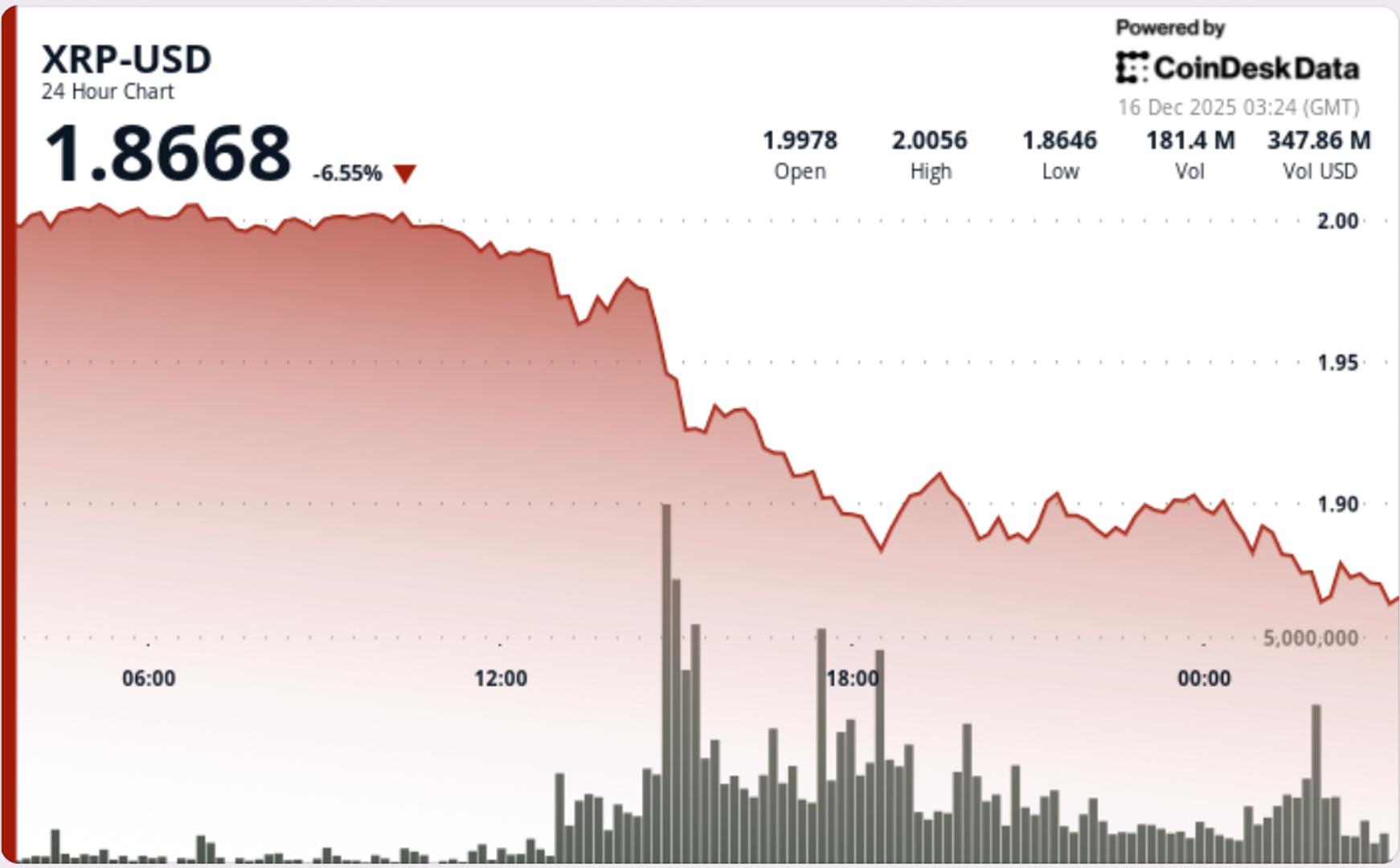
XRP price weakens at critical level, raising risk of deeper pullback

XRP price weakens at critical level, raising risk of deeper pullback

Markets Share Share this article
Copy linkX (Twitter)LinkedInFacebookEmail
XRP price weakens at critical level, raising
Paylaş
Coindesk2025/12/16 11:34
Wormhole Unveils W Token 2.0 with Enhanced Tokenomics
Wormhole Unveils W Token 2.0 with Enhanced Tokenomics

The post Wormhole Unveils W Token 2.0 with Enhanced Tokenomics appeared on BitcoinEthereumNews.com. Joerg Hiller Sep 17, 2025 13:57 Wormhole introduces W Token 2.0, featuring upgraded tokenomics, a strategic Wormhole Reserve, and a 4% base yield, aiming to optimize ecosystem growth and align incentives. Wormhole has announced a significant upgrade to its native token, unveiling the W Token 2.0. This upgrade introduces new tokenomics including the establishment of a Wormhole Reserve, a 4% base yield, and an optimized unlock schedule, marking a pivotal development in the ecosystem, according to Wormhole. The W Token Evolution Launched in October 2020, Wormhole’s W token has been central to the platform’s mission of creating a connected internet economy. The latest upgrade aims to enhance the token’s utility across more than 40 blockchains. With a capped supply of 10 billion, the W token supports governance, staking, and ecosystem growth, aligning incentives for network security and development. Introducing the Wormhole Reserve The Wormhole Reserve will accumulate value from both onchain and offchain activities, supporting the ecosystem’s expansion. As Wormhole adoption grows, the token will capture value through network expansions and ecosystem applications, ensuring that growth is directly reflected in the token’s value. 4% Base Yield and Governance Rewards Wormhole 2.0 introduces a 4% base yield for W holders who actively participate in governance. The yield, derived from existing token supplies and protocol revenues, is designed to incentivize active participation without inflating the token supply. Optimized Unlock Schedule Updating its token release schedule, Wormhole replaces annual cliffs with bi-weekly unlocks, starting October 3, 2025. This change aims to reduce market pressure and provide a more stable environment for investors and contributors. The bi-weekly schedule will span over 4.5 years, affecting categories such as Guardian Nodes and Community & Launch. Wormhole’s Future Vision With these upgrades, Wormhole aims to expand its role as…
Paylaş
BitcoinEthereumNews2025/09/18 15:48
Crucial US Stock Market Update: What Wednesday’s Mixed Close Reveals

Crucial US Stock Market Update: What Wednesday’s Mixed Close Reveals

BitcoinWorld Crucial US Stock Market Update: What Wednesday’s Mixed Close Reveals The financial world often keeps us on our toes, and Wednesday was no exception. Investors watched closely as the US stock market concluded the day with a mixed performance across its major indexes. This snapshot offers a crucial glimpse into current investor sentiment and economic undercurrents, prompting many to ask: what exactly happened? Understanding the Latest US Stock Market Movements On Wednesday, the closing bell brought a varied picture for the US stock market. While some indexes celebrated gains, others registered slight declines, creating a truly mixed bag for investors. The Dow Jones Industrial Average showed resilience, climbing by a notable 0.57%. This positive movement suggests strength in some of the larger, more established companies. Conversely, the S&P 500, a broader benchmark often seen as a barometer for the overall market, experienced a modest dip of 0.1%. The technology-heavy Nasdaq Composite also saw a slight retreat, sliding by 0.33%. This particular index often reflects investor sentiment towards growth stocks and the tech sector. These divergent outcomes highlight the complex dynamics currently at play within the American economy. It’s not simply a matter of “up” or “down” for the entire US stock market; rather, it’s a nuanced landscape where different sectors and company types are responding to unique pressures and opportunities. Why Did the US Stock Market See Mixed Results? When the US stock market delivers a mixed performance, it often points to a tug-of-war between various economic factors. Several elements could have contributed to Wednesday’s varied closings. For instance, positive corporate earnings reports from certain industries might have bolstered the Dow. At the same time, concerns over inflation, interest rate policies by the Federal Reserve, or even global economic uncertainties could have pressured growth stocks, affecting the S&P 500 and Nasdaq. Key considerations often include: Economic Data: Recent reports on employment, manufacturing, or consumer spending can sway market sentiment. Corporate Announcements: Strong or weak earnings forecasts from influential companies can significantly impact their respective sectors. Interest Rate Expectations: The prospect of higher or lower interest rates directly influences borrowing costs for businesses and consumer spending, affecting future profitability. Geopolitical Events: Global tensions or trade policies can introduce uncertainty, causing investors to become more cautious. Understanding these underlying drivers is crucial for anyone trying to make sense of daily market fluctuations in the US stock market. Navigating Volatility in the US Stock Market A mixed close, while not a dramatic downturn, serves as a reminder that market volatility is a constant companion for investors. For those involved in the US stock market, particularly individuals managing their portfolios, these days underscore the importance of a well-thought-out strategy. It’s important not to react impulsively to daily movements. Instead, consider these actionable insights: Diversification: Spreading investments across different sectors and asset classes can help mitigate risk when one area underperforms. Long-Term Perspective: Focusing on long-term financial goals rather than short-term gains can help weather daily market swings. Stay Informed: Keeping abreast of economic news and company fundamentals provides context for market behavior. Consult Experts: Financial advisors can offer personalized guidance based on individual risk tolerance and objectives. Even small movements in major indexes can signal shifts that require attention, guiding future investment decisions within the dynamic US stock market. What’s Next for the US Stock Market? Looking ahead, investors will be keenly watching for further economic indicators and corporate announcements to gauge the direction of the US stock market. Upcoming inflation data, statements from the Federal Reserve, and quarterly earnings reports will likely provide more clarity. The interplay of these factors will continue to shape investor confidence and, consequently, the performance of the Dow, S&P 500, and Nasdaq. Remaining informed and adaptive will be key to understanding the market’s trajectory. Conclusion: Wednesday’s mixed close in the US stock market highlights the intricate balance of forces influencing financial markets. While the Dow showed strength, the S&P 500 and Nasdaq experienced slight declines, reflecting a nuanced economic landscape. This reminds us that understanding the ‘why’ behind these movements is as important as the movements themselves. As always, a thoughtful, informed approach remains the best strategy for navigating the complexities of the market. Frequently Asked Questions (FAQs) Q1: What does a “mixed close” mean for the US stock market? A1: A mixed close indicates that while some major stock indexes advanced, others declined. It suggests that different sectors or types of companies within the US stock market are experiencing varying influences, rather than a uniform market movement. Q2: Which major indexes were affected on Wednesday? A2: On Wednesday, the Dow Jones Industrial Average gained 0.57%, while the S&P 500 edged down 0.1%, and the Nasdaq Composite slid 0.33%, illustrating the mixed performance across the US stock market. Q3: What factors contribute to a mixed stock market performance? A3: Mixed performances in the US stock market can be influenced by various factors, including specific corporate earnings, economic data releases, shifts in interest rate expectations, and broader geopolitical events that affect different market segments uniquely. Q4: How should investors react to mixed market signals? A4: Investors are generally advised to maintain a long-term perspective, diversify their portfolios, stay informed about economic news, and avoid impulsive decisions. Consulting a financial advisor can also provide personalized guidance for navigating the US stock market. Q5: What indicators should investors watch for future US stock market trends? A5: Key indicators to watch include upcoming inflation reports, statements from the Federal Reserve regarding monetary policy, and quarterly corporate earnings reports. These will offer insights into the future direction of the US stock market. Did you find this analysis of the US stock market helpful? Share this article with your network on social media to help others understand the nuances of current financial trends! To learn more about the latest stock market trends, explore our article on key developments shaping the US stock market‘s future performance. This post Crucial US Stock Market Update: What Wednesday’s Mixed Close Reveals first appeared on BitcoinWorld.
Paylaş
Coinstats2025/09/18 05:30