Overview
The market structure legislation the US crypto industry has waited on for more than a year is now compressed into a window measured in hours. The Senate's scheduled session end date is August 7, and as of this writing on August 6, the Digital Asset Market Clarity Act (H.R. 3633) has not appeared on the Senate agenda and no cloture motion has been filed. CoinDesk, in its
rundown of the possible outcomes, reported that the Senate has not indicated whether it will work on the bill, with just two days left in session and no official word on whether or when a vote might occur.
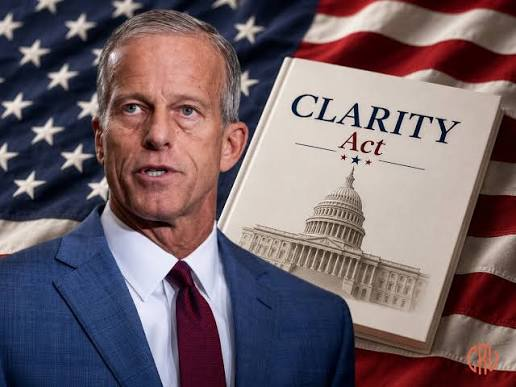
The reason this matters has little to do with near-term prices. The dispute is about regulatory trajectory. If the window closes, the boundary between SEC and CFTC jurisdiction over digital assets continues to be drawn through enforcement and case-by-case determination rather than statute. CoinDesk noted that after the Senate returns in September it must also handle government funding, with only 14 working days across September and October before the chamber breaks again for the final stretch of the midterm campaign.
One distinction needs to be established up front: the vote that may happen this week would not pass the bill. It would decide whether debate can begin at all. That difference governs how every headline over the next few days should be read.
Key Takeaways
The House passed the bill on July 17, 2025 by 294 votes to 134, with more than 70 Democrats voting in favour.
The Senate Banking Committee advanced it 15 to 9 on May 14, 2026, and it was placed on the Senate Legislative Calendar as Calendar No. 423 on June 1.
A merged 616-page text was released on July 22, with Senator Lummis submitting a version combining the Banking and Agriculture Committee drafts.
Majority Leader John Thune said on August 3 that a floor vote would happen before recess, but as of this writing no cloture motion has been filed and the bill is not on the agenda.
Under Senate procedure a motion must ripen for a full calendar day before a vote, which made Wednesday night effectively the last moment to file if the chamber leaves on August 7.
Cloture requires 60 votes. Republicans hold 53 seats, meaning at least seven Democrats must join.
Senate Democrats have coalesced around three conditions: ethics, illicit finance and stablecoin yield. Punchbowl News reporter Brendan Pedersen reported on August 4 that without movement on those, a cloture vote this week would fail.
Prediction markets and research desks have converged on roughly a one-in-three probability of 2026 passage.
Two Days Left and the Procedural Clock Is Nearly Out
The Senate Has Other Business
Understanding the odds requires looking at what else is queued. CoinDesk reported that alongside this bill the Senate is contending with Todd Blanche's nomination as Attorney General, a continuing resolution to fund the federal government, a Russia sanctions bill and possibly a college sports bill. Crypto legislation sits behind those items, not ahead of them.
One detail cuts the other way. Thune has already filed cloture on the college sports bill led by Senator Ted Cruz but has not yet invoked it, which CoinDesk reported an industry source reading as leaving him enough room to file on the market structure bill and still move through a vote.
Wednesday Night Was the Procedural Hinge
Senate rules leave the calendar with little give. CoinDesk's analysis noted that if the Senate does leave town on Friday, Wednesday night was essentially the final moment for Thune to file for cloture, because the motion must ripen for a full day before a first procedural vote can occur.
That inference carries a condition, though. Thune could also announce on Thursday that the Senate will keep working into the weekend or into next week, which would reopen the timeline. CoinDesk flagged a specific read on this: it is increasingly looking like the Senate will stay a few more days, given that Blanche's nomination is still pending.
The accurate formulation is therefore that no cloture news on Wednesday night does not necessarily mean the bill is finished. It may simply mean no news. That ambiguity is the defining feature of the current situation.
Why Cloture Is the Whole Ballgame
What Rule XXII Requires
Senate Rule XXII requires 16 senators' signatures to file a cloture motion and three-fifths of senators duly chosen and sworn, meaning 60 votes in a full chamber, to end debate. The threshold exists to stop indefinite debate, commonly known as the filibuster.
There is a further layer of procedure. Even if cloture is invoked, the rules allow up to 30 hours on the motion to proceed before that vote, after which the bill still requires consideration and passage and could face a second cloture hurdle. A vote this week, if it happens, would be step one rather than the finish line.
A less-discussed accelerated route also exists. Senate rules provide a bipartisan petition mechanism whose 16 signers must include both leaders, seven additional senators not affiliated with the majority and seven not affiliated with the minority, under which the cloture question is put one hour after the chamber meets on the next calendar day. That path demands a higher degree of cross-party cooperation, and no public information indicates it is being used.
Where the 60 Votes Would Come From
The arithmetic is plain. Republicans hold 53 seats, seven short of the threshold, so even a unified Republican caucus needs at least seven Democrats. Committee behaviour suggests two are already there in Ruben Gallego and Angela Alsobrooks. The gap sits in the remaining seats.
The signals running the other way are equally clear. In mid-July, Senators Chris Murphy, Chris Van Hollen and Jeff Merkley formally opposed the bill after the merged draft dropped an ethics provision Democrats had treated as a condition. Those three are not only three votes against; they set a reference point for other members of the caucus.
What Democrats Are Actually Demanding
The Ethics Provision and the White House Review
Ethics is the condition closest to a breakthrough. CoinDesk reported that Senators Thom Tillis and Ruben Gallego sent a proposal on ethics language to the White House last week and that the administration is still considering it. Tillis told reporters on Wednesday that the White House had begun to engage with the proposal, as relayed by Punchbowl News reporter Brendan Pedersen.
The provision aims to block senior government officials, including the president, from profiting off the crypto industry. Over the same period Senator Elizabeth Warren asked the SEC to investigate Trump, and
CoinDesk's report on that development tied the bill's stalling directly to the ethics dispute.
Status matters here. That the White House has begun engaging comes from a senator's statement to reporters relayed through the press, which places it in the category of credibly reported but not officially confirmed. Whether the administration accepts, amends or rejects the proposal has no official resolution.
Illicit Finance and Stablecoin Yield Remain Open
Beyond ethics, the other two conditions show no clear movement.
Cryptonews, citing Brendan Pedersen's August 4 reporting, described a clear consensus among Senate Democrats that without movement on ethics, illicit finance and stablecoin yield, a cloture vote this week would fail, adding that industry spending has stopped moving them at this stage.
CoinDesk likewise confirmed that provisions on illicit finance and agriculture issues are still under discussion, per a legislative staffer. That same person said that if the outstanding issues get sorted through, the bill would easily have a chance at passage in September.
That is worth holding onto. The current resistance is about the content of specific provisions rather than principled opposition to legislating at all, which makes failure this week a different kind of event than it might appear.
Why the Market Has Barely Reacted
Price action shows almost no trace of this fight. CoinDesk's August 6 market coverage reported bitcoin steady above $64,000, with traders focused on a roughly $100 billion SpaceX unlock rather than on procedural manoeuvres in the Capitol.
The disconnect is defensible. Whether or not the bill advances this week, no existing exchange, token or stablecoin faces immediate legal jeopardy. What shifts is the regulatory trajectory, not present-day compliance status. For venues operating across jurisdictions, including globally focused exchanges such as
MEXC, the near-term effect runs through US product planning timelines rather than the legality of existing operations.
What does get affected is time cost. If the window closes, the realistic timeline for comprehensive market structure legislation slips, and jurisdictional boundaries continue to be set through enforcement in the interim. For institutions that plan on multi-year horizons, that uncertainty accumulates continuously. It simply never shows up on a daily chart.
Four Possible Paths and What Comes Next
The first path is a successful procedural vote this week. Thune files Wednesday night, the Senate clears its other priorities by Friday, holds the first procedural vote Friday evening and secures 60 votes. CoinDesk noted that if this succeeds the Senate breaks and returns in September with the industry hoping for relatively smooth passage on the remaining votes.
The second is a vote that fails. CoinDesk's assessment is that if the vote fails, the bill probably goes nowhere until after the election, with outcomes from there depending on whether the House or Senate flips and on each party's margins.
The third is an extended session. CoinDesk noted that with Blanche's nomination still pending, the Senate staying a few more days is increasingly likely, which would create room to work through the outstanding provisions and at minimum reach a first procedural vote.
The fourth is no action this week and a return to the bill in September. CoinDesk pointed out that the Senate will also face government funding then, with only 14 working days across September and October, making passage difficult absent senators agreeing to push it through, though not impossible.
The concrete signals to watch are whether Thune files cloture, whether the Senate announces an extended session, how the White House formally responds to the Tillis and Gallego ethics proposal, and whether the illicit finance and agriculture provisions change at the text level.
Risks and the Status of Each Claim
On a legislative story moving this fast, sorting information by confirmation status matters more than reaching a conclusion.
Officially confirmed: the July 17, 2025 House vote result, the May 14, 2026 Senate Banking Committee vote, the bill's placement on the Senate Legislative Calendar, and Rule XXII's signature and vote thresholds.
Credibly reported but not officially documented: Thune's statement about holding a vote before recess, the White House engaging with the ethics proposal, the assessment that the Senate may extend its session, and the state of consensus inside the Democratic caucus.
Estimates and market pricing: the passage probabilities published by prediction markets and research desks. These reflect participant expectations rather than evidence about outcomes, and they move quickly during news-dense periods.
To be explicit: as of this writing there is no official record of a cloture motion having been filed. Any claim that a vote time has been fixed should be treated as unconfirmed until the Senate says so formally.
Exclusive View from James Mitchell
What actually matters here is not whether a vote happens this week but the nature of the resistance. Three specific provisions are blocking the bill, covering ethics, illicit finance and stablecoin yield, rather than opposition to writing market structure rules at all. The legislative staffer cited by CoinDesk said plainly that the bill would easily have a chance at passage in September if the outstanding items get resolved. That means the deadlock is technically solvable and the binding constraint is time rather than principle. Reading a closed window as a reversal in legislative direction misreads the situation.
Two further misreadings look likely. The first is treating a procedural vote as passage. Cloture only settles whether debate can begin; even if invoked, up to 30 hours on the motion, substantive consideration and a possible second cloture threshold all still lie ahead. Pricing a "Senate votes" headline as though the bill has passed will cost money in the weeks that follow. The second is overstating this story's weight on near-term prices. Bitcoin held above $64,000 on August 6 with attention on the SpaceX unlock, and that contrast is itself the ranking.
What deserves attention next is not the probability number but three verifiable events: whether a cloture motion is formally filed, whether the Senate announces an extended session, and whether the White House gives a clear answer on the ethics proposal. Each of those leaves a public record and can be checked. Prediction market quotes are simply advance pricing of those same facts. In event-driven markets, separating verifiable facts from the pricing of those facts is the first step in risk control, especially during a window where the picture can reverse within hours.
The cross-asset lesson is that regulatory clarity tends to be undervalued in its absence and overvalued on arrival. The cost of unclear jurisdiction is continuous and diffuse, showing up as delayed product launches, higher compliance spending and institutional capital waiting on the sidelines, none of which concentrates into any single day's price. When legislation finally lands, markets tend to compress a long-run effect into a one-off reaction. The more durable approach is to fold this kind of progress into a medium-term view of industry structure and capital access routes rather than treating it as a directional short-term signal. Position sizing matters more than directional conviction in a window like this one, because the outcome is binary while the timing is not knowable.
This analysis rests on reporting and procedural rules available as of publication. The Senate's schedule, the provision negotiations and the White House's posture could all change quickly, and no single scenario should be treated as a fixed expectation.
FAQ
What is the CLARITY Act?
The Digital Asset Market Clarity Act (H.R. 3633) is the furthest-advanced crypto market structure legislation in US history. Its core purpose is to divide jurisdiction over digital assets between the SEC and the CFTC and to establish statutory rules for exchanges, issuers and intermediaries. The House passed it 294 to 134 on July 17, 2025, the Senate Banking Committee advanced it 15 to 9 on May 14, 2026, and it was placed on the Senate Legislative Calendar on June 1.
What is cloture and why does it decide everything?
Cloture is the Senate's procedural mechanism for ending debate so a measure can move forward. Under Rule XXII a motion requires 16 senators' signatures to file and three-fifths of senators duly chosen and sworn to invoke, meaning 60 votes in a full chamber. Without it, a minority can block a bill from reaching a substantive vote through indefinite debate. In practice, whether 60 votes exist usually matters more than how many senators support the bill on the merits.
Why are seven Democratic votes needed?
Republicans currently hold 53 seats, seven short of the 60-vote threshold. Even with complete Republican unity, at least seven Democrats must join. Committee behaviour indicates Ruben Gallego and Angela Alsobrooks are supportive. Working against that, Senators Chris Murphy, Chris Van Hollen and Jeff Merkley declared opposition in mid-July after the merged text dropped an ethics provision, leaving the gap unresolved.
What exactly do Democrats want?
Three conditions have consolidated: ethics, illicit finance provisions and stablecoin yield. The ethics piece centres on barring senior officials including the president from profiting off the crypto industry, and Senators Tillis and Gallego have sent a proposal to the White House. Illicit finance and agriculture provisions remain under negotiation. Punchbowl News reporting on August 4 described a caucus consensus that a cloture vote this week fails without movement on all three.
If there is no vote this week, is the bill dead?
No. It remains on the Senate Legislative Calendar and can be taken up after the September return. The difficulty rises, because the Senate must also handle government funding and has only 14 working days across September and October before the midterm campaign's final stretch. CoinDesk cited a legislative staffer saying the bill would have a real chance in September if the outstanding provisions get resolved.
Would a successful vote mean the bill becomes law?
No. Any vote this week would be procedural, deciding only whether debate can begin. Even if cloture is invoked, the rules allow up to 30 hours before the next step, after which substantive consideration, a passage vote and a possible second cloture threshold remain. Reconciliation with the House version and a presidential signature would follow. Treating a procedural vote as legislative completion is the most common error at this stage.
Does this directly affect crypto prices?
There is no visible immediate effect. CoinDesk's August 6 coverage reported bitcoin steady above $64,000 with attention on a roughly $100 billion SpaceX unlock. Whether or not the bill advances this week, existing exchanges, tokens and stablecoins face no immediate legal jeopardy; what changes is the regulatory trajectory. The impact runs through institutional planning and product timelines rather than through today's price.
Which specific signals should be tracked next?
Four events are verifiable. First, whether a cloture motion is formally filed, since nothing else starts the clock. Second, whether the Senate announces an extended session, which looks increasingly plausible with the Attorney General nomination pending. Third, whether the White House gives a formal response to the Tillis and Gallego ethics proposal. Fourth, whether the illicit finance and agriculture provisions change at the text level. Each leaves a public record.
Disclaimer
This article is provided for informational and research purposes only and does not constitute investment advice, financial advice, legal advice, tax advice or any recommendation to transact. The legislative developments, procedural rules and statements described here reflect public reporting available at the time of writing on a fast-moving story; official congressional records and formal announcements are the authoritative sources, and some information has been credibly reported without official confirmation, which the text notes where applicable. Prices of crypto assets, equities and other related financial instruments can move sharply over short periods, and investors may lose their entire principal. Historical performance, technical indicators and on-chain data cannot guarantee future outcomes and should not be read as a promise or forecast regarding any asset. Prediction market quotes reflect participant expectations and are not evidence about legislative outcomes. Readers should conduct their own independent research, verify official information directly, and evaluate any decision against their own financial circumstances, investment objectives, experience and risk tolerance, consulting a qualified professional adviser where appropriate. The MEXC Crypto Pulse team accepts no liability for any direct or indirect loss arising from use of or reliance on the information in this article.
About the Author
James Mitchell specializes in technical analysis, market trends, and trading strategies for both Bitcoin and altcoins. Based in London, he has over 10 years of experience in financial markets. Before joining MEXC Learn, James worked as a senior analyst at a leading European investment firm, where he developed expertise in risk management and quantitative trading. His transition to cryptocurrency markets began in 2017, and he has since become recognized for his data-driven approach. He holds a Master's degree in Financial Economics from the London School of Economics. His analytical approach combines traditional technical analysis with on-chain metrics to provide readers with actionable insights.
Areas of Expertise:
Research References