

👨🏿🚀TechCabal Daily – FoodCourt pauses operations
Good morning.
Happy new week, if you insist. Did I finish The Legend of Vox Machina? No. Instead, I spent the weekend emotionally invested in season 12 of a 1990s medical drama. Somebody hand me a scalpel. I have opinions now.
You know that friend who can’t keep a secret to save their life? That’s Amazon Leo. Every few weeks, it pops up to remind everyone how many satellites it has launched—now over 390 after another batch of 29 last week. Chris Weber, VP of Amazon Leo Business, said the satellite Internet service will launch this year, but didn’t specify what markets would get first dibs (spoiler: it’s likely the United States).
Is it good or bad? Well, Starlink has spent long enough hogging the satellite Internet spotlight to itself. A little competition never hurt anyone, except perhaps Starlink’s pricing power.
—Zia
Get smarter about Francophone Africa with our newsletter, Francophone Weekly—the startups, tech policies, and institutions building the pipelines for ecosystem growth.
- FoodCourt pauses operations
- Nigeria expands its crypto sandbox
- Kenyan government loses ‘block first’ powers
- South Africa eyes AI campaign labels
- World Wide Web 3
- Job Openings
Food Delivery
No more food for FoodCourt customers
 Image Source: TechCabal
If you were a FoodCourt customer in Lagos in early March and suddenly couldn’t place an order, you weren’t imagining things. The app didn’t crash. It was switched off, deliberately, because the people cooking the food had stopped showing up. They hadn’t been paid in months.
Explain like I’m new here: FoodCourt wasn’t a delivery app in the Uber Eats mould. It owned the kitchens, cooked the food, packed the orders, and handled delivery under several virtual restaurant brands. The model gave it more control and, in theory, better margins. In 2024, CEO Henry Nneji told TechCabal the business was profitable and generating $4.3 million in annual recurring revenue.
Two years later, a financial strain that started before March was visibly affecting the business.
What happened? Things unravelled quickly. Kitchen staff missed their February salaries. Workers at FoodCourt’s kitchen in Lekki, Lagos, went on strike in March. The company shut down all three locations in Lagos and Abuja, Nigeria, while waiting for a funding facility, which it said was close to being finalised. It never came. By April 19, the last kitchen had closed, and the app went offline.
Who loses? Employees are still owed salaries. Suppliers are chasing unpaid invoices. Delivery riders have lost a source of income. Investors, including Future Africa, are now trying to restructure the business.
Zoom out: FoodCourt’s collapse is another reminder that running a cloud kitchen means owning every expensive part of the food business: kitchens, staff, inventory, and logistics. That can work when growth is strong. When funding dries up, and costs keep rising, there’s nowhere to hide.
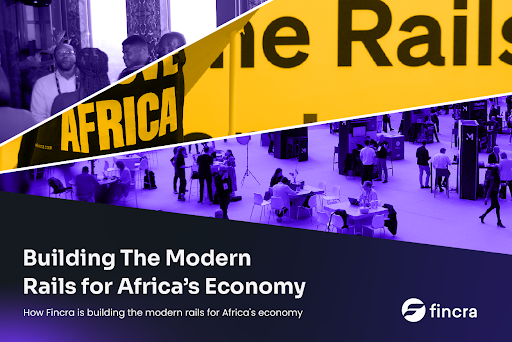
Modern Rails for Africa’s Economy: How Fincra is helping businesses collect, pay out, convert, and settle across African markets. Read more here.
Regulation
Nigeria has admitted nine more companies into its regulatory sandbox
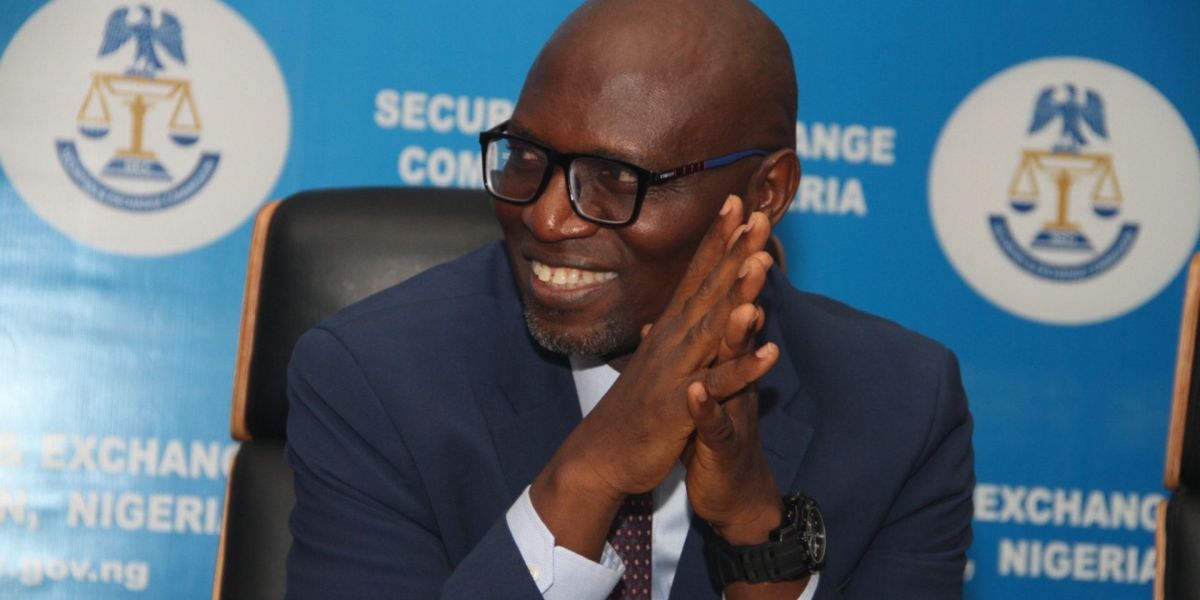 Dr. Emomotimi Agama, Nigeria’s SEC Director General. Image Source: Regtech Africa
In June 2024, Nigeria’s Securities and Exchange Commission (SEC) launched the Accelerated Regulatory Incubation Programme (ARIP), a regulatory sandbox for virtual asset companies. This came shortly after the Central Bank of Nigeria (CBN) had lifted its ban on banks working with crypto firms in December 2023, a restriction that had been in place since 2021.
One month after ARIP launched, crypto startups Busha and Quidax became its first entrants.
It felt like the beginning of something. Instead, almost two years passed with little to show for it. The two companies never graduated to full licences, and no new firms were admitted.
Then, in 48 hours, everything changed. On July 2 and 3, the SEC admitted nine companies into ARIP. The first batch included Luno, GetEquity, Koinkoin, WrappedCBDC, Trovotech, Blockvault, and Bitbarter. A second batch, admitted on Friday, included GIGX Technologies and KuCoin.
Why the SEC is moving now: Nigeria’s crypto market has become too big to leave in regulatory limbo. The country received about $92.1 billion in crypto value between July 2024 and June 2025, making it one of the world’s largest crypto markets. Yet, participation in the country’s capital markets remains relatively low.
SEC Director-General Emomotimi Agama told Bloomberg in October 2025 that while millions of Nigerians are willing to take financial risks through gambling and cryptocurrencies, fewer than three million invest in the capital market.
“An appetite for risk clearly exists,” he said, “but not the trust or access to channel that energy into the productive sector.”
ARIP is part of the regulator’s attempt to bring that appetite inside the rulebook.
Regulators have become alert to the volume of these digital currencies, including stablecoins, that pass through informal channels. The CBN, in its Payments System Vision 2028, proposed a licencing framework for stablecoin issuers. The SEC, overseeing securities-like virtual assets, will regulate companies that facilitate adoption in the country.
Zoom out: Getting into ARIP is like receiving a learner’s permit, not a driver’s licence. The bigger question is whether Nigeria’s regulators can move as quickly as the market they’re trying to regulate. Busha and Quidax have spent almost two years waiting to graduate. If this latest batch moves through faster, the SEC won’t just have approved nine more companies. It will have shown that its regulatory pipeline finally works.
Naira Life 2026 is here!

The theme for this year’s Naira Life Conference by Zikoko is “All About Wealth.”
Join 2,000+ in Lagos on August 22 for a day of practical money conversations and workshops designed to move you from simply earning an income to building lasting wealth. Get 15% off early bird tickets.
Regulation
Kenya’s government can’t block websites on its own anymore
 Image Source: Tenor
Governments love emergency powers. Courts, every so often, ask them to slow down. Kenya’s High Court has just done exactly that.
What happened: The court struck down part of Kenya’s cybercrime law that allowed government authorities to order Internet service providers to block websites and online applications without first getting a judge’s approval.
Explain like I’m new here: Kenya expanded its cybercrime law in October 2025 to tackle phishing, SIM-swap fraud, online scams, and extremist content. One new provision gave the National Computer and Cybercrimes Coordination Committee (NC4), the agency that oversees Kenya’s national cybersecurity, the power to tell Internet providers to block websites it believed promoted unlawful activity, religious extremism, or cultism. No judge needed. The High Court has now ruled that it was one step too far, saying it created broad censorship powers with too few safeguards.
Why did Kenya create the law in the first place? Kenya wasn’t trying to solve a made-up problem. Online fraud, phishing, SIM-swap scams, and extremist content have all become more common, prompting the government to strengthen its 2018 cybercrime law. The website-blocking provision was created to allow authorities to move quickly against malicious sites without waiting for a court order.
Why this became controversial: Kenya has spent the last few years wrestling with where legitimate online regulation ends and censorship begins. Civil society groups, journalists, and digital rights advocates warned that giving a government committee the power to decide what disappears from the Internet, without judicial oversight, risked silencing lawful speech alongside genuinely harmful content. The court agreed.
Why should you care? Kenya can still block websites. It just has to convince a court first. Cybercrime and digitally-enabled incitement remain headaches for Kenya, and governments need tools to fight them. But so do courts when governments ask for extraordinary powers. This ruling draws the line where one institution stops and another begins.
Showcase Your Brand at Moonshot by TechCabal

Founders. Investors. Policymakers. Enterprise leaders. Moonshot 2026 brings together the people shaping Africa’s technology ecosystem across AI, commerce, climate, enterprise, and culture. Spotlight your brand today.
AI
South Africa wants to clean up election campaigns online
 Image Source: Tenor
AI now poses serious misinformation threats, and South Africa wants to prevent that risk. It wants campaigning parties to be the adults in the room.
What’s happening: The country’s Independent Electoral Commission (IEC), the body that conducts elections, has proposed a new code of conduct that tells political parties how they should behave online ahead of the 2026 local government elections.
Explain like I’m new here: If the proposal becomes law, political parties would have to clearly label campaign adverts, identify AI-generated campaign material, and avoid using bots and fake accounts to spread political messages. Political parties should also report election-related misinformation within 72 hours of discovering it. Political adverts would also need to identify who paid for or published them.
South Africa’s municipal elections, happening in November 2026, will likely be the testbed for the country’s AI-curtailed campaign rules.
Why is this important? The IEC says false information can spread quickly through social media and other digital platforms, influencing voters before anyone has time to verify what’s true. Instead of focusing only on taking misleading content down, the proposal also makes political parties responsible for what happens on their own online platforms.
Why should you care? Whether you’re interested in politics or not, election misinformation has a habit of finding you anyway. At least this time, it’ll be easier to tell who is behind political messages and when AI is doing the talking.
CRYPTO TRACKER
The World Wide Web3
Source:

|
Coin Name |
Current Value |
Day |
Month |
|---|---|---|---|
| Bitcoin | $61,660 |
+ 1.60% |
– 7.68% |
| Ether | $1,714 |
+ 5.22% |
– 7.86% |
| XRP | $1.09 |
+ 3.24% |
– 10.52% |
| Solana | $80.88 |
+ 3.72% |
+ 8.88% |
* Data as of 06.50 AM WAT, July 6, 2026.
JOB OPENINGS
- Kredete —Blockchain Engineer — Lagos, Nigeria
- BBC — Video Journalist, BBC News Igbo — Lagos, Nigeria
- Bank of Taiwan, South Africa —Chief Risk Officer — Gauteng, South Africa
- M-KOPA — Group Tax Manager, Finance Business Partnering Manager — Nairobi, Kenya
Looking for more opportunities? There are additional openings on TechCabal’s job board. We’ve also cleared out outdated listings to keep opportunities fresh for job seekers. If you’re hiring and would like to feature an open role, please submit it via this form.
- Digital Nomads: The AI engineer who left Nigeria for Germany and quadrupled his income
- India is testing an alternative to Silicon Valley’s AI playbook
Written by: Opeyemi Kareem and Zia Yusuf
Edited by: Emmanuel Nwosu & Ganiu Oloruntade
Want more of TechCabal?
Sign up for our insightful newsletters on the business and economy of tech in Africa.
- The Next Wave: futuristic analysis of the business of tech in Africa.
- Francophone Weekly by TechCabal: insider insights and analysis of Francophone’s tech ecosystem
P:S If you’re often missing TC Daily in your inbox, check your Promotions folder and move any edition of TC Daily from “Promotions” to your “Main” or “Primary” folder and TC Daily will always come to you.



You May Also Like

Dow Jones Industrial Average Flirts With Historic Milestone Before Pulling Back

Was Michael Burry Right About Palantir? PLTR Is Still Down Over the Past Year
MAGA melts down as Bruce Springsteen torches Trump in new interview: 'He is a coward'



