

Bitcoin Allocation Faces A 2% Limit With A Hidden Market Twist
Bitcoin allocation has become one of Wall Street’s hottest discussions, but BlackRock’s latest guidance reveals a hidden challenge behind institutional adoption. While a 1% to 2% allocation may encourage more investors to enter the market, it could also force financial advisors to reduce Bitcoin exposure when prices climb sharply, creating a new source of selling pressure during future bull runs.
According to the source, BlackRock Investment Institute considers a Bitcoin allocation of 1% to 2% appropriate for diversified portfolios if investors believe Bitcoin adoption will continue and can tolerate its volatility. Rather than focusing on potential returns, the firm bases its recommendation on Bitcoin’s contribution to overall portfolio risk, making risk management the foundation of its strategy.
Why Bitcoin Allocation Stops at 2%
BlackRock’s research shows why Bitcoin allocation remains conservative. In a traditional 60/40 portfolio, a 1% Bitcoin allocation contributes roughly 2% of total portfolio risk. Raising exposure to 2% increases that figure to about 5%, while a 4% allocation pushes portfolio risk close to 14%. Because Bitcoin’s volatility grows much faster than its portfolio weight, BlackRock treats 2% as the practical upper limit instead of a return target.
That ceiling becomes important when Bitcoin rallies. A 2% Bitcoin allocation grows to about 3% after a 51.5% price increase if other assets remain flat. A gain of roughly 104% lifts it near 4%, leaving advisors to trim positions, hedge exposure, allow temporary drift, or shift allocations elsewhere to restore portfolio balance.
Institutional Growth Could Shape Future Market Cycles
The discussion carries greater weight because BlackRock’s IBIT has accumulated nearly $60 billion in net inflows. At that scale, portfolio decisions made by advisors could begin influencing Bitcoin’s broader market behavior rather than affecting only individual investors.
Meanwhile, Citi recently lowered its 12 month Bitcoin price target from $112,000 to $82,000 after reducing its expected Bitcoin ETF inflows from $10 billion to zero. Supporting that cautious outlook, Farside Investors reported more than $2.7 billion in net outflows from U.S. spot Bitcoin ETF products over ten trading days through early July, reflecting weaker institutional demand.
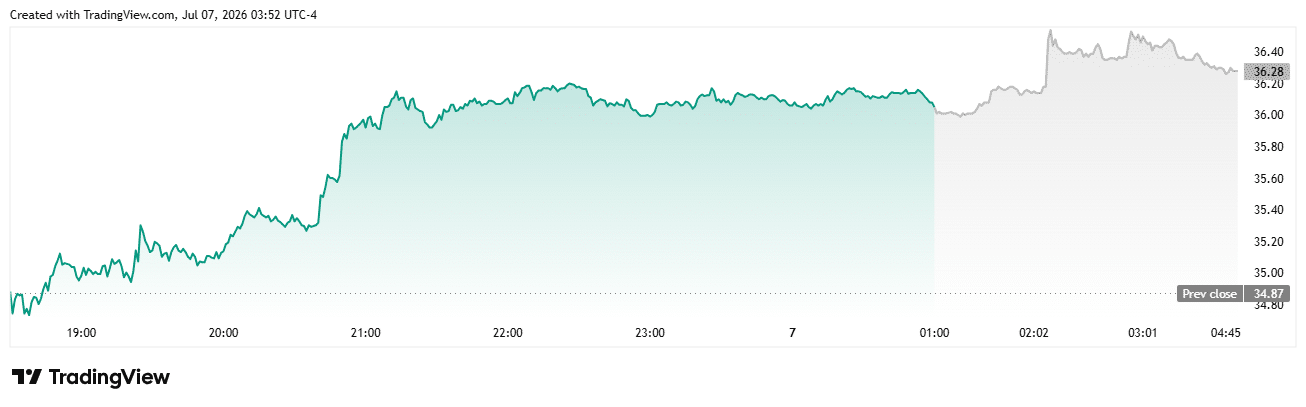 Source: Tradingview
Experts Say Selling Is Only One Option
Mauricio Di Bartolomeo, Co-founder and Chief Strategy Officer of Ledn, argues that many companies, households, Latin American Bitcoin communities, and even first-home buyers increasingly borrow against Bitcoin instead of selling it.
He noted that responsible borrowers have often preserved more long term wealth than those who sold their holdings outright. However, he advises maintaining collateral equal to at least 100% of the loan value and avoiding borrowing against more than half of a Bitcoin portfolio to withstand market swings.
Kelly Ye, Co-founder and Chief Investment Officer of CoinBridge, believes fears of widespread forced selling may be premature. Citing Morgan Stanley data, she said nearly 80% of Bitcoin ETF activity remains self directed, while only about 20% comes through advisors. She also explained that large wealth managers usually require six to twelve months of performance history, compliance checks, and operational reviews before adding a new Bitcoin ETF to model portfolios.
Instead of selling, advisors can widen rebalancing bands, use new client cash flows, move holdings into retirement accounts such as IRAs or Roth IRAs, or rely on options strategies. Glassnode estimates the average Bitcoin ETF holder’s cost basis is around $83,000, meaning many investors would still be sitting on unrealized losses. At the same time, the options market continues expanding.
The OCC reported 689.5 million ETF options contracts traded in June, up 69.7% year over year, while Kaiko and MerQube data showed IBIT options open interest reached $53.3 billion. Goldman Sachs has also filed for a Bitcoin ETF designed to combine Bitcoin exposure with options income.
Conclusion
The future of Bitcoin allocation may depend on how advisors respond when prices surge. If firms adopt wider rebalancing bands and flexible portfolio management, Bitcoin could continue compounding with limited selling. However, if narrow allocation limits become standard, every major rally may trigger mechanical rebalancing and recurring supply.
Bitwise estimates assets following third party model portfolios grew from $400 billion in 2023 to more than $645 billion in 2025, showing how influential these decisions could become. Combined with aggressive Bitcoin-backed borrowing, future market corrections could also trigger forced liquidations, adding another layer of downside risk. As institutional adoption expands, Bitcoin allocation is likely to become one of the strongest forces shaping Bitcoin’s next market cycle.
Glossary of Key Terms
Bitcoin Allocation: The percentage of an investment portfolio allocated to Bitcoin.
Bitcoin ETF: An exchange-traded fund that tracks Bitcoin’s price.
Portfolio Rebalancing: Adjusting investments to maintain target asset allocations.
IBIT: BlackRock’s spot Bitcoin ETF.
Options Overlay: An options strategy used to manage risk without selling the underlying asset.
FAQs About Bitcoin Allocation
Why does BlackRock recommend a 1%–2% Bitcoin allocation?
It aims to balance Bitcoin exposure while keeping overall portfolio risk under control.
Why might advisors sell Bitcoin during rallies?
A price surge can increase Bitcoin’s portfolio weight, prompting rebalancing.
Can advisors avoid selling Bitcoin?
Yes. They may use wider rebalancing bands, options, or new client cash instead.
Why is IBIT important?
Its large asset base means advisor decisions could increasingly influence the broader Bitcoin market.
Sources/References
CryptoSlate
BlackRock
Farside Investors
OCC
Read More: Bitcoin Allocation Faces A 2% Limit With A Hidden Market Twist">Bitcoin Allocation Faces A 2% Limit With A Hidden Market Twist


You May Also Like

Ethereum News: Vitalik Puzzle Solved, ETH UTXOs and Bitmine Updates

New SummerFi DeFi exploit shows AI automation now sits above smart contract risk

Medicare’s 2027 Part B Premium Is Projected to Push Past $215 a Month



