

Revolutionary Google AI Assistant CC Transforms Email Into Your Personal Productivity Hub
BitcoinWorld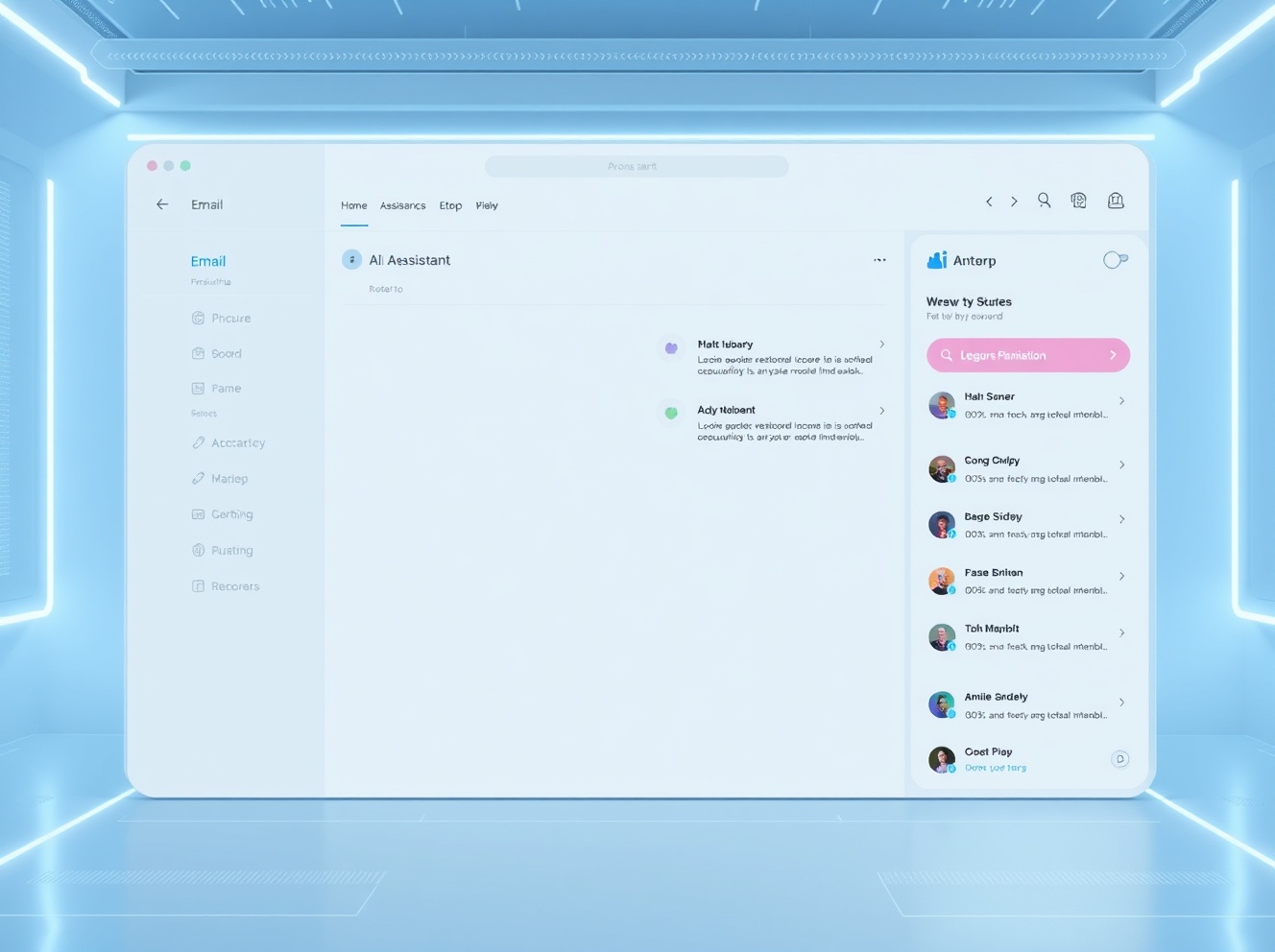
Revolutionary Google AI Assistant CC Transforms Email Into Your Personal Productivity Hub
In the relentless pursuit of efficiency, a new contender emerges from Silicon Valley’s labs. Google has quietly begun testing a potentially game-changing tool: an email-based productivity assistant named CC. Powered by its advanced Gemini AI, this experiment represents a significant push to embed artificial intelligence directly into the core of our daily digital communication—our inbox. For professionals and crypto enthusiasts drowning in notifications, calendar invites, and task lists, this could be the lifeline they’ve been waiting for.
What is Google’s New AI Assistant CC?
Announced as a Google Labs experiment, CC is an AI productivity assistant that operates primarily through your email. Its core function is to connect with your Google ecosystem—specifically Gmail, Google Drive, and Google Calendar—and synthesize the chaos into a single, actionable daily email called “Your Day Ahead.” Think of it as a hyper-intelligent, automated chief of staff that lives in your inbox.
The assistant’s current capabilities are focused on three key areas:
- Task Awareness: It scans your commitments and flags upcoming to-dos.
- Calendar Summarization: It provides a concise overview of your daily schedule.
- Key Updates: It surfaces important information from your connected accounts.
What makes CC interactive is its two-way communication. You can reply to its daily brief or email it directly with commands. You can ask it to add tasks, teach it your preferences (like which types of emails are most important), remember notes for you, or even search for information across your connected data.
How Does Gemini Power This Email Productivity Tool?
The brains behind CC is Google’s flagship Gemini AI model. This isn’t a simple rule-based filter; it’s a large language model designed to understand context, nuance, and user intent. By integrating with Gmail and Google Calendar, Gemini can process the unstructured data in your emails and appointments, identify patterns, and predict what information you need to start your day effectively.
This move is strategic. Productivity is a battleground where companies believe AI assistants can create “stickiness”—if they save users time, users will rely on them more. Google’s deep integration with its own suite gives CC a native advantage that third-party apps struggle to match.
| Feature | How CC Uses It |
|---|---|
| Gmail Integration | Reads emails to identify tasks, deadlines, and important communications. |
| Google Calendar Access | Summarizes meetings, appointments, and free blocks in your schedule. |
| Google Drive Connection | Can reference documents and files mentioned in your communications. |
| Gemini AI Processing | Understands natural language requests and provides contextual summaries. |
Who Can Access This Gmail Automation Assistant?
As with many high-profile experiments, access is initially limited. Currently, CC is available only to:
- Users with an AI Pro or AI Ultra Google subscription.
- Users located in the United States or Canada.
- Individuals aged 18 or above.
- Consumer Google accounts (it is explicitly not available for Google Workspace accounts at launch).
This staged rollout allows Google to gather data, refine the model, and scale the infrastructure before a potential wider release. The restriction to consumer accounts suggests Google is testing the waters for a premium, consumer-facing AI service, separate from its enterprise offerings.
Is a Daily Brief the Future of Work Management?
Google is not inventing the concept of an AI-powered daily brief. The market already has several players. Sequoia-backed Mindy, which has since pivoted to the creator economy, began as an email assistant. Meeting analytics tools like Read AI and Fireflies.ai send post-meeting summaries, though they may lack the deep integration with email and Drive that CC promises.
Perhaps the most interesting comparison is Huxe, an audio app from former Google NotebookLM creators. Huxe creates a personalized daily brief podcast using data from your email, calendar, and news preferences. This highlights a trend: the future of productivity is proactive, synthesized, and delivered in the format that suits you best—be it email, audio, or chat.
CC’s potential advantage lies in its seamless placement. For billions of users, Gmail is the first app they open in the morning. By placing the assistant there, Google removes friction and meets users where they already are.
What Are the Challenges and Considerations?
While promising, an AI with this level of access raises immediate questions:
- Privacy: Users must grant an AI broad access to read their emails, calendar, and files. Google will need to be transparent about data usage and security.
- Accuracy: Can Gemini consistently identify the “key updates” from the noise? An incorrect summary could cause a user to miss a critical deadline.
- Market Fit: Will users trust and consistently use an email-based assistant, or is it another feature that becomes background noise?
The success of CC will depend not just on its technical prowess, but on its ability to deliver undeniable, tangible value without becoming intrusive or overwhelming.
Conclusion: A Step Toward the Invisible Assistant
Google’s test of the CC assistant is more than just another app launch; it’s a vision of a future where AI doesn’t live in a separate tab or device, but is woven into the fabric of our most essential tools. By leveraging Gemini AI to power a Gmail automation hub, Google is betting that the path to superior productivity is through consolidation and context, not more fragmented apps. If successful, CC could transform the humble email inbox from a source of stress into a genuine command center for our digital lives. The experiment has begun, and its results could redefine how we interact with technology every single day.
To learn more about the latest AI trends and tools that are shaping the future of work and automation, explore our dedicated coverage on key developments in artificial intelligence and its growing integration into everyday platforms.
Frequently Asked Questions (FAQs)
What is Google’s CC assistant?
CC is an experimental, email-based AI productivity assistant from Google Labs. It connects to your Gmail, Google Drive, and Google Calendar to provide a synthesized “Your Day Ahead” daily brief and responds to user commands via email.
What AI model powers Google CC?
CC is powered by Google’s own Gemini AI model, which allows it to understand natural language and context from your connected accounts.
Who are some competitors in the AI daily brief space?
The space includes tools like Read AI and Fireflies.ai for meeting summaries, and apps like Huxe, created by former Google NotebookLM makers, which creates audio briefs. Sequoia Capital-backed Mindy also started as a similar email assistant.
Is CC available for Google Workspace (business) accounts?
No. At launch, Google has stated CC is only available for consumer Google accounts and is not yet available for Google Workspace accounts.
How can I get access to Google CC?
Currently, access is limited to AI Pro and AI Ultra subscribers in the U.S. and Canada who are 18 or older. It is being rolled out as a Google Labs experiment.
This post Revolutionary Google AI Assistant CC Transforms Email Into Your Personal Productivity Hub first appeared on BitcoinWorld.
You May Also Like

Born Again’ Season 3 Way Before Season 2

Unleashing A New Era Of Seller Empowerment
