

U.S. Government Enters Partial Shutdown After House Misses Funding Vote
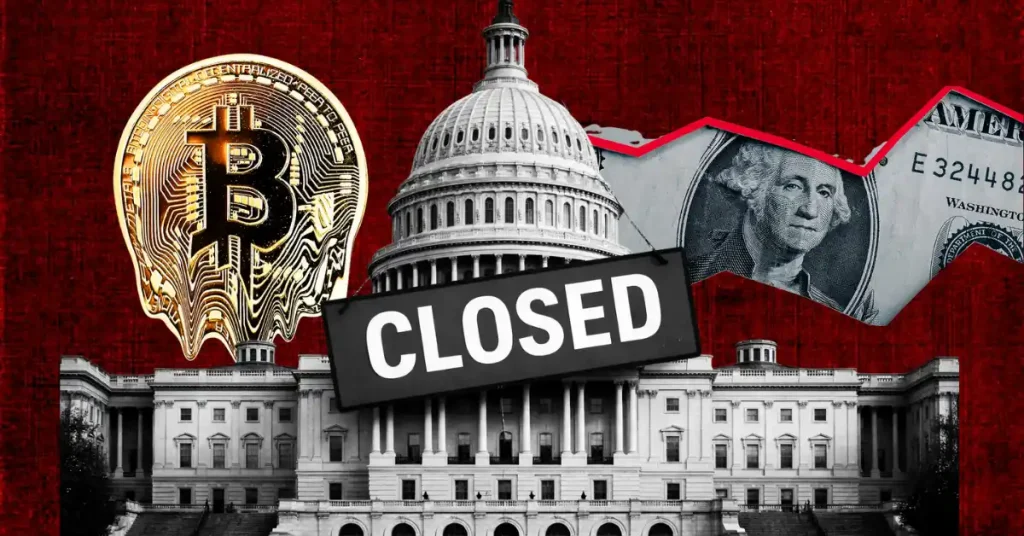
The post U.S. Government Enters Partial Shutdown After House Misses Funding Vote appeared first on Coinpedia Fintech News
The U.S. government has entered a partial shutdown after the House failed to vote on a Senate-approved spending bill before the funding deadline.
The shutdown began at midnight, has disrupted several federal agencies, affected government workers, and raised concerns across financial markets, including potential ripple effects on crypto sentiment.
U.S. Government Enters Partial Shutdown
According to official updates released late Friday, the U.S. Senate approved H.R. 7148 with a strong bipartisan vote of 71–29, aiming to fund most federal agencies through September 2026.
The bill combined 11 of the 12 annual spending measures to prevent a full government shutdown
However, the House began without voting on the legislation, leaving several departments without full funding. As a result, the funding lapse pushed the U.S. government into a partial shutdown rather than a complete shutdown.
Why Lawmakers Failed to Reach a Full Agreement
The funding dispute largely began from disagreements over immigration policy. Democrats refused to approve full-year DHS funding without limits on Immigration and Customs Enforcement deportations
To keep negotiations open, Senate leaders and the White House agreed to split DHS funding from the broader package.
The Office of Management and Budget confirmed it had begun preparations for a funding lapse, as the House is not expected to reconvene until February 2, 2026. Until lawmakers act, the shutdown is likely to last at least several days.
- Also Read :
- Why Bitcoin Is Falling Despite Progress on a US Government Shutdown Deal
- ,
Agencies Impacted by the Partial Shutdown
Due to the funding lapse, non-essential employees at departments including Homeland Security, Labor, Education, State, Justice, and Transportation face suspension or unpaid work.
Essential services such as national security, air traffic control, and emergency operations continue to function.
Fiscal conservatives also raised objections. Senators Rand Paul and Mike Lee opposed the bill, citing concerns over spending levels and earmarks. Meanwhile, Markwayne Mullin supported the measure, calling it a win backed by Donald Trump.
What the Shutdown Means for Markets and Crypto
Government shutdowns often raise concerns in the traditional and crypto markets. During the last full U.S. government shutdown, which lasted 43 days, Bitcoin dropped by 10% to 12%. Fast forward to the current partial shutdown, Bitcoin is trading near $83,789, but has so far moved less than 2% since the shutdown began.
Meanwhile, if the shutdown stretches longer, past data suggests Bitcoin could see increased volatility in the 5–10% range, especially if talks stall.
Never Miss a Beat in the Crypto World!
Stay ahead with breaking news, expert analysis, and real-time updates on the latest trends in Bitcoin, altcoins, DeFi, NFTs, and more.
 Subscribe to News
FAQs
The House failed to vote on a Senate-approved spending bill before the deadline, leaving several federal departments without funding.
The shutdown may last several days or longer, as lawmakers are not expected to reconvene until February 2, 2026.
Shutdowns can increase market uncertainty, often leading to higher Bitcoin volatility, especially if political negotiations drag on.
You May Also Like

US SEC: Currently operating in accordance with the operational plan during the US government shutdown.
Tether Reports $10B Profit in 2025, Expands with New USAT Stablecoin and Investments

