Taliban Makes Bold Economic Move Offers 10 Year Residency Permits to Foreign Investors
Taliban Announces Plan to Grant Long-Term Residency Permits to Foreign Investors
Afghanistan’s Taliban-led authorities have announced plans to offer residency permits lasting up to 10 years to foreign investors, a move aimed at attracting international capital as the country seeks economic stability amid ongoing isolation from much of the global financial system.
The development was first highlighted through information shared on X by BRICS News and later reviewed by the hokanews editorial team. While details of the policy remain limited, the announcement marks one of the most direct efforts yet by the Taliban administration to court foreign investment since returning to power in 2021.
 |
| Source: Xpost |
A Bid to Attract Capital
According to officials familiar with the plan, the proposed residency permits would allow foreign investors to live and operate in Afghanistan for extended periods, potentially up to a decade. Authorities believe long-term residency could provide greater certainty for investors considering projects in sectors such as mining, construction, agriculture, and energy.
Afghanistan is rich in natural resources, including minerals critical to global supply chains, but decades of conflict and political instability have hindered large-scale development. Taliban officials have repeatedly said foreign investment is essential to reviving the economy and creating jobs.
Economic Pressures Drive Policy Shift
Since taking control, the Taliban have faced severe economic challenges, including reduced international aid, frozen assets abroad, and limited access to global banking networks. Inflation, unemployment, and poverty remain widespread.
Analysts say the residency proposal reflects mounting pressure on the authorities to generate economic activity without traditional sources of foreign assistance.
“This is an attempt to offer something tangible to investors in the absence of international recognition,” said a regional political economist. “Long-term residency is meant to reduce uncertainty.”
How the Residency Plan May Work
While full details have not been released, the permits are expected to be tied to specific investment thresholds or approved projects. Similar programs in other countries typically require minimum capital commitments and compliance with local regulations.
It remains unclear which nationalities would be eligible, how security concerns would be addressed, or what legal protections investors would receive. Observers caution that the effectiveness of the policy will depend heavily on implementation and enforcement.
International Reaction Likely to Be Cautious
Global reaction to the announcement has so far been muted. Many governments and multinational corporations remain wary of engaging with the Taliban due to ongoing concerns over human rights, governance, and sanctions.
Legal experts note that sanctions regimes and compliance rules could limit the ability of foreign firms to invest, regardless of residency incentives.
“Residency alone doesn’t remove legal and reputational risks,” said a compliance specialist. “Those hurdles are significant.”
A Signal Rather Than a Breakthrough
Some analysts view the move less as an immediate game-changer and more as a signal of intent. By publicly advertising long-term residency for investors, the Taliban appear eager to present Afghanistan as open for business, even as practical barriers remain.
The policy also aligns with recent efforts by the authorities to engage regional partners and promote trade links, particularly with neighboring countries.
Media Confirmation and Reporting
The residency proposal was initially reported by BRICS News on X and later cited by hokanews as part of its coverage of geopolitical and economic developments. No formal decree or regulatory framework has yet been published, and officials have not provided a timeline for implementation.
What Comes Next
Attention will now turn to whether the Taliban formalize the policy through official channels and whether any foreign investors respond. Analysts say early interest, if any, is likely to come from smaller regional firms rather than major multinational corporations.
Until clearer legal guarantees and international engagement emerge, most observers expect foreign investment to remain limited.
Conclusion
The Taliban’s announcement that it will grant foreign investors residency permits of up to 10 years represents a notable attempt to stimulate Afghanistan’s struggling economy. While the proposal signals openness to investment, significant political, legal, and security challenges remain.
Confirmed through information shared by BRICS News and cited by hokanews, the move underscores how economic necessity is shaping policy decisions in Afghanistan, even as the country remains largely isolated from the global financial system.
hokanews.com – Not Just Crypto News. It’s Crypto Culture.
Writer @Ethan
Ethan Collins is a passionate crypto journalist and blockchain enthusiast, always on the hunt for the latest trends shaking up the digital finance world. With a knack for turning complex blockchain developments into engaging, easy-to-understand stories, he keeps readers ahead of the curve in the fast-paced crypto universe. Whether it’s Bitcoin, Ethereum, or emerging altcoins, Ethan dives deep into the markets to uncover insights, rumors, and opportunities that matter to crypto fans everywhere.
Disclaimer:
The articles on HOKANEWS are here to keep you updated on the latest buzz in crypto, tech, and beyond—but they’re not financial advice. We’re sharing info, trends, and insights, not telling you to buy, sell, or invest. Always do your own homework before making any money moves.
HOKANEWS isn’t responsible for any losses, gains, or chaos that might happen if you act on what you read here. Investment decisions should come from your own research—and, ideally, guidance from a qualified financial advisor. Remember: crypto and tech move fast, info changes in a blink, and while we aim for accuracy, we can’t promise it’s 100% complete or up-to-date.
You May Also Like

Hadron Labs Launches Bitcoin Summer on Neutron, Offering 5–10% BTC Yield
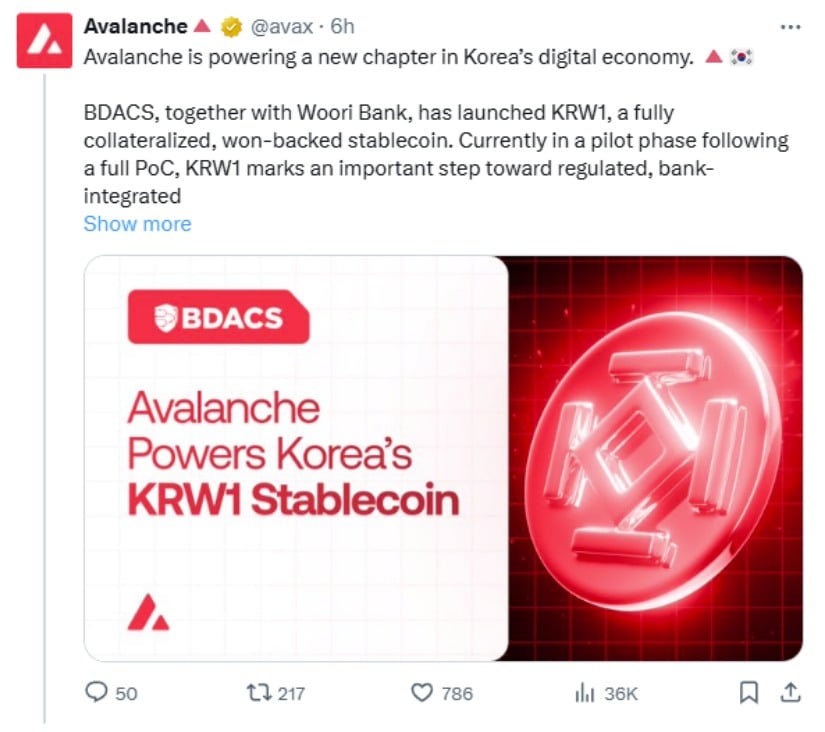
South Korea Launches First Won-Backed Stablecoin KRW1 on Avalanche