

UnitedHealth (UNH) Stock Slides as Analyst Cuts and Regulatory Pressure Mount
TLDR
- UNH opened at $277.32, down sharply from its 52-week high of $606.36
- Multiple analysts cut price targets — JPMorgan to $389, Truist to $370, UBS to $410
- Weiss Ratings downgraded UNH to a Sell rating in early March
- Q4 EPS of $2.11 narrowly beat estimates; revenue rose 12.3% to $113.73 billion
- MarketBeat consensus remains Moderate Buy with a $372.13 average target
UnitedHealth Group (UNH) has had a rough stretch. The stock opened at $277.32 on Monday, sitting well below both its 50-day moving average of $297.19 and its 200-day average of $324.39.
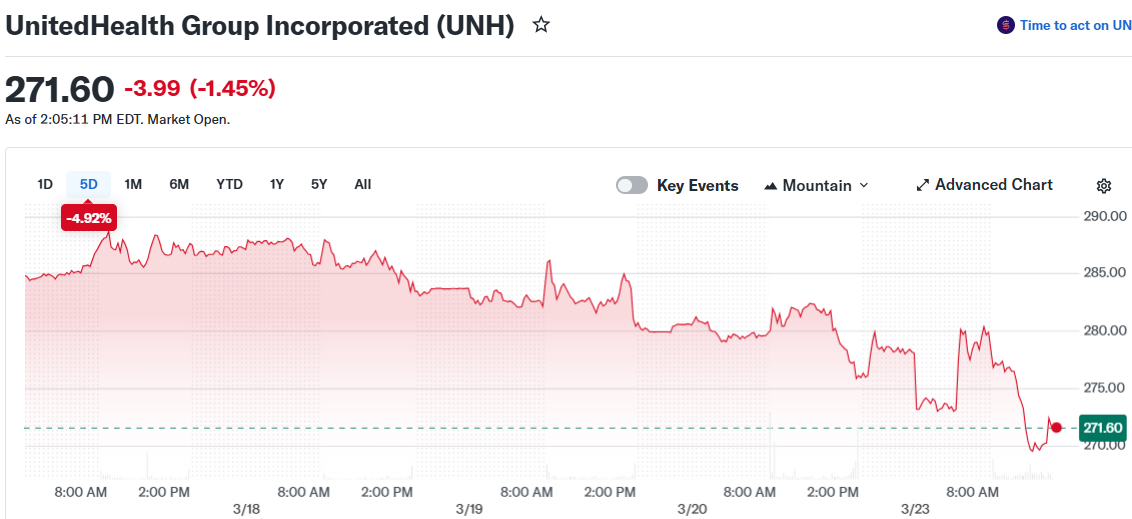 UnitedHealth Group Incorporated (UNH)
That’s a long way from the 52-week high of $606.36. The 52-week low sits at $234.60.
The company’s market cap currently stands at $251.71 billion, with a price-to-earnings ratio of 21.02 and a beta of 0.41.
UNH’s debt-to-equity ratio is 0.72, with current and quick ratios both at 0.79.
In January, the company reported Q4 earnings of $2.11 per share, just ahead of the $2.09 consensus estimate. Revenue came in at $113.73 billion, up 12.3% year-over-year and slightly above analyst expectations.
That said, the Q4 EPS number is a notable drop from the $6.81 reported in the same quarter a year earlier.
Analyst Price Target Cuts
Several major Wall Street firms have trimmed their price targets in recent months.
JPMorgan cut its target from $425 to $389, Morgan Stanley nudged it down from $411 to $409, and UBS lowered theirs from $430 to $410. Truist made the sharpest cut, going from $410 to $370. All four maintained Buy or Overweight ratings.
Weiss Ratings went a step further, downgrading UNH from Hold to Sell in early March.
The current MarketBeat consensus sits at Moderate Buy, with 17 Buy ratings, 8 Holds, and 2 Sells. The average 12-month price target is $372.13 — implying around 34% upside from current levels.
On the institutional side, there’s been notable activity. Wealth Enhancement Advisory Services cut its stake by 40.6% in Q4, selling 170,643 shares. Meanwhile, Norges Bank, Berkshire Hathaway, and Capital Research Global Investors all added or initiated positions in 2024. Institutions collectively own 87.86% of the stock.
Regulatory Headwinds Remain
DOJ scrutiny around Medicare Advantage reimbursement practices continues to weigh on sentiment. There has been at least one favorable legal development for the company in that case, but broader regulatory pressure on prior-authorization and coverage denial practices hasn’t gone away.
Management has previously announced plans to shed certain Medicare Advantage members and reprice products in response to the evolving cost environment.
The company provided FY2026 EPS guidance of approximately $17.75. Analysts on average expect full-year EPS of $29.54 for the current fiscal year.
UNH also paid a quarterly dividend of $2.21 per share on March 17, representing an annualized yield of roughly 3.2%. The payout ratio currently stands at 67.02%.
On the positive side, UnitedHealth recently announced a national expansion of its doula benefit program, which could support member retention and improve outcomes in its value-based care model.
The post UnitedHealth (UNH) Stock Slides as Analyst Cuts and Regulatory Pressure Mount appeared first on CoinCentral.
You May Also Like

US SEC approves options tied to Grayscale Digital Large Cap Fund and Cboe Bitcoin US ETF Index

Wormhole token soars following tokenomics overhaul, W reserve launch
Wormhole’s native token has had a tough time since launch, debuting at $1.66 before dropping significantly despite the general crypto market’s bull cycle. Wormhole, an interoperability protocol facilitating asset transfers between blockchains, announced updated tokenomics to its native Wormhole (W) token, including a token reserve and more yield for stakers. The changes could affect the protocol’s governance, as staked Wormhole tokens allocate voting power to delegates.According to a Wednesday announcement, three main changes are coming to the Wormhole token: a W reserve funded with protocol fees and revenue, a 4% base yield for staking with higher rewards for active ecosystem participants, and a change from bulk unlocks to biweekly unlocks.“The goal of Wormhole Contributors is to significantly expand the asset transfer and messaging volume that Wormhole facilitates over the next 1-2 years,” the protocol said. According to Wormhole, more tokens will be locked as adoption takes place and revenue filters back to the company.Read more

