

Claude Mac Remote Control: Can AI Really Control Your Computer from Your Phone?
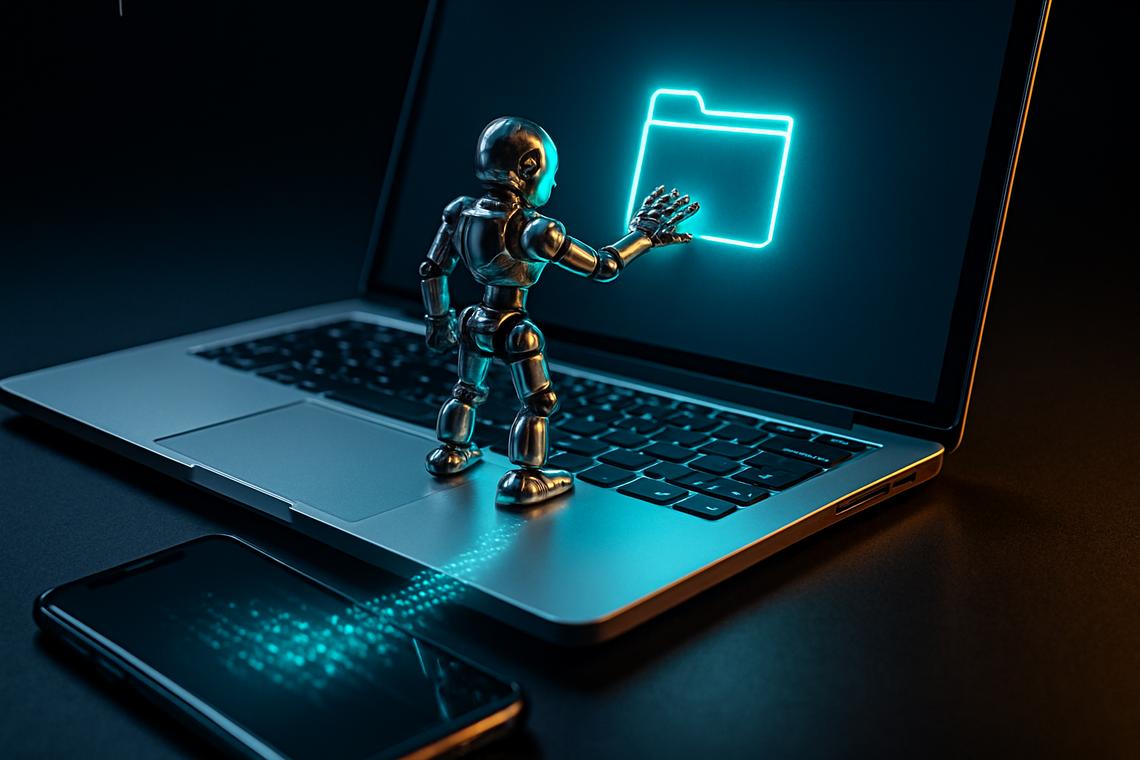
Anthropic is testing new ways for users to work across devices, with the latest Claude remote control feature drawing attention in the agentic AI race.
Anthropic launches desktop control for Claude on MacOS
Anthropic has introduced a new capability that allows its AI assistant Claude to operate users’ Mac computers remotely to complete tasks. The feature, announced on Monday, is currently available only to Claude Pro and Claude Max subscribers, underscoring the company’s push to differentiate its premium tiers.
The functionality is restricted to MacOS systems for now. Users send instructions from their mobile devices, and Claude carries out the tasks on their desktop machine. It can launch applications, control a web browser, fill in spreadsheets, and organize local files. However, Anthropic stresses that the experience remains experimental and may not handle complex workflows perfectly on first attempt.
In a demonstration shared by Anthropic, a user running late for a conference call asked Claude to convert a presentation deck into PDF format and attach it to an existing calendar event. Claude completed the series of actions without requiring further clarification, illustrating how the system can manage multi-step office tasks under time pressure.
The system connects to productivity tools such as Google Calendar and Slack through native connectors. When no connector exists, Claude falls back to direct keyboard and mouse control to operate the interface manually. That said, Anthropic emphasizes that Claude always requests explicit permission before entering a new application, and users can interrupt any sequence at any moment.
Integration with Dispatch for continuous workflows
The new desktop control feature is designed to work closely with Dispatch, a coordination platform Anthropic launched last week inside its Claude Cowork environment. Dispatch lets users maintain persistent conversations with Claude across devices and delegate ongoing tasks that may span hours or days.
Used together, Claude’s Mac control and Dispatch can automate routines such as sending morning briefings, conducting code reviews, or monitoring email inboxes and taking predefined actions. Moreover, the combination points toward a broader ecosystem of agentic AI workflows, where software agents complete real work with minimal supervision.
Anthropic concedes that complicated task chains may fail or require refinement. The company is explicitly labeling this release as experimental to gather feedback, identify reliability gaps, and prioritize future improvements. This positioning signals that the current version is aimed at early adopters comfortable with occasional errors.
Privacy safeguards and security concerns
The rise of Claude remote control capabilities has intensified discussion around agentic ai security and user protection. Anthropic says it has implemented multiple safeguards, including automated checks designed to detect prompt injection attempts that might redirect the system into unsafe behavior. Certain applications that handle especially sensitive data are disabled by default to reduce exposure.
However, cybersecurity experts note that agent-style AI systems can make high-impact changes quickly and sometimes with limited user visibility. There is additional risk that malicious actors could compromise an AI agent and then use its elevated access to reach confidential documents or internal infrastructure. As a result, Anthropic is advising customers not to use the new feature with applications that manage highly confidential information.
The company has committed to upgrading its protections as new attack methods emerge. Moreover, it is positioning user oversight as a core part of safe operation, reminding customers that Claude seeks permission before switching apps and that sessions can be stopped instantly if something looks wrong.
Competitive landscape with OpenClaw and OpenAI
This release strengthens Anthropic’s position in a crowded field where rival platforms are racing to deliver powerful personal AI agents. Earlier this year, OpenClaw, an open-source project, went viral by enabling users to send instructions via WhatsApp or Telegram and execute them directly on their devices. Its rapid adoption highlighted demand for flexible, locally executing agents.
OpenClaw’s momentum has already inspired commercial spin-offs. Nvidia recently launched NemoClaw, a commercialized version of the open-source framework aimed at enterprise deployments. Moreover, the open-source origins of OpenClaw have encouraged a wave of experimentation around agent architectures and control schemes.
OpenAI has also moved aggressively into this space. Last month, it hired Peter Steinberger, the founder of OpenClaw, to build personal AI assistant technology. That move signaled that mainstream AI labs now view local device control and persistent agent workflows as central to their next generation of products.
Within this competitive context, Anthropic’s desktop automation feature, combined with Dispatch, pushes Claude further into the same territory. The company is betting that tight integration with MacOS, clear permission flows, and incremental security hardening will attract professionals who want powerful assistance but remain wary of uncontrolled automation.
Current availability and outlook
For now, Claude’s computer control remains an experimental preview. It is limited to MacOS users on the Claude Pro and Claude Max plans and requires a companion mobile device to send instructions. However, Anthropic’s rapid rollout of coordination tools like Dispatch suggests the company sees multi-device, always-on agents as a core strategic focus for 2024.
In summary, the new remote Mac control capability, paired with Dispatch and protective safeguards, marks a significant step in Anthropic’s evolution from chat-based assistant to active digital coworker. The experimental label, explicit warnings around sensitive apps, and competitive pressure from OpenClaw and OpenAI will shape how quickly this technology moves from preview to mainstream adoption.
You May Also Like

Siren Token Sheds 70% as Analysts Question Supply Structure

One Of Frank Sinatra’s Most Famous Albums Is Back In The Spotlight

