

Bitcoin, Ethereum, Solana, Hyperliquid and NEAR: 5 Cryptos That Could Lead the Next Rally
TLDR
- Bitcoin pulled back around 3% to $75,398 with over $400 million in liquidations, but remains the top institutional crypto
- Ethereum lags behind Bitcoin in price action, though it still underpins most DeFi and smart contract activity
- Solana spot ETF inflows topped $103 million in May, standing out while Bitcoin and Ethereum ETFs saw outflows
- Hyperliquid has been one of the best-performing crypto assets of 2026, driven by strong decentralized derivatives volume
- NEAR Protocol is tied to the AI-crypto narrative, with analysts watching it as interest in AI tokens picks back up
Bitcoin
Bitcoin is the first place most investors look when markets get rocky.
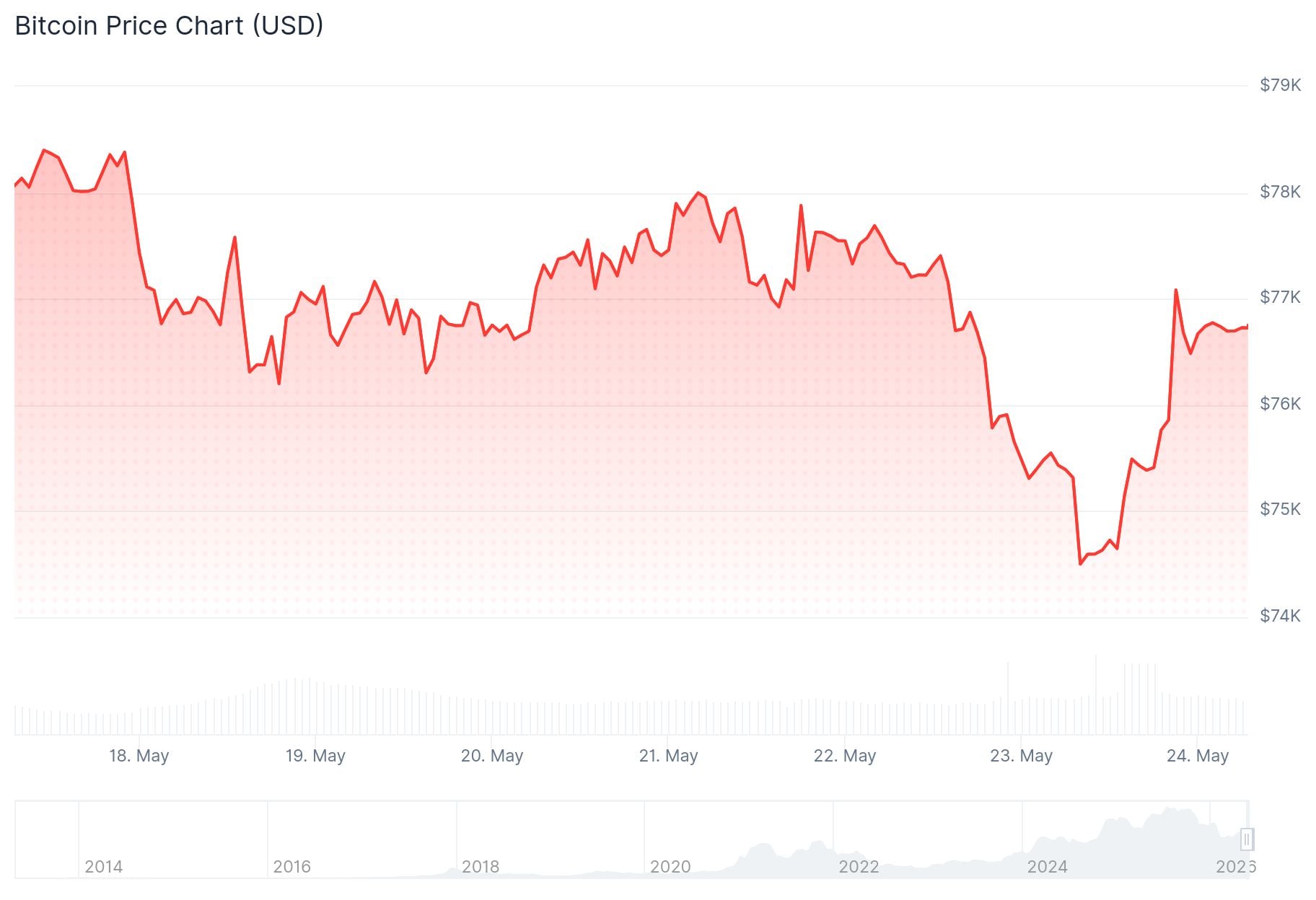 Bitcoin (BTC) Price
The recent pullback was sharp. Bitcoin dropped around 3% in 24 hours to about $75,398, with more than $400 million in crypto positions liquidated during that move. That kind of selling shows sentiment is still fragile.
ETF flows add to the picture. After a stronger April, Bitcoin ETF demand cooled in May with several large outflow days. Spot ETFs are now one of the clearest signals of institutional appetite, so when outflows rise, it weighs on price.
Despite the pressure, Bitcoin remains the most liquid and most widely held crypto asset. It has the deepest institutional presence and the strongest store-of-value narrative in the market.
Ethereum
Ethereum has underperformed Bitcoin recently, and investor confidence is mixed.
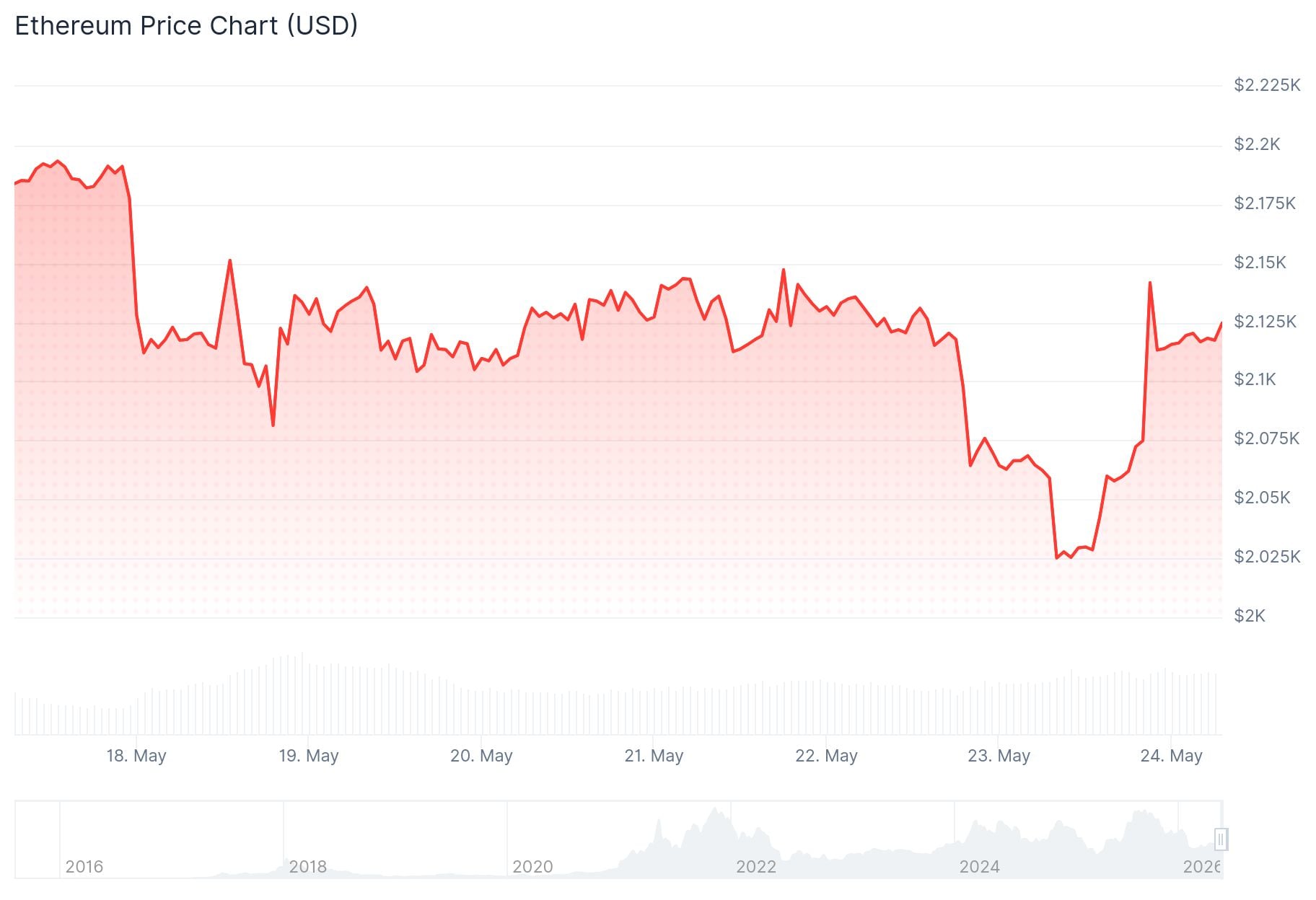 Ethereum (ETH) Price
Price action has been weak. ETH has struggled even as accumulation narratives have circulated, and it has not shown the kind of momentum that rebuilds conviction.
The longer-term case is still there. Ethereum runs most of the smart contract infrastructure in crypto — DeFi, stablecoins, tokenized assets, and on-chain lending all depend on it.
The challenge is competition. Solana, Layer-2 networks, and newer chains are all competing for developers and users. Ethereum needs stronger demand and better price momentum to reassert itself.
Solana
Solana is the standout large-cap altcoin in the current market.
Its spot ETF inflows hit more than $103 million by May 19, even as Bitcoin and Ethereum ETF products were seeing outflows. That is a concrete sign that demand for Solana exposure is holding up.
Solana has fast transactions, low fees, and strong retail activity. It connects to meme coins, DeFi trading, consumer apps, and payments experiments — giving it one of the broader growth narratives among large-cap cryptos.
The main risk is volatility. Solana tends to move faster than Bitcoin or Ethereum in both directions. A broader market selloff could hit SOL harder than most.
Hyperliquid
Hyperliquid is one of the more talked-about names in the medium-cap space this year.
The project runs a decentralized perpetual futures platform. That gives its token a clearer link to real platform activity, which sets it apart from many speculative altcoins where token value is harder to justify.
Hyperliquid has been one of the best-performing larger crypto assets of 2026, supported by strong trading volume. Analyst Michaël van de Poppe said HYPE could reach $100 or more if broader crypto market conditions improve.
The risk is that it is still a newer and more volatile asset. If derivatives activity slows or traders rotate out of high-beta altcoins, HYPE could pull back quickly.
NEAR Protocol
NEAR is the other medium-cap crypto getting attention right now.
It is closely tied to the AI-and-blockchain narrative, which has picked up again recently. CoinDesk reported that AI tokens were part of the latest altcoin-rally discussions, with NEAR mentioned alongside Hyperliquid as names traders are watching.
NEAR has an established ecosystem and a long-running focus on scalable applications and usability. That gives it more substance than many tokens that simply carry an AI label.
The risk is that AI crypto can become hype-driven fast. The long-term case for NEAR depends on real AI and consumer applications actually bringing users on-chain.
As of mid-May, Solana ETF inflows and Hyperliquid’s platform growth remain two of the more concrete data points in an otherwise uneven market.
The post Bitcoin, Ethereum, Solana, Hyperliquid and NEAR: 5 Cryptos That Could Lead the Next Rally appeared first on CoinCentral.


추천 콘텐츠

BNB slips below $590 as Trump threatens to strike Iranian power plants

Everyone Is Navigating AI Security in Real Time — Even Google

Eightco Holdings Discloses $337M Portfolio with OpenAI, 11,000 ETH, and 283M WLD


인기 뉴스
더보기
