Index

A crypto Index provides a way for investors to gain diversified exposure to a specific basket of digital assets through a single tokenized product. These indices often track specific sectors, such as DeFi, DePIN, or RWA, and are automatically rebalanced via smart contracts. In 2026, AI-managed thematic indices have become the gold standard for passive investing, allowing users to track the "blue chips" of the Web3 economy without manual portfolio management. This tag covers index methodology, rebalancing frequency, and the benefits of diversified crypto baskets.

25424 Articles
Created: 2026/02/02 18:52
Updated: 2026/02/02 18:52

AUD/NZD trades near 1.1100 after pulling back from six-month highs

AUD/NZD trades near 1.1100 after pulling back from six-month highs

The post AUD/NZD trades near 1.1100 after pulling back from six-month highs appeared on BitcoinEthereumNews.com. AUD/NZD pulled back from a six-month high at 1.1131, reached on Thursday. Australia’s Private Capital Expenditure climbed 0.2% in Q2, against the expected 0.7% rise. The New Zealand Dollar struggles as the RBNZ officials indicated further reductions in the coming months. AUD/NZD retreats after reaching a six-month high at 1.1131, trading around 1.1110 during the Asian hours on Thursday. However, the downside of the currency cross could be restrained as the Australian Dollar (AUD) gains ground following the release of Australia’s Private Capital Expenditure. Australia’s Private Capital Expenditure rose 0.2% in the second quarter, from the previous decline of 0.1% but fell short of the expected 0.7% increase. The AUD/USD holds ground as the US Dollar (USD) struggles over US Federal Reserve (Fed) concerns. Additionally, the AUD is also supported by hotter-than-expected Australian inflation data, which reduces expectations of a Reserve Bank of Australia (RBA) rate cut. Australia’s Monthly Consumer Price Index jumped by 2.8% year-over-year in July, surpassing a 1.9% increase prior and 2.3% expected growth. The Reserve Bank of Australia (RBA) Minutes of its August monetary policy meeting suggested that board members agreed that some further reduction in the cash rate is likely to be needed in the coming year. The AUD/NZD cross may regain its ground as the New Zealand Dollar (NZD) continues to struggle after the Reserve Bank of New Zealand (RBNZ) cut its policy rate last week. The RBNZ officials indicated further reductions in the coming months as policymakers warned of domestic and global headwinds to growth. RBNZ Governor Christian Hawkesby noted that the policy outlook is guided by data, but emphasized that if businesses and consumers stay cautious and require additional support, it could warrant further measures. Australian Dollar Price Today The table below shows the percentage change of Australian Dollar (AUD) against listed…

Author: BitcoinEthereumNews
Experienced Analyst Timothy Peterson Warned: “Even if the FED Cuts Interest Rates, Problems Won’t Be Solved. If You Want to Survive, Bitcoin and…”

Experienced Analyst Timothy Peterson Warned: “Even if the FED Cuts Interest Rates, Problems Won’t Be Solved. If You Want to Survive, Bitcoin and…”

The post Experienced Analyst Timothy Peterson Warned: “Even if the FED Cuts Interest Rates, Problems Won’t Be Solved. If You Want to Survive, Bitcoin and…” appeared on BitcoinEthereumNews.com. Pro-Bitcoin (BTC) analyst Timothy Peterson made striking assessments about the Fed’s monetary policy and market outlook. Peterson argued that keeping interest rates at current levels would not solve structural problems but would instead make the economy suffer even more. According to Peterson, the Leading Economic Index (LEI) has declined by 5% or more before every recession in the last 50 years, and the Fed has cut interest rates each time. However, despite the LEI experiencing a historic decline between 2022 and 2025, the Fed has still not cut interest rates. The analyst described this as anomalous, stating, “There’s a recession this cycle, but the National Bureau of Economic Research (NBER) hasn’t officially declared it.” Peterson stated that Russia’s invasion of Ukraine in 2022 caused disruptions in global trade and supply chains, creating supply shocks for energy, food, and critical minerals. The analyst emphasized that these structural problems cannot be solved by high interest rates, commenting, “As long as interest rates remain high, growth will slow further, unemployment will rise, and consumption will be suppressed.” Peterson, claiming that the Fed’s fight against inflation will fail, said, “The root cause of inflation is supply constraints. The Fed’s tools cannot solve this problem. Furthermore, consumers are in debt, income growth is slow, and food prices remain high.” The analyst also said stock markets weren’t as strong as expected. “The majority of the rise in the S&P 500 is coming from just a few tech companies,” Peterson said. “This suggests it’s not a broad-based rally.” Peterson argued that in current conditions, investors should turn to what he describes as “hard assets” to protect their portfolios: “The Fed can’t fix structural problems. Global supply chains are broken, the government is overspending. Inflation is inevitable. Gold and Bitcoin must be at the core of your portfolio…

Author: BitcoinEthereumNews
EUR/USD ticks up to near 1.1650, French risks might cap upside

EUR/USD ticks up to near 1.1650, French risks might cap upside

The post EUR/USD ticks up to near 1.1650, French risks might cap upside appeared on BitcoinEthereumNews.com. EUR/USD edges up to near 1.1650 as the US Dollar faces selling pressure. Fed’s Williams supported the need to look at economic data before getting confident on interest rate cuts in September. Opposition parties in France are unlikely to support PM Bayrou’s confidence vote. The EUR/USD pair edges higher to near 1.1650 during the Asian trading session on Thursday. The major currency pair gains marginally as the US Dollar (USD) faces selling pressure, following dovish remarks on interest rates from New York Federal Reserve (Fed) Bank President John Williams in an interview with CNBC on Wednesday. During the press time, the US Dollar Index (DXY), which tracks the Greenback’s value against six major currencies, trades 0.12% lower to near 98.00. On Wednesday, Fed’s Williams argued in favor of interest rate cuts, but didn’t express confidence over the same for the September policy meeting, citing that officials need to see economic data during the time. “Risks are more in balance. We are going to just have to see how the data plays out,” Williams said. Meanwhile, traders see an 87% chance that the Fed will cut interest rates in the September policy meeting, according to the CME FedWatch tool. In the Eurozone, growing risks of a snap election in the French economy have capped the upside in the Euro (EUR). Earlier this week, France Prime Minister (PM) François Bayrou called for a confidence vote on September 8 over his €44 billion budget package. In response, opposition parties are not expected to support Bayrou’s confidence vote, a move that could lead to a snap election in the French economy. On the economic front, investors await preliminary inflation data for August from major economies of the Eurozone, which will be published on Friday.   Euro FAQs The Euro is the currency for the 19…

Author: BitcoinEthereumNews
Google Cloud Announces Plans to Launch Its Own Cryptocurrency Network: But There’s Significant Criticism

Google Cloud Announces Plans to Launch Its Own Cryptocurrency Network: But There’s Significant Criticism

The post Google Cloud Announces Plans to Launch Its Own Cryptocurrency Network: But There’s Significant Criticism appeared on BitcoinEthereumNews.com. Google Cloud has announced Google Cloud Universal Ledger (GCUL), a new Layer-1 (L1) blockchain platform that aims to simplify global payments and asset reconciliation. GCUL simplifies the management of commercial bank money, enabling transfers via distributed ledger technology. The platform is currently in a private testnet phase, and the company launched a pilot project for tokenized assets with CME earlier this year. While Rich Widmann, Google Cloud’s head of Web3 strategy, stated that GCUL is a Layer 1 blockchain, some in the community have expressed the view that the structure is not fully decentralized and permissionless, but more like a consortium chain. The company argued that instead of reinventing money, infrastructure should be redesigned: “The path to a global, 24/7, multi-currency, and programmable payments system isn’t about reinventing money, but about reimagining the infrastructure. GCUL will enable the next generation of payments while preserving the stability and regulatory clarity advantages of the current financial system.” *This is not investment advice. Follow our Telegram and Twitter account now for exclusive news, analytics and on-chain data! Source: https://en.bitcoinsistemi.com/google-cloud-announces-plans-to-launch-its-own-cryptocurrency-network-but-theres-significant-criticism/

Author: BitcoinEthereumNews
Stellar Price Forecast: XLM shows early signs of recovery

Stellar Price Forecast: XLM shows early signs of recovery

The Stellar (XLM) price trades around $0.38 on Thursday, following a recent pullback, with price action nearing a key support zone that could pave the way for a rebound. Derivatives data also support the recovery thesis, as funding rates have turned positive.

Author: Fxstreet
Unpacking This Crucial Market Shift

Unpacking This Crucial Market Shift

The post Unpacking This Crucial Market Shift appeared on BitcoinEthereumNews.com. Crypto Fear & Greed Index Dips: Unpacking This Crucial Market Shift Skip to content Home Crypto News Crypto Fear & Greed Index Dips: Unpacking This Crucial Market Shift Source: https://bitcoinworld.co.in/crypto-fear-greed-index-fall/

Author: BitcoinEthereumNews
Metaplanet to Raise $1.2B, $835M for Bitcoin Buys

Metaplanet to Raise $1.2B, $835M for Bitcoin Buys

The post Metaplanet to Raise $1.2B, $835M for Bitcoin Buys appeared on BitcoinEthereumNews.com. Japanese investment company Metaplanet approved a plan to raise 130.3 billion yen ($880 million) through an overseas share issuance, with almost $835 million set aside for Bitcoin purchases. According to a Wednesday filing, the company plans to issue up to 555 million new shares, which could increase its total outstanding stock from 722 million to about 1.27 billion shares. The issue price will be determined Sept. 9-11, with payments scheduled to settle shortly after. Metaplanet said the bulk of the funds will go toward acquiring additional Bitcoin (BTC), adding to its existing treasury reserves of 18,991 BTC (valued at around $2.1 billion). The company said the strategy is designed to protect against Japan’s weak yen, mitigate inflation risks and enhance corporate value. A further $45 million will be directed into the firm’s “Bitcoin Income Business,” which generates revenue by selling covered call options on its BTC holdings. The company said the program is already producing profit and will be expanded with the new funds. Related: Metaplanet, Smarter Web add almost $100M in Bitcoin to treasuries Part of long-term BTC strategy The move is the latest step in Metaplanet’s aggressive Bitcoin-focused strategy, which includes the “21 Million Plan” announced in April and the “555 Million Plan” revealed in June. The company has set a target of holding more than 210,000 BTC by 2027, representing over 1% of Bitcoin’s total supply. The offering will be conducted through overseas placements to institutional investors. The filing said that the issuance was not registered under the US Securities Act of 1933, and will not be publicly offered in the United States. “We announced an international offering of new shares earlier today,” Metaplanet CEO Simon Gerovich wrote on X. “Due to legal restrictions, we cannot comment on the offering beyond what is in the release while…

Author: BitcoinEthereumNews
How Things Are Changing for Japan’s Largest Bitcoin Tank

How Things Are Changing for Japan’s Largest Bitcoin Tank

The post How Things Are Changing for Japan’s Largest Bitcoin Tank appeared on BitcoinEthereumNews.com. Japanese company MetaPlanet has mirrored MicroStrategy by converting its balance sheet to Bitcoin. While the Japanese government has not adopted spot crypto ETFs and its taxation system has levied a heavier burden on crypto trading, stocks of companies like MetaPlanet have been regarded as a regulated proxy for Bitcoin exposure. Now this edge is being tested as the regulatory environment changes. From Bitcoin Proxy to Volatile Equity BackgroundThe company pivoted from a hospitality business to a Bitcoin treasury vehicle. The recent inclusion in the FTSE index attracted passive inflows. With no local ETFs and heavy tax burdens, investors turned to MetaPlanet as a “pseudo-ETF.” Policy shifts loom: Japan’s tax council is debating a flat 20% levy on crypto gains, similar to equities, much lower than the current 55% at maximum. This could increase direct holdings. At the same time, JPYC, a yen stablecoin backed by Japanese government bonds, is gaining traction as a regulated liquidity tool. Nothing Is ImpossibleMetaPlanet shares trade at more than a 400% premium to the net value of its Bitcoin holdings. A 30%–50% BTC drawdown could trigger sharper equity sell-offs, the Financial Times reported. Repeated issuance of equity and warrant funds growth, but raises dilution concerns. BeInCrypto reported that MetaPlanet’s premium relies on a self-reinforcing loop: higher premiums enable fundraising, which buys more BTC, sustaining the premium. That cycle can break if BTC falls.On the other hand, some analysts note that MetaPlanet’s consistent BTC yield record and low liabilities suggest dilution may be less severe than feared, as its high mNAV has allowed proportionally larger raises for BTC purchases. Latest UpdateMetaPlanet filed for an overseas equity offering of up to 555 million new shares. The company disclosed that its Bitcoin holdings reached 18,991 BTC, worth about $2.1 billion. The stock has surged 480% year-to-date. Benchmark Research analyzed realized…

Author: BitcoinEthereumNews
Altcoin Season Index Surges to 46: What This Means for Your Portfolio

Altcoin Season Index Surges to 46: What This Means for Your Portfolio

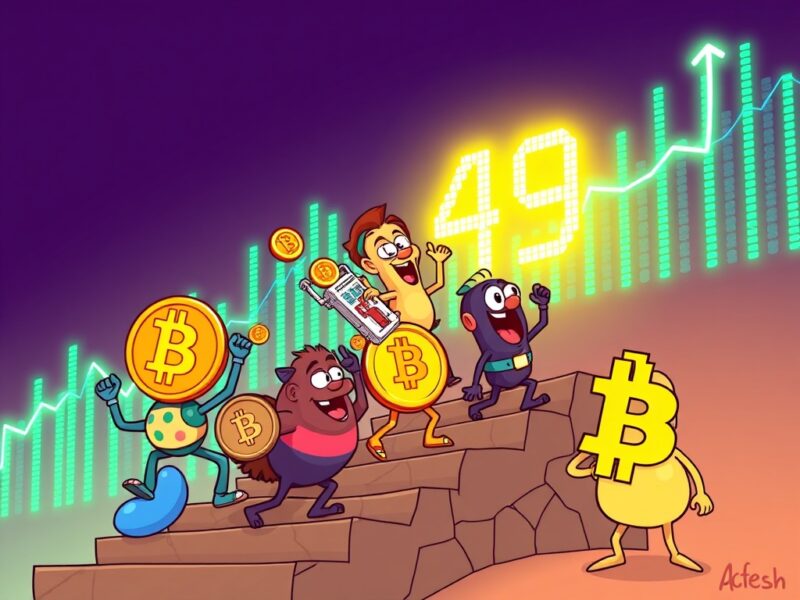
BitcoinWorld Altcoin Season Index Surges to 46: What This Means for Your Portfolio The crypto world is buzzing with fresh signals as CoinMarketCap’s Altcoin Season Index recently climbed one point to 46. This upward movement sparks important conversations among investors and enthusiasts alike, hinting at potential shifts in market dynamics. For many, this rise suggests a growing appetite for cryptocurrencies beyond Bitcoin, opening new avenues for portfolio growth. Understanding the Altcoin Season Index: What Does 46 Mean? The Altcoin Season Index is a crucial metric that helps gauge the overall performance of altcoins compared to Bitcoin. It signals an official altcoin season when a significant threshold is met: 75% of the top 100 cryptocurrencies by market capitalization, excluding stablecoins and wrapped tokens, must have outperformed Bitcoin over the last 90 days. A score closer to 100 on the Altcoin Season Index suggests a stronger and more pronounced altcoin season. Currently sitting at 46, the index indicates that while we are not yet in a full-blown altcoin season, momentum is building. This reading shows that a notable portion of altcoins are indeed outperforming Bitcoin, suggesting a shift in investor focus and capital allocation. This gradual increase often precedes more significant movements, making it a key indicator for savvy traders. Is an Altcoin Season Truly Approaching? The one-point rise in the Altcoin Season Index to 46 is more than just a number; it’s a signal. While the 75% benchmark for an official altcoin season remains a distance away, this steady increase demonstrates growing confidence and interest in alternative cryptocurrencies. This recent shift in the Altcoin Season Index indicates increasing investor confidence in various altcoins, suggesting that many are seeing better returns than Bitcoin over the short term. What should you watch for as the index continues to evolve? Consistent Outperformance: Look for a sustained trend where a majority of top altcoins continue to surpass Bitcoin’s gains. Increased Trading Volume: Higher trading volumes in altcoin markets often accompany rising prices. New Project Excitement: Innovations and new projects in the altcoin space can attract fresh capital. Navigating Potential Altcoin Opportunities As the Altcoin Season Index inches higher, savvy investors are already looking at potential gains. However, navigating the altcoin market requires careful consideration and a strategic approach. It’s not simply about picking any altcoin; rather, it involves understanding market trends and individual project fundamentals. Here are some actionable insights to consider: Diversify Your Portfolio: Instead of putting all your eggs in one basket, spread your investments across several promising altcoins. Do Your Research: Investigate the utility, team, and technology behind each altcoin. Strong fundamentals are key to long-term success. Risk Management: Altcoins can be highly volatile. Only invest what you can afford to lose and consider setting stop-loss orders. Stay Informed: Keep a close eye on market news, technological developments, and, of course, the Altcoin Season Index itself. Important Considerations and Risks While the rising Altcoin Season Index is exciting, it’s crucial to remember that the crypto market remains highly volatile. Altcoins, especially those with smaller market caps, can experience dramatic price swings. This volatility presents both significant opportunities for profit and substantial risks of loss. Always conduct thorough due diligence and understand the unique risks associated with each investment. Market sentiment can change rapidly, influenced by global economic factors, regulatory news, and even social media trends. Therefore, a rising index does not guarantee continued upward movement, nor does it eliminate the potential for sudden corrections. A balanced approach, combining optimism with cautious risk assessment, is always recommended. Conclusion: The Evolving Crypto Landscape The climb in the Altcoin Season Index to 46 serves as a compelling indicator of shifting dynamics within the cryptocurrency market. While it doesn’t declare an immediate altcoin season, it certainly signals growing momentum and renewed interest in altcoins. This presents both exciting opportunities and inherent risks for investors. By staying informed, conducting thorough research, and managing risk effectively, you can better navigate this evolving landscape and potentially capitalize on the burgeoning altcoin market. Frequently Asked Questions (FAQs) What is the Altcoin Season Index? The Altcoin Season Index measures the percentage of the top 100 altcoins (excluding stablecoins and wrapped tokens) that have outperformed Bitcoin over the last 90 days. A score closer to 100 indicates a stronger altcoin season. What does a score of 46 mean for the Altcoin Season Index? A score of 46 means that 46% of the top 100 altcoins have outperformed Bitcoin in the last 90 days. While not yet an official altcoin season (which requires 75%), it indicates growing momentum and a positive trend for altcoins. How is an Altcoin Season officially declared? An altcoin season is officially declared when the Altcoin Season Index reaches 75. This signifies that 75% or more of the top 100 altcoins have surpassed Bitcoin’s performance over a three-month period. What should investors do during a potential Altcoin Season? Investors should conduct thorough research on individual altcoins, consider diversifying their portfolios, manage risk with appropriate strategies, and stay updated on market trends and news. Are there risks involved with altcoins, even if the index is rising? Yes, altcoins are generally more volatile than Bitcoin. Even with a rising Altcoin Season Index, market conditions can change rapidly, and investments carry inherent risks. Always invest responsibly. Share this valuable insight with your network! If you found this article on the Altcoin Season Index helpful, please share it on your social media platforms to help others understand these crucial market trends. To learn more about the latest crypto market trends, explore our article on key developments shaping altcoin price action. This post Altcoin Season Index Surges to 46: What This Means for Your Portfolio first appeared on BitcoinWorld and is written by Editorial Team

Author: Coinstats
Crypto Fear & Greed Index Dips: Unpacking This Crucial Market Shift

Crypto Fear & Greed Index Dips: Unpacking This Crucial Market Shift

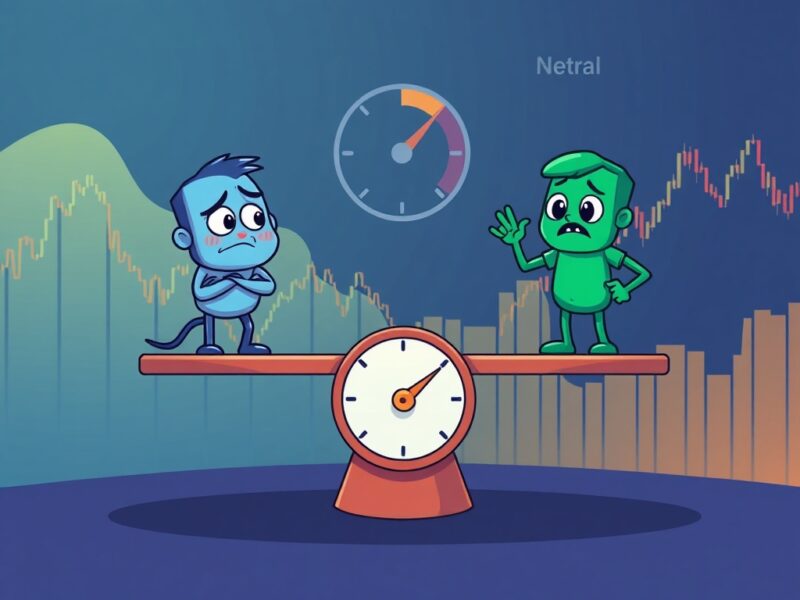
BitcoinWorld Crypto Fear & Greed Index Dips: Unpacking This Crucial Market Shift The cryptocurrency market is a dynamic space, constantly influenced by investor emotions. Recently, the Crypto Fear & Greed Index experienced a notable shift, falling three points to 48. This movement, while keeping the index in a ‘neutral’ stage, signals a subtle change in collective market sentiment. Understanding this index is crucial for anyone navigating the volatile world of digital assets. What Does the Crypto Fear & Greed Index Tell Us? The Crypto Fear & Greed Index, provided by data provider Alternative, serves as a powerful barometer for market sentiment. It helps us gauge whether investors are feeling overly optimistic (greedy) or excessively pessimistic (fearful) about the crypto market. This index operates on a simple scale: 0: Extreme Fear – This often indicates that investors are very worried, potentially leading to selling pressure. 100: Extreme Greed – This suggests investors are overly confident, which can sometimes precede a market correction. A score of 48, as we see now, firmly places the market in a neutral zone. However, even small dips can reflect underlying shifts that smart investors monitor closely. This index provides a snapshot of the prevailing mood, offering insights beyond just price charts. How is the Crypto Fear & Greed Index Calculated? The strength of the Crypto Fear & Greed Index lies in its comprehensive methodology. It doesn’t rely on a single factor but aggregates data from various sources to form a holistic view. Here are the key components and their respective weightings: Volatility (25%): Measures the current volatility and maximum drawdowns of Bitcoin compared to its average over 30 and 90 days. Higher volatility often suggests fear. Market Volume (25%): Analyzes current trading volume and market momentum. High buying volume in a positive market can signal greed, while high selling volume suggests fear. Social Media (15%): Scans social media for specific keywords and sentiment analysis. Increased mentions and positive sentiment can indicate greed. Surveys (15%): While currently paused, these polls ask thousands of people for their market sentiment, providing direct feedback. Bitcoin Dominance (10%): An increasing Bitcoin dominance often points to fear, as investors tend to flock to the perceived safety of Bitcoin during uncertain times. Google Trends (10%): Examines search queries related to cryptocurrencies. A surge in ‘Bitcoin price manipulation’ searches, for example, might indicate fear. Each factor contributes to the overall score, providing a nuanced perspective on investor psychology. Understanding the Recent Dip in the Crypto Fear & Greed Index The recent three-point fall in the Crypto Fear & Greed Index to 48, while still neutral, hints at a slight cooling of market enthusiasm. This subtle shift could be influenced by a variety of factors: General Market Jitters: Broader economic concerns or regulatory uncertainties can make investors more cautious. Price Consolidation: After periods of significant price movements, markets often consolidate, leading to a more subdued sentiment. Reduced Momentum: A decrease in trading volume or social media chatter might naturally pull the index down from higher neutral levels. It’s important to remember that the index is a tool, not a crystal ball. A small dip doesn’t necessarily forecast a major crash, but it encourages investors to reassess their positions and market outlook. Navigating the Crypto Market: Actionable Insights from the Index How can you use the Crypto Fear & Greed Index to inform your investment strategy? Here are some actionable insights: Counter-Cyclical Investing: Legendary investor Warren Buffett advises to be ‘fearful when others are greedy, and greedy when others are fearful.’ The index can highlight these extremes, suggesting potential buying opportunities during extreme fear or caution during extreme greed. Risk Management: A high greed score might be a signal to take some profits or reduce exposure, while extreme fear could indicate a good time for dollar-cost averaging into positions. Complementary Tool: Always use the index in conjunction with fundamental analysis (project viability, technology, team) and technical analysis (price charts, indicators). No single metric tells the whole story. The index helps you understand the emotional landscape, but rational decision-making remains paramount. Conclusion: Deciphering Market Emotions The recent movement of the Crypto Fear & Greed Index to 48 underscores the continuous ebb and flow of sentiment in the crypto market. While remaining in the neutral zone, this dip serves as a gentle reminder that market emotions are constantly at play. By understanding how this crucial index is calculated and what its shifts signify, investors can gain a clearer perspective, making more informed decisions in their cryptocurrency journey. Always remember to combine emotional intelligence with thorough research for sustainable success. Frequently Asked Questions (FAQs) What does a ‘neutral’ score on the Crypto Fear & Greed Index mean? A neutral score, like the current 48, indicates that investors are neither extremely fearful nor extremely greedy. It suggests a balanced market sentiment, where there isn’t a strong consensus on the market’s immediate direction. Is the Crypto Fear & Greed Index only for Bitcoin? While Bitcoin’s market cap dominance is a factor in its calculation, and Bitcoin often drives overall market sentiment, the Crypto Fear & Greed Index aims to reflect the broader cryptocurrency market sentiment. Its components consider general market activity. How often does the Crypto Fear & Greed Index update? The index is updated daily by Alternative, providing a fresh snapshot of market sentiment for investors to consider. Can I rely solely on the Crypto Fear & Greed Index for investment decisions? No, it’s not advisable to rely solely on any single indicator. The Crypto Fear & Greed Index is a valuable tool for understanding market psychology, but it should be used in conjunction with fundamental analysis, technical analysis, and your personal financial goals. What causes the Crypto Fear & Greed Index to change? Changes in the index are driven by shifts in its underlying factors: volatility, trading volume, social media activity, Bitcoin dominance, and Google search trends. Any significant movement in these areas can impact the overall score. Did you find this article insightful? Share it with your friends and fellow crypto enthusiasts on social media to help them better understand market sentiment! To learn more about the latest crypto market trends, explore our article on key developments shaping Bitcoin price action. This post Crypto Fear & Greed Index Dips: Unpacking This Crucial Market Shift first appeared on BitcoinWorld and is written by Editorial Team

Author: Coinstats