Liquidation

Liquidation occurs when a trader’s collateral is no longer sufficient to cover their leveraged position’s losses, triggering an automated forced closure by the exchange's liquidation engine. It is a critical risk-management mechanism that ensures the solvency of lending protocols and derivative platforms. In 2026, the focus has moved toward MEV-resistant liquidation models that protect users from predatory "cascades." This tag provides essential information on maintenance margins, health factors, and how to avoid liquidation in high-volatility environments.

14968 Articles
Created: 2026/02/02 18:52
Updated: 2026/02/02 18:52
Ethereum (ETH) Price: 22% Pullback to Key Support Sparks Buy-the-Dip Calls

Ethereum (ETH) Price: 22% Pullback to Key Support Sparks Buy-the-Dip Calls

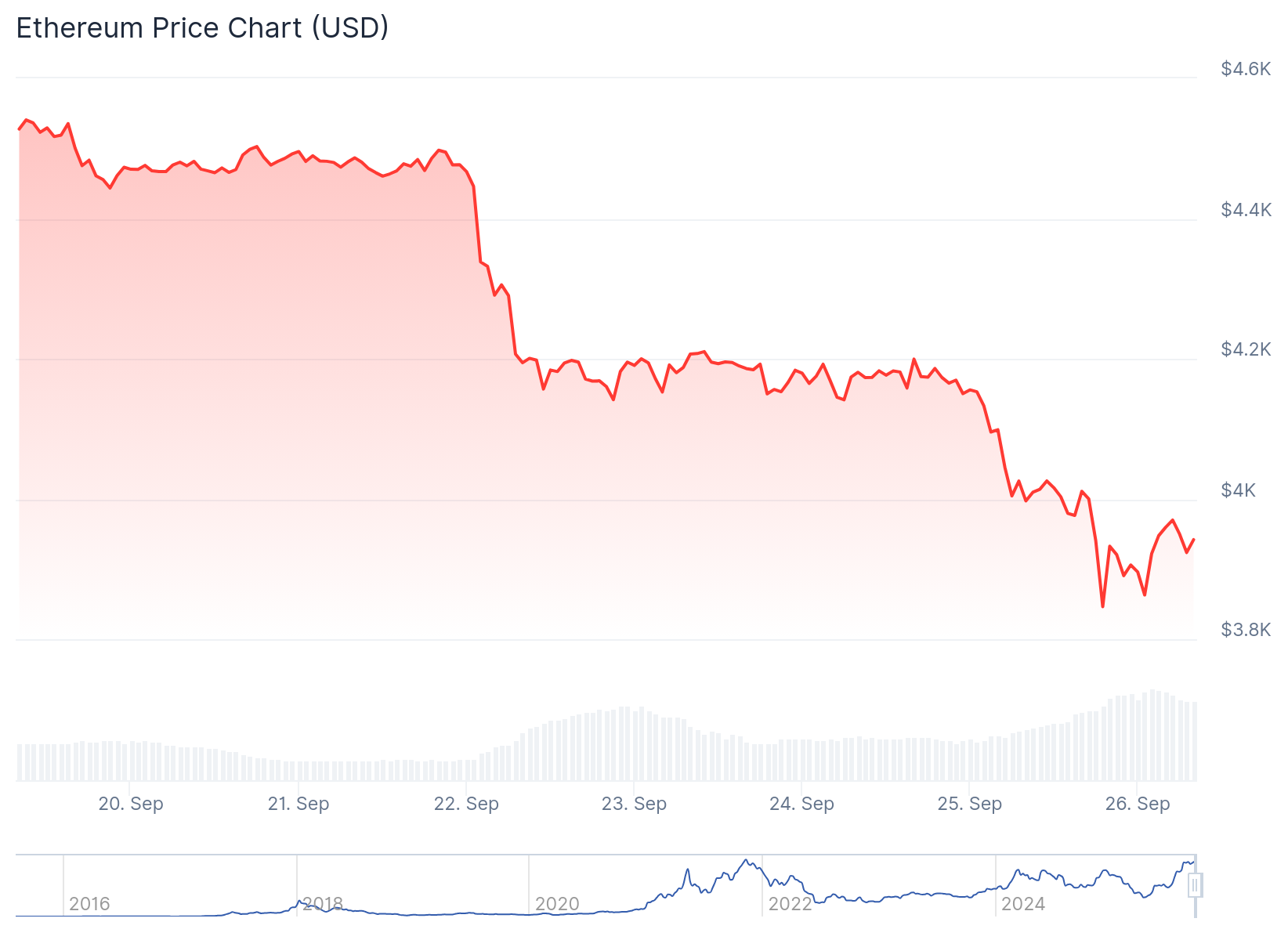
TLDR Ethereum dropped 13% from recent highs above $4,400, now testing support around $3,650-$3,850 Mid-sized holders (10,000-100,000 ETH) are increasing accumulation while large whales reduce positions Crypto market saw $1.1 billion in liquidations with Ethereum leading at $409 million in 24 hours Spot Ether ETFs recorded over $250 million in outflows despite launch of first [...] The post Ethereum (ETH) Price: 22% Pullback to Key Support Sparks Buy-the-Dip Calls appeared first on CoinCentral.

Author: Coincentral
Bitcoin slips below $110k as Crypto Fear and Greed Index drops to 29

Bitcoin slips below $110k as Crypto Fear and Greed Index drops to 29

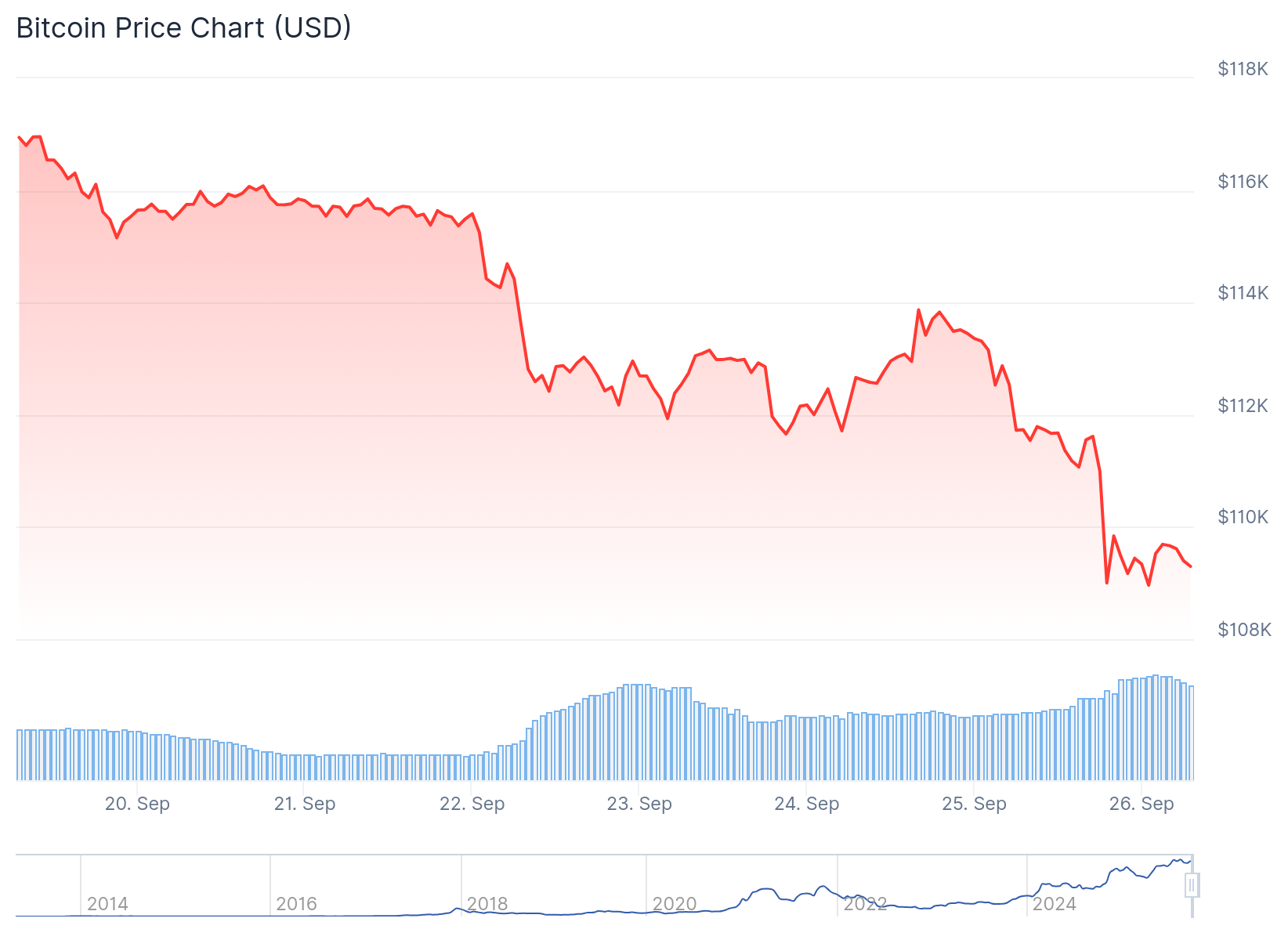
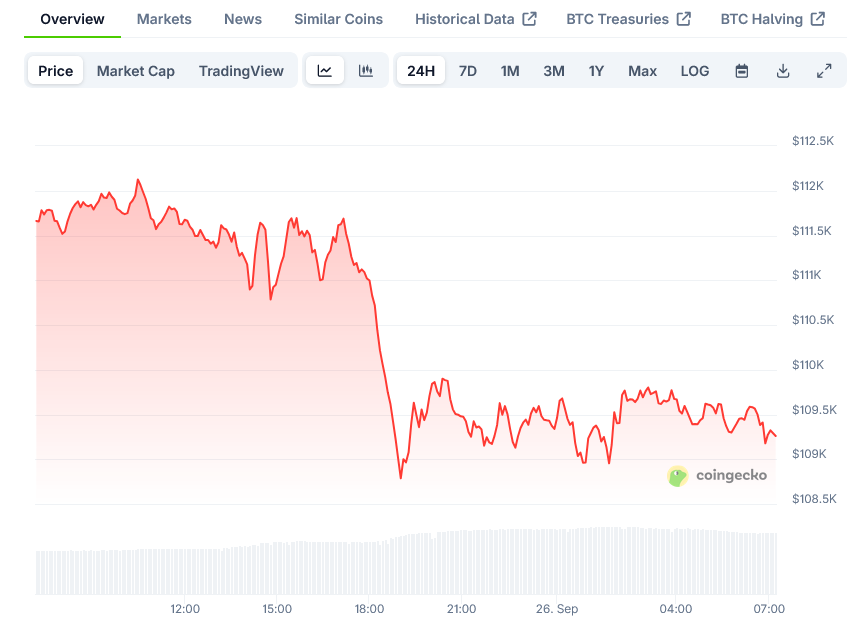
The post Bitcoin slips below $110k as Crypto Fear and Greed Index drops to 29 appeared on BitcoinEthereumNews.com. Bitcoin price has fallen below $110,000, as it barely hangs on above $109,000. This drop coincides with the Crypto Fear and Greed Index falling to 29, as it inches closer to Extreme Fear territory. Summary Crypto Fear and Greed Index has fallen by 16 points in the past 24 hours to 29. This indicates that the market has officially entered a state of Fear as it nears Extreme Fear territory. Bitcoin has declined by 2.1%, falling below the $110,000 threshold by around $109,399. BTC could see a swift rebound if it manages to surpass the 30-day moving average at $109,526, which could open the door for a retest of the $109,700 to $109,800 zone. According to data from CoinGlass, the Crypto Fear and Greed Index has dropped by 16 points compared to the previous day as Bitcoin continues its precipitous decline. The index indicates that the crypto market is currently in a state of Fear after witnessing a series of market liquidations and crashes of major tokens. The last time the Crypto Fear and Greed Index fell into Extreme Fear territory was in April 2025 as well as in mid-February 2025, right after President Donald Trump introduces ‘Liberation Day’ blanket tariffs that shook up the crypto market. As of 26 Sept., the overall crypto market cap has decreased by 2%, stabilizing at around $3.8 trillion. So far, it has yet to recover from the mass liquidations earlier this week, when it fell below $4 trillion due to a series of long positions liquidating. Both Bitcoin (BTC) and Ethereum (ETH) have experienced drops ranging around the 2% level. Ethereum has once again fallen under the $4,000, while Bitcoin has taken a heavy hit and slipped below $110,000. At press time, the largest cryptocurrency by market cap has managed to maintain its…

Author: BitcoinEthereumNews
Bitcoin (BTC) Price: Profit-Taking Frenzy Sends Markets Lower. Watch These Levels

Bitcoin (BTC) Price: Profit-Taking Frenzy Sends Markets Lower. Watch These Levels

TLDR Bitcoin dropped to a four-week low of $108,700 on Thursday, falling below key $112,000 support levels Long-term holders realized 3.4 million Bitcoin in profits while ETF inflows slowed, showing signs of market exhaustion The Spent Output Profit Ratio (SOPR) indicates some Bitcoin holders are now selling at a loss at 1.01 Cumulative realized profits [...] The post Bitcoin (BTC) Price: Profit-Taking Frenzy Sends Markets Lower. Watch These Levels appeared first on CoinCentral.

Author: Coincentral
Bitcoin (BTC) Price: Market Exhaustion Takes Hold After $1.5B Liquidation Wave

Bitcoin (BTC) Price: Market Exhaustion Takes Hold After $1.5B Liquidation Wave

TLDR Bitcoin has fallen to a four-week low of $108,700, dropping below key support at $112,000 Long-term holders have realized 3.4 million Bitcoin in profit, potentially signaling market “exhaustion” ETF inflows have slowed following the Federal Reserve’s recent rate cut Some Bitcoin holders have begun selling at a loss, with the Spent Output Profit Ratio [...] The post Bitcoin (BTC) Price: Market Exhaustion Takes Hold After $1.5B Liquidation Wave appeared first on Blockonomi.

Author: Blockonomi
Ethereum Leads $1.1 Billion Crypto Market Liquidation, Experts See Buy The Dip Opportunity

Ethereum Leads $1.1 Billion Crypto Market Liquidation, Experts See Buy The Dip Opportunity

                         Read the full article at                             coingape.com.                         

Author: Coinstats
Bitcoin Price (BTC) Tumbles Below $109K

Bitcoin Price (BTC) Tumbles Below $109K

The post Bitcoin Price (BTC) Tumbles Below $109K appeared on BitcoinEthereumNews.com. A rough early session for crypto markets took a turn for the worse in U.S. afternoon hours Thursday, with BTC$109,410.09 tumbling below $109,000, its weakest price in nearly a month. ETH$3,952.13 plummeted 8% through the past 24 hours rapidly approaching $3,800, erasing gains since early August. It’s now has lost 22% since its record highs last month. SOL$195.97, changing hands above $250 only two weeks ago, plunged below $200, down another 8% today. The CoinDesk 20 Index was down 6%. The sharp move lower across the board triggered a widespread leverage flush on derivatives markets, liquidating over $1.1 billion worth of leveraged trading positions, CoinGlass data shows. Ether led liquidations with over $400 million long positions, or bets on higher prices, being wiped out, followed by bitcoin’s $265 million. Crypto liquidations over the past 24 hours (CoinGlass) Crypto equities also took a hit. Michael Saylor’s Strategy (MSTR), the largest corporate owner of BTC, sunk as much as 10% during the session to five-month low. The stock, which is often seen as a leveraged bet on bitcoin’s price, gave up all of this year’s gains and is now 1.5% down year-to-date, while BTC is still holding on 16% advance during the same period. Ether treasury firms Bitmine (BMNR) and Sharplink Gaming (SBET) were down 7%-8%,as were bitcoin miners MARA Holdings. (MARA) and Riot Platforms (RIOT). With Thursday’s nosedive, BTC is now on the brink of taking out the lows of late August-early September, when it bottomed just above $107,000. That price level could serve as support at least for a bounce, with order books also showing a liquidity cluster which could absorb selling pressure, CoinDesk reported on a Hyblock Capital analysis. Read more: Here Are the 3 Make-Or-Break Bitcoin Price Floors as BTC Sell-off Gathers Steam Source: https://www.coindesk.com/markets/2025/09/25/crypto-liquidations-top-usd1b-as-bitcoin-ether-solana-selloffs-worsen

Author: BitcoinEthereumNews
Treehouse DeFi: Unlocking a Revolutionary Era for Decentralized Finance

Treehouse DeFi: Unlocking a Revolutionary Era for Decentralized Finance

BitcoinWorld Treehouse DeFi: Unlocking a Revolutionary Era for Decentralized Finance The world of decentralized finance, or DeFi, is constantly evolving, yet it grapples with inherent limitations that hinder its mainstream adoption and full potential. But what if a project could paradoxically exploit these very inefficiencies to eliminate them, paving the way for a more robust and efficient ecosystem? This is precisely the groundbreaking vision behind Treehouse DeFi, as highlighted in a recent report by global crypto research firm Four Pillars. Unpacking the Paradox: What Makes Treehouse DeFi So Unique? Four Pillars’ insightful report, titled “Treehouse: Looking at the Next Chapter of DeFi,” delves into Treehouse’s innovative strategy. At its core, Treehouse aims to generate profit by identifying and leveraging market inefficiencies, while simultaneously working to eradicate these same discrepancies. This might sound counterintuitive, but it’s a powerful mechanism designed to bring greater stability and fairness to the DeFi landscape. DOR (Decentralized Reference Interest Rate): Imagine a benchmark interest rate that isn’t controlled by a central entity but is instead determined by the market itself, in a transparent and decentralized manner. DOR is designed to be this foundational element, providing a reliable and unbiased reference rate for various financial products within DeFi. This is crucial because a standardized, trustworthy rate is essential for complex financial instruments to thrive. tAsset (Treehouse Asset): This component actively seeks out and capitalizes on market discrepancies. By identifying mispricings or imbalances, tAsset can generate returns. However, its ultimate goal isn’t just profit; it’s to push the market towards greater equilibrium. As tAsset exploits these inefficiencies, it naturally reduces them, making the market more efficient over time. Think of it as a self-correcting mechanism for the DeFi ecosystem. This dual approach suggests a future where profitability and market improvement are not mutually exclusive but rather intertwined, driving positive change within decentralized finance. Navigating Risks in Treehouse DeFi: Ensuring Stability Any innovative financial system, especially in the volatile crypto space, must prioritize robust risk management. The Four Pillars report acknowledges this, detailing Treehouse’s prudent measures to safeguard its operations and user funds. Managing risk effectively is paramount for the long-term viability and adoption of any Treehouse DeFi solution. Limited Leverage for tETH: Currently, Treehouse restricts the leverage process for its tETH asset to a single cycle. This is a critical step in preventing excessive risk-taking and cascading liquidations, which can destabilize the entire system during periods of high volatility. By limiting leverage, Treehouse aims to build a more resilient platform. WstETH Liquidity for Emergency Redemptions: Furthermore, Treehouse strategically holds back a portion of wrapped staked Ethereum (wstETH) liquidity. This reserved liquidity acts as an emergency buffer, ensuring that users can redeem their assets even during unforeseen market shocks or liquidity crunches. This commitment to liquidity provision instills confidence and enhances the platform’s reliability. These proactive risk management strategies demonstrate Treehouse’s commitment to building a sustainable and secure environment, a crucial factor for attracting broader participation in Treehouse DeFi solutions. The Future Impact: How Treehouse DeFi Could Transform Finance The implications of Treehouse’s approach, particularly with DOR, are profound. Four Pillars draws a compelling parallel to the past: just as LIBOR (London Interbank Offered Rate) served as a benchmark that facilitated the creation of a massive $600 trillion fixed-income market four decades ago, DOR possesses the potential to unlock a similar, perhaps even larger, era for decentralized finance. The introduction of a reliable, decentralized reference rate could pave the way for a plethora of new financial products and services. Imagine a future where: New types of fixed-income instruments, previously difficult to implement in DeFi due to a lack of stable reference rates, become commonplace. Lending and borrowing protocols gain greater transparency and efficiency, reducing costs and increasing accessibility for users worldwide. More sophisticated derivatives and hedging tools emerge, offering better risk management options for participants in the crypto market. The potential for Treehouse DeFi to standardize and stabilize key aspects of decentralized finance is immense, promising to bridge the gap between traditional finance and the innovative world of blockchain. Concluding Thoughts: A New Horizon for DeFi The report from Four Pillars paints a vivid picture of Treehouse as a potential game-changer. By embracing a paradoxical strategy of profiting from and simultaneously eliminating market inefficiencies, Treehouse offers a fresh perspective on overcoming the persistent limitations within decentralized finance. Its core components, DOR and tAsset, are not just theoretical constructs but practical solutions designed to foster a more robust, transparent, and efficient financial ecosystem. If successful, Treehouse DeFi could indeed usher in a new era, making DeFi more accessible, reliable, and ultimately, more impactful for global finance. Frequently Asked Questions About Treehouse DeFi Here are some common questions about Treehouse and its innovative approach to decentralized finance: Q1: What is the main problem Treehouse DeFi aims to solve?A1: Treehouse aims to overcome the inherent limitations and inefficiencies within decentralized finance by creating a more robust, transparent, and stable ecosystem. It does this by paradoxically exploiting and then eliminating market discrepancies. Q2: How does DOR contribute to Treehouse’s vision?A2: DOR, the Decentralized Reference Interest Rate, is designed to provide a reliable, market-driven benchmark interest rate. This is crucial for the development of complex financial products in DeFi, much like LIBOR was for traditional finance. Q3: What is the role of tAsset in the Treehouse ecosystem?A3: tAsset actively identifies and capitalizes on market inefficiencies. While generating profit, its primary function is to drive the market towards greater efficiency and equilibrium by correcting these discrepancies. Q4: How does Treehouse manage risk for its users?A4: Treehouse implements robust risk management, including limiting tETH leverage to a single cycle to prevent excessive risk, and holding back wstETH liquidity for emergency redemptions, ensuring user asset safety and platform stability. Q5: What impact could Treehouse DeFi have on the future of decentralized finance?A5: By establishing a decentralized reference rate (DOR) and improving market efficiency (tAsset), Treehouse could unlock a new era for DeFi, fostering the creation of new fixed-income markets, enhancing lending/borrowing protocols, and offering more sophisticated financial tools. Share Your Thoughts! What are your thoughts on Treehouse’s unique approach to solving DeFi’s challenges? Do you believe DOR could be the next LIBOR for decentralized finance? Share this article on your social media channels and join the conversation! To learn more about the latest DeFi innovation trends, explore our article on key developments shaping decentralized finance institutional adoption. This post Treehouse DeFi: Unlocking a Revolutionary Era for Decentralized Finance first appeared on BitcoinWorld.

Author: Coinstats
Nine Banks Unite On Euro Stablecoin, Eyeing Rollout In Second Half Of 2026

Nine Banks Unite On Euro Stablecoin, Eyeing Rollout In Second Half Of 2026

Nine major European banks have formed a consortium to launch a MiCAR-compliant euro-based stablecoin in the second half of next year. ING, UniCredit, & Other European Banks Are Coming Together For Stablecoin As announced in a press release by Italian banking giant UniCredit, the bank is joining forces with eight other major European institutions to launch […]

Author: Bitcoinist
Story, Aster, Flare, and Avalanche lead crypto market losses as liquidations top $1 billion

Story, Aster, Flare, and Avalanche lead crypto market losses as liquidations top $1 billion

Story (IP), Aster (ASTER), Flare (FLR), and Avalanche (AVAX) are leading losses over the last 24 hours as the broader cryptocurrency market faces a sell-off.

Author: Fxstreet
Ethereum Liquidations: Massive $805M Wipeout Rocks Crypto Market

Ethereum Liquidations: Massive $805M Wipeout Rocks Crypto Market

BitcoinWorld Ethereum Liquidations: Massive $805M Wipeout Rocks Crypto Market The cryptocurrency market just experienced a dramatic shake-up, with Ethereum liquidations at the forefront of an astonishing $805 million wipeout over the past 24 hours. This significant event saw long positions, betting on price increases, getting overwhelmingly liquidated across major digital assets. It’s a stark reminder of the inherent volatility and rapid shifts that define the crypto landscape, leaving many traders caught off guard by sudden market movements. What Exactly Are Ethereum Liquidations and Why Do They Matter? In simple terms, a liquidation occurs when a trader’s leveraged position is forcibly closed by an exchange. This happens because the market moves against their trade, and they no longer have enough collateral to maintain the position. For example, if you bet on Ethereum’s price rising (a long position) but it unexpectedly drops, your position might be liquidated to prevent further losses for the exchange. Over the past 24 hours, these forced closures were immense. Here’s a breakdown of the liquidation volumes for major cryptocurrency perpetual futures: ETH: $440 million liquidated, with long positions accounting for a substantial 89.86%. BTC: $280 million liquidated, with an even higher 96.34% of long positions affected. SOL: $85.56 million liquidated, with 92.93% of these being long positions. These figures highlight how predominantly long positions were hit, underscoring a market largely positioned for upward momentum that quickly reversed. Unpacking the $805 Million Crypto Market Shockwave This massive wave of liquidations, totaling over $805 million, highlights a crucial aspect of leveraged trading: it dramatically magnifies losses as well as gains. The overwhelming dominance of long liquidations suggests a market caught off guard by a sudden downturn or unexpected consolidation. Traders with high leverage, anticipating continued upward momentum, were the most vulnerable to these swift market corrections. The fact that Ethereum liquidations led the charge underscores ETH’s pivotal role. Often, ETH’s price movements can signal trends for other digital assets. Its significant decline contributed to a cascading effect across the ecosystem. This interconnectedness means a major move in one asset, especially Ethereum, can trigger widespread consequences and volatility. Navigating Volatility: Lessons from Recent Ethereum Liquidations For crypto participants, this event offers critical lessons in risk management. The allure of amplified profits through leverage is strong, but it comes with equally amplified risks. Understanding market dynamics and having a robust exit strategy are paramount. Diversification, setting stop-loss orders, and avoiding excessive leverage are fundamental practices to protect capital during volatile periods. Moreover, keeping an eye on fundamental developments and technical indicators can provide insights into potential market shifts. While no one can predict the market perfectly, informed decision-making based on thorough research can mitigate some risks associated with widespread Ethereum liquidations. Always remember, the crypto market can turn on a dime, making vigilance essential for any trader. In conclusion, the recent $805 million in crypto liquidations, heavily led by Ethereum, serves as a powerful reminder of the market’s unpredictable nature. It emphasizes caution and strategic planning, especially in leveraged trading. As the market evolves, adapting to its inherent volatility through sound risk management will be key to long-term success in digital assets. Frequently Asked Questions About Crypto Liquidations What exactly are crypto liquidations? Crypto liquidations occur when a trader’s leveraged position is automatically closed by an exchange. This happens when their collateral falls below a required margin due to the market moving significantly against their prediction. Why were long positions predominantly affected in this event? Long positions are bets that an asset’s price will increase. The high number of long liquidations indicates a sudden and significant price drop, catching traders expecting upward momentum off guard. This decline pushed many leveraged long positions below their liquidation thresholds. How can traders protect themselves from significant Ethereum liquidations? Traders can protect themselves by using stop-loss orders, avoiding excessive leverage, diversifying portfolios, and conducting thorough market research. Robust risk management strategies are crucial for navigating volatile markets. Does this event signal a broader crypto market crash? While significant liquidation indicates high volatility, it doesn’t automatically signal a sustained market crash. It often reflects a price correction. However, it reminds traders to remain cautious and adapt their strategies. If you found this analysis helpful, please share this article with your network on social media. Your shares help us spread critical information about market dynamics and risk management, empowering more individuals to navigate the complex world of cryptocurrency trading with greater awareness! To learn more about the latest explore our article on key developments shaping Ethereum price action. This post Ethereum Liquidations: Massive $805M Wipeout Rocks Crypto Market first appeared on BitcoinWorld.

Author: Coinstats