Liquidation

Liquidation occurs when a trader’s collateral is no longer sufficient to cover their leveraged position’s losses, triggering an automated forced closure by the exchange's liquidation engine. It is a critical risk-management mechanism that ensures the solvency of lending protocols and derivative platforms. In 2026, the focus has moved toward MEV-resistant liquidation models that protect users from predatory "cascades." This tag provides essential information on maintenance margins, health factors, and how to avoid liquidation in high-volatility environments.

14545 Articles
Created: 2026/02/02 18:52
Updated: 2026/02/02 18:52
Tether surpasses several ETFs to become top Bitcoin accumulator

Tether surpasses several ETFs to become top Bitcoin accumulator

The post Tether surpasses several ETFs to become top Bitcoin accumulator appeared on BitcoinEthereumNews.com. Stablecoin issuer Tether is one of the largest corporate accumulators of Bitcoin over the last 12 months, adding more coins to its treasury than nearly all spot exchange-traded funds (ETFs). On Sept. 8, Tether CEO Paolo Ardoino shared data showing that the stablecoin issuer secured more than 27,700 BTC in the past year. Of that amount, around 7,900 BTC were placed directly into the reserves backing USDT, while an additional 19,800 BTC were allocated to Twenty One Capital (XXI), a digital asset treasury fund to which Tether contributes. Tether Bitcoin Holdings vs US Spot ETFs (Source: Ardoino) The purchases put Tether ahead of several mid-tier ETF inflows, including VanEck’s HODL, Bitwise’s BITB, Ark 21Shares’ ARKB, and WisdomTree’s BTCW. Yet the stablecoin operator’s buying remains modest compared with heavyweights like BlackRock’s IBIT, which absorbed 394,600 BTC, Grayscale’s mini Bitcoin trust, which added 44,200 BTC, and Fidelity’s FBTC with 27,900 BTC. Ardoino’s breakdown highlights how the company has divided its Bitcoin strategy between backing its stablecoin and building longer-term investment positions. 5 Days to Smarter Crypto Moves Learn how pros avoid bagholding, spot insider front-runs, and capture alpha — before it’s too late. Brought to you by CryptoSlate Nice 😎 Your first lesson is on the way. Please add [email protected] to your email whitelist. Tether’s Bitcoin embrace Tether began its structured Bitcoin acquisition in May 2023, pledging to allocate 15% of quarterly profits to the asset. That commitment established the company as one of the few major corporate actors with a standing policy to direct profits into Bitcoin. However, its strategy has also faced scrutiny. Recently, YouTuber Clive Thompson claimed Tether had sold more than $1 billion worth of Bitcoin to help fund a $1.6 billion gold purchase, citing changes in the company’s public asset disclosures. Ardoino responded by saying the decline…

Author: BitcoinEthereumNews
BNB Rally Gains Steam as Key Resistance Turns Into Support

BNB Rally Gains Steam as Key Resistance Turns Into Support

BNB trades near $880 after breaking last year’s high, with $1.49B futures OI and key resistance at $895.

Author: CryptoPotato
HashKey launches $500M Digital Asset Treasury fund in Hong Kong

HashKey launches $500M Digital Asset Treasury fund in Hong Kong

The post HashKey launches $500M Digital Asset Treasury fund in Hong Kong appeared on BitcoinEthereumNews.com. Hong Kong-based HashKey Group said it launched a $500 million investment fund targeting digital asset treasuries (DATs), initially focusing on exposure to Bitcoin and Ether’s price performance. The fund is structured as a perpetual, institutional-only vehicle allowing regular subscriptions and redemptions, similar to an open-ended crypto hedge fund, HashKey said in a statement. Unlike a passive exchange-traded fund (ETF), HashKey’s fund is designed to invest in projects and companies deploying DAT strategies. The launch comes after Nasdaq announced enhanced scrutiny of listed companies’ crypto holdings on Thursday, a move HashKey framed as signaling a “survival of the fittest” stage for the industry. HashKey said the DAT initiative is part of a broader effort to bridge traditional finance and crypto assets. “Compared with passive ETF products, DAT is more aligned with the around-the-clock, high-volatility nature of the crypto market” the company said. HashKey has over HK$12 billion ($1.5 billion) in clients’ assets under management, according to its latest quarterly report. The company also operates licensed exchanges, ETFs and an Ethereum layer-2 chain. In April, HashKey expanded its institutional offerings by launching Asia’s first XRP tracker fund. Related: China’s crypto liquidation plans reveal its grand strategy Hong Kong leads crypto regulation, innovation in China  Hong Kong has moved to position itself as a hub for institutional crypto, giving companies like HashKey a regulatory base to launch large-scale investment products. In April 2024, the city became the first in Asia to approve spot Bitcoin (BTC) and Ether (ETH) ETFs as local regulators clarifying that Ether was not a security, providing a level of certainty that was still absent in the United States at the time. In June 2025, authorities expanded the framework to allow crypto derivatives trading for professional investors and adjusted tax rules to attract digital asset funds and family offices. The new policies…

Author: BitcoinEthereumNews
Mutuum Finance (MUTM) Goes Viral, Could It Mirror Dogecoin’s (DOGE) 100X Growth?

Mutuum Finance (MUTM) Goes Viral, Could It Mirror Dogecoin’s (DOGE) 100X Growth?

The post Mutuum Finance (MUTM) Goes Viral, Could It Mirror Dogecoin’s (DOGE) 100X Growth? appeared on BitcoinEthereumNews.com. Mutuum Finance (MUTM) is among the top-performing new coins within the crypto market, attracting massive interest on social media and exchanges. Mutuum Finance presale is already at Stage 6 at $0.035. The project has already raised more than $15.5 million and boasts more than 16,150 token holders.  As its raise become larger and its holder base bigger, everybody is wondering whether this new token of DeFi will take a similar viral path like Dogecoin (DOGE), which also became a force in the market after being elevated from a meme to a phenomenon. With investors looking at possible exponential return and analysts arguing whether it will be sustainable in the long run, the latest momentum of MUTM has positioned itself squarely at the centre of the crypto space and will definitely track DOGE’s 100x. Mutuum Finance Risk Management and Protocol Safety All assets underlying have parameters that reflect risk profile, including overcollateralization, borrowing and deposit thresholds, and collateral thresholds. Liquidators are incentivized to close undercollateralized trades. Higher Collateral Efficiency supports higher borrowing amounts for correlated securities, with Loan-to-Value ratios capping borrowing against collateral. Liquidation thresholds and penalties protect the protocol and incentivize timely intervention. Reserve factors divert some attention to serve as a default and extreme market incident buffer and riskier securities get more reserves.  Stage 6 Presale supported by Mutuum Finance (MUTM) Mutuum Finance is already integrated in the DeFi ecosystem and possesses more than 16,150 investors and more than $15.5 million in presale at present. The project is also hosting a $50,000 USDT Bug Bounty Program for security improvement on the platform and encouraging more community involvement, which has rewards offered for four danger levels, i.e., critical, major, minor, and low. Interest Rate Models When there is ample cash, prices remain at a low rate in MUTM; when there…

Author: BitcoinEthereumNews
A whale deposited 5.17 million USDC into HyperLiquid to establish a long position in HYPE

A whale deposited 5.17 million USDC into HyperLiquid to establish a long position in HYPE

PANews reported on September 9th that, according to Onchain Lens, a whale deposited $5.17 million USDC into HyperLiquid over the past 20 hours and opened a long position in HYPE with 5x leverage. The position size was 483,576 HYPE , worth approximately $26.4 million, with an entry price of $53.77 and a liquidation price of $45.28.

Author: PANews
Teneo’s Crucial Move In 3AC Liquidation Unveiled

Teneo’s Crucial Move In 3AC Liquidation Unveiled

The post Teneo’s Crucial Move In 3AC Liquidation Unveiled appeared on BitcoinEthereumNews.com. WLD Sales: Teneo’s Crucial Move In 3AC Liquidation Unveiled Skip to content Home Crypto News WLD Sales: Teneo’s Crucial Move in 3AC Liquidation Unveiled Source: https://bitcoinworld.co.in/wld-sales-teneo-liquidation/

Author: BitcoinEthereumNews
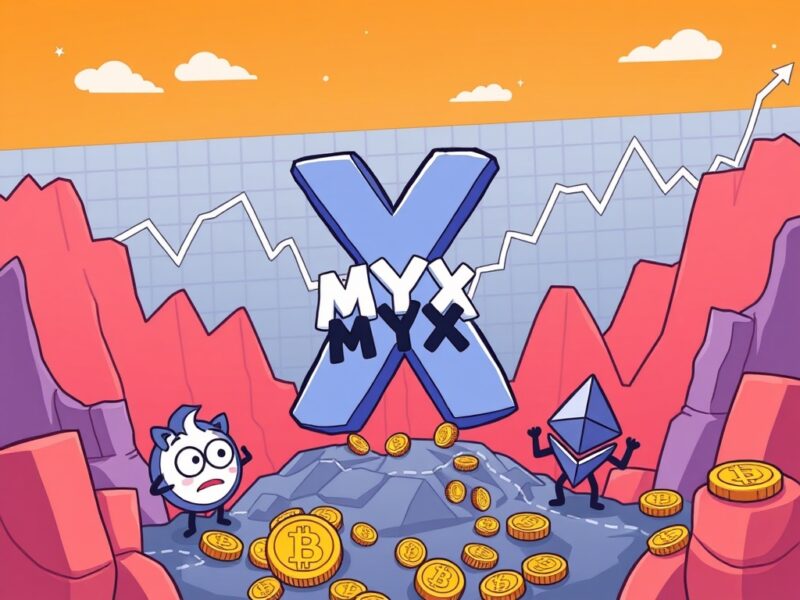
$152M Wiped Out In 24 Hours, MYX Leads The Plunge

$152M Wiped Out In 24 Hours, MYX Leads The Plunge

The post $152M Wiped Out In 24 Hours, MYX Leads The Plunge appeared on BitcoinEthereumNews.com. Massive Crypto Liquidations: $152M Wiped Out In 24 Hours, MYX Leads The Plunge Skip to content Home Crypto News Massive Crypto Liquidations: $152M Wiped Out in 24 Hours, MYX Leads the Plunge Source: https://bitcoinworld.co.in/crypto-liquidations-market-impact-2/

Author: BitcoinEthereumNews
Suilend IKA Lending: Urgent Suspension Amidst Extreme Volatility

Suilend IKA Lending: Urgent Suspension Amidst Extreme Volatility

BitcoinWorld Suilend IKA Lending: Urgent Suspension Amidst Extreme Volatility The world of decentralized finance (DeFi) is often lauded for its innovation, but it also comes with inherent risks. Recently, a significant event unfolded that highlights these challenges: the Suilend IKA lending services suspension. Suilend, a prominent crypto lending platform built on the Sui blockchain, has made the difficult decision to halt all lending services for its IKA token. This move comes in response to extreme price volatility that caused substantial losses for its users, sending ripples through the DeFi community. What Triggered the Suilend IKA Lending Suspension? Understanding the root cause of this drastic measure is crucial for anyone involved in crypto lending. The immediate trigger was an unprecedented surge in the IKA token’s price. Early this morning, the token’s value skyrocketed from a modest $0.04 to an astonishing $0.47. While a price increase might sound positive, such rapid and extreme fluctuations can be incredibly destabilizing for lending protocols. This sudden spike led to a critical situation where several user positions were liquidated at abnormally high prices. The consequences were severe: a collective loss of $379,000. These losses were not absorbed by the platform itself, but unfortunately, by users who had deposited IKA tokens into the protocol. This directly resulted in a 6% reduction across all IKA deposits on the platform, a stark reminder of the inherent risks associated with high-volatility assets in lending pools. The platform acted swiftly to prevent further damage by implementing the Suilend IKA lending suspension. The Dire Consequences of IKA Token Volatility When a token experiences such wild swings, the entire ecosystem built around it can be jeopardized. For users of Suilend, the impact was immediate and painful. Unexpected Liquidations: Positions were liquidated at inflated prices, meaning users lost more collateral than they would have under normal market conditions. Reduced Deposits: The 6% reduction in IKA deposits reflects a direct loss for those who trusted the platform with their assets. Erosion of Trust: Incidents like these can shake user confidence in DeFi platforms and the broader crypto lending space. The decision to suspend Suilend IKA lending was a necessary step to protect remaining user funds and stabilize the protocol. It underscores the critical need for robust risk management strategies in decentralized finance, especially when dealing with newer or less liquid tokens. How do platforms balance innovation with user safety? Safeguarding Your Assets: Lessons from Suilend IKA Lending This incident serves as a powerful cautionary tale for both platforms and individual investors. For platforms like Suilend, it highlights the importance of: Dynamic Risk Parameters: Implementing systems that can quickly adjust collateral ratios, liquidation thresholds, and even suspend services in extreme market conditions. Robust Oracles: Ensuring price feeds are resilient against manipulation and accurately reflect true market value, even during flash crashes or pumps. Transparency: Clearly communicating risks and actions taken to users. For users engaging in crypto lending, consider these actionable insights: Diversify: Don’t put all your assets into a single token or platform. Understand the Risks: Always research the underlying token’s volatility and the platform’s risk management policies. Monitor Positions: Keep a close eye on your lending positions, especially with volatile assets. The proactive measure of the Suilend IKA lending suspension, while painful, aims to prevent a larger catastrophe. The suspension of Suilend IKA lending services due to extreme volatility is a stark reminder of the unpredictable nature of the crypto market. While such events are challenging, they also drive innovation in risk management and highlight the importance of user education. As the DeFi space continues to evolve, platforms and users alike must prioritize vigilance and adapt to safeguard assets against unforeseen market forces. This incident will undoubtedly prompt further discussions on how to build more resilient and user-protective lending protocols. Frequently Asked Questions (FAQs) 1. What is Suilend and why did it suspend IKA lending?Suilend is a crypto lending platform operating on the Sui blockchain. It suspended IKA lending services due to extreme price volatility of the IKA token, which led to significant user losses and liquidations. 2. What caused the extreme volatility of the IKA token?The IKA token experienced an sudden and rapid price surge, skyrocketing from $0.04 to $0.47 in a short period. This extreme fluctuation destabilized the lending protocol. 3. How were Suilend users affected by the IKA lending suspension?Users faced liquidations at abnormally high prices, resulting in a collective loss of $379,000. This also led to a 6% reduction in all IKA deposits on the platform. 4. What measures can crypto lending platforms take to prevent similar incidents?Platforms can implement dynamic risk parameters, ensure robust and resilient price oracles, and maintain transparency with users regarding risks and actions taken during market stress. 5. What should users do to protect their assets in DeFi lending?Users should diversify their investments, thoroughly understand the risks associated with volatile tokens and platforms, and actively monitor their lending positions. If you found this analysis of the Suilend IKA lending suspension informative, please consider sharing it with your network on social media. Your insights and awareness help strengthen the entire crypto community. To learn more about the latest crypto lending trends, explore our article on key developments shaping decentralized finance risk management. This post Suilend IKA Lending: Urgent Suspension Amidst Extreme Volatility first appeared on BitcoinWorld and is written by Editorial Team

Author: Coinstats
WLD Sales: Teneo’s Crucial Move in 3AC Liquidation Unveiled

WLD Sales: Teneo’s Crucial Move in 3AC Liquidation Unveiled

BitcoinWorld WLD Sales: Teneo’s Crucial Move in 3AC Liquidation Unveiled The cryptocurrency world is buzzing with significant developments surrounding the bankrupt crypto hedge fund, Three Arrows Capital (3AC). Its designated liquidator, Teneo, has just executed another crucial move: substantial WLD sales. This action continues their ongoing, meticulous effort to recover assets for creditors, providing a glimpse into the complex process of unwinding a major crypto insolvency. What’s the Latest on These Crucial WLD Sales? According to a recent report from blockchain analytics firm Lookonchain, a wallet associated with Teneo sold an additional 2.25 million WLD tokens. This transaction, valued at approximately $2.88 million, occurred roughly 14 hours ago. It represents another step in Teneo’s systematic liquidation strategy. These WLD sales are not a new development. The wallet first began offloading these tokens in July of last year. This followed an initial massive deposit of 75 million WLD two years ago, establishing a significant holding for the liquidator. Currently, the associated wallet still retains a substantial 52.47 million WLD, which is worth an impressive $92 million. This ongoing, controlled approach to WLD sales highlights the strategic considerations involved in managing such a large asset portfolio during bankruptcy proceedings. Why Are Teneo’s WLD Sales So Important for 3AC Creditors? The primary objective of any liquidation process is to maximize the recovery of assets for those who suffered losses. Teneo’s role, as the designated liquidator, is to systematically convert various crypto assets, including WLD, into funds that can be distributed to 3AC’s creditors. This is a vital step towards financial restitution. Strategic Offloading: Teneo avoids a sudden, large-scale dump of tokens, which could severely destabilize the market and depress the asset’s value. Instead, their strategy involves measured WLD sales over time. This careful approach aims to minimize negative price impact while steadily generating necessary funds. Transparency and Trust: Each reported instance of WLD sales offers a degree of transparency into the liquidation’s progress. This openness helps to build and maintain trust among creditors and the broader crypto community, demonstrating that the process is moving forward responsibly. The challenge for Teneo lies in balancing the urgent need for asset recovery with the imperative of market stability. What Can We Expect Regarding Future WLD Sales? Given that Teneo still holds over 52 million WLD tokens, future WLD sales are highly probable. It is reasonable to anticipate that Teneo will continue its careful, phased approach, meticulously planning each transaction to optimize returns and mitigate market risks. Potential Market Impact: While individual WLD sales may appear small in isolation, their cumulative effect over time could certainly influence the token’s price dynamics. Both investors and market analysts will undoubtedly monitor these transactions closely, looking for any shifts in strategy or significant patterns. The ultimate goal for Teneo remains the comprehensive resolution of 3AC’s complex bankruptcy. These ongoing asset liquidations, including the recent WLD sales, are critical milestones on that long road to recovery for all affected parties. The ongoing WLD sales by Teneo serve as a stark reminder of the complexities inherent in large-scale crypto insolvencies. These actions, though seemingly routine in their execution, are absolutely crucial steps towards achieving justice and recovery for 3AC’s creditors. They powerfully underscore the importance of establishing robust and transparent liquidation frameworks within the rapidly evolving digital asset landscape, ensuring greater confidence and stability for the future. Frequently Asked Questions (FAQs) 1. Who is Teneo? Teneo is the designated liquidator appointed to manage the assets and liabilities of Three Arrows Capital (3AC), the bankrupt crypto hedge fund. Their primary role is to recover and distribute assets to creditors. 2. What is WLD? WLD refers to the Worldcoin (WLD) token, which is a cryptocurrency distributed by Tools for Humanity, the company behind the Worldcoin project. It aims to create a global identity and financial network. 3. Why is Teneo selling WLD? Teneo is selling WLD tokens as part of its mandate to liquidate 3AC’s assets. The funds generated from these WLD sales are used to repay the creditors of the bankrupt hedge fund, as required by law. 4. How much WLD does Teneo still hold? As of the latest reports, the wallet associated with Teneo still holds approximately 52.47 million WLD tokens, valued at around $92 million. 5. What impact do these WLD sales have on the market? Teneo aims to conduct these WLD sales strategically and gradually to minimize negative market impact. However, the continuous offloading of a significant amount of any token can still create selling pressure and influence its price dynamics over time. If you found this insight into Teneo’s crucial WLD sales and the ongoing 3AC liquidation valuable, please consider sharing it with your network! Stay informed on the latest crypto liquidation updates and market movements by following our content. To learn more about the latest crypto market trends, explore our article on key developments shaping the crypto ecosystem institutional adoption. This post WLD Sales: Teneo’s Crucial Move in 3AC Liquidation Unveiled first appeared on BitcoinWorld and is written by Editorial Team

Author: Coinstats
Massive Crypto Liquidations: $152M Wiped Out in 24 Hours, MYX Leads the Plunge

Massive Crypto Liquidations: $152M Wiped Out in 24 Hours, MYX Leads the Plunge

BitcoinWorld Massive Crypto Liquidations: $152M Wiped Out in 24 Hours, MYX Leads the Plunge The cryptocurrency market, known for its dynamic swings, recently witnessed a staggering event: over $152 million in crypto liquidations within just 24 hours. This sudden market movement has left many traders reeling and highlights the inherent volatility of digital asset trading. Understanding what drives these significant events is crucial for anyone involved in the crypto space. What Are Crypto Liquidations, and Why Do They Matter? At its core, a liquidation in the crypto world occurs when an exchange forcefully closes a trader’s leveraged position due to a sudden and substantial price movement against their trade. Traders use leverage to amplify their potential gains, but it also magnifies their risks. If the market moves unfavorably, the exchange closes the position to prevent the trader’s balance from falling below zero, effectively wiping out their collateral. These forced closures, or crypto liquidations, are a common feature of perpetual futures markets. They act as a critical mechanism to maintain market stability and prevent excessive risk-taking. However, when they happen on a large scale, they can create a cascading effect, pushing prices further in the direction of the initial move and trapping more traders. Who Led the Recent Wave of Crypto Liquidations? The latest data reveals a clear picture of the assets most affected by this dramatic market event. Here’s a breakdown of the largest perpetual futures liquidations by volume over the past 24 hours: MYX: $64.23 million – A significant portion, 82.38%, of these were short positions. This indicates that traders betting on a price decline for MYX were caught off guard by an unexpected upward movement or sideways consolidation. ETH: $48.97 million – Here, long positions accounted for 53.97%. This suggests that traders expecting Ethereum’s price to rise faced unexpected selling pressure, leading to their positions being closed out. BTC: $39.52 million – Bitcoin, the market leader, saw 56.2% of its liquidations come from short positions. Similar to MYX, this points to a squeeze on traders who were bearish on BTC’s immediate future. The dominance of MYX in these crypto liquidations is particularly noteworthy, signaling a specific event or trend impacting this particular asset that triggered a widespread unwinding of leveraged bets. Understanding Long vs. Short Liquidations: What Does It Mean? When we talk about long or short liquidations, we are referring to the direction of the trade that was closed. A ‘long’ position is a bet that an asset’s price will increase, while a ‘short’ position is a bet that its price will decrease. Therefore: Short liquidations occur when the price of an asset unexpectedly rises, forcing those who bet on a fall to close their positions. Long liquidations happen when the price of an asset unexpectedly drops, forcing those who bet on a rise to close their positions. The recent figures demonstrate a mixed bag, with MYX and BTC experiencing more short liquidations, while ETH saw more long liquidations. This diverse impact underscores the unpredictable nature of the market and the different pressures affecting various assets simultaneously. How Can Traders Navigate Volatile Periods and Avoid Crypto Liquidations? Navigating periods of high volatility requires a strategic approach. Here are some actionable insights to help mitigate the risk of forced crypto liquidations: Manage Leverage Wisely: While leverage can amplify gains, it dramatically increases risk. Use it cautiously and understand the liquidation price of your positions. Set Stop-Loss Orders: These orders automatically close your position if the price hits a predetermined level, limiting potential losses before a full liquidation occurs. Diversify Your Portfolio: Spreading investments across different assets can help reduce exposure to single-asset volatility. Stay Informed: Keep abreast of market news, economic indicators, and technical analysis to make more informed trading decisions. Ultimately, understanding the mechanisms behind crypto liquidations and implementing robust risk management strategies are paramount for long-term success in the crypto futures market. In conclusion, the recent $152 million in crypto liquidations serves as a potent reminder of the inherent risks and rewards in cryptocurrency trading. While such events can be daunting, they also offer valuable lessons in market dynamics and risk management. By staying informed and adopting disciplined trading practices, participants can better navigate these turbulent waters and potentially turn volatility into opportunity. Frequently Asked Questions (FAQs) What is a crypto liquidation? A crypto liquidation is the forced closure of a trader’s leveraged position by an exchange when the market moves against their trade, causing their margin balance to fall below a required threshold. Why did MYX have the highest crypto liquidations? MYX experienced the highest liquidations, predominantly from short positions, suggesting a significant price surge or an unexpected market move that caught bearish traders off guard. How do long and short liquidations differ? Long liquidations occur when the price drops, closing positions that bet on a rise. Short liquidations happen when the price rises, closing positions that bet on a fall. Can I prevent my crypto positions from being liquidated? While you cannot entirely prevent liquidations in extreme market conditions, you can mitigate the risk by using lower leverage, setting stop-loss orders, and maintaining sufficient margin in your account. What is the impact of large-scale crypto liquidations on the market? Large-scale liquidations can create a cascade effect, pushing prices further in the direction of the initial move, increasing volatility, and potentially leading to further liquidations across the market. Did you find this article insightful? Share it with your friends and fellow crypto enthusiasts on social media to help them understand the complexities of market liquidations and how to navigate them effectively! To learn more about the latest crypto market trends, explore our article on key developments shaping Bitcoin price action. This post Massive Crypto Liquidations: $152M Wiped Out in 24 Hours, MYX Leads the Plunge first appeared on BitcoinWorld and is written by Editorial Team

Author: Coinstats