Oracle

Oracles are essential infrastructure components that feed real-time, off-chain data (such as price feeds, weather, or sports results) into blockchain smart contracts. Without decentralized oracles like Chainlink and Pyth, DeFi could not function. In 2026, oracles have evolved to support verifiable randomness and cross-chain data synchronization. This tag covers the technical evolution of data availability, tamper-proof price feeds, and the critical role oracles play in ensuring the deterministic execution of complex decentralized applications.

5216 Articles
Created: 2026/02/02 18:52
Updated: 2026/02/02 18:52
NVIDIA invests $100B in OpenAI for next-gen AI

NVIDIA invests $100B in OpenAI for next-gen AI

The post NVIDIA invests $100B in OpenAI for next-gen AI appeared on BitcoinEthereumNews.com. Key Highlights NVIDIA invests $100B in OpenAI for next-gen AI infrastructure 10 GW mega data centers planned to power future intelligence Partnership could redefine computing and global tech growth OpenAI and NVIDIA join forces to build the next era of intelligence OpenAI and NVIDIA have announced a groundbreaking strategic partnership to build and launch AI data centers with a combined capacity of at least 10 gigawatts. This massive investment aims to power the next generation of artificial intelligence systems and expand access to advanced computing. A $100 Billion Bet on the Future of Computing As part of the deal, NVIDIA plans to invest up to $100 billion in OpenAI. The funding will be deployed in stages, aligned with each gigawatt of new infrastructure. The first large-scale computing systems are scheduled to come online in the second half of 2026, powered by NVIDIA’s Vera Rubin platform. NVIDIA’s founder and CEO Jensen Huang called the move a natural continuation of more than a decade of collaboration with OpenAI, stretching from the launch of the first DGX supercomputers to the debut of ChatGPT. He described the partnership as the key to entering the “next era of intelligence.” OpenAI CEO Sam Altman emphasized that computing has become the foundation of the future economy. According to Altman, collaboration with NVIDIA will accelerate AI innovation while making powerful technology available to a much broader range of users and companies. OpenAI co-founder Greg Brockman added that NVIDIA platforms have already been crucial to developing services used by hundreds of millions of people daily. The new phase of partnership, he noted, will further expand the boundaries of AI’s potential and bring new benefits to users worldwide. Building Global AI Infrastructure The partnership is not only about hardware. OpenAI and NVIDIA will also collaborate on software optimization, networking technologies,…

Author: BitcoinEthereumNews
OpenAI and NVIDIA Announce a 100 Billion Dollar Leap Toward the Future of Computing

OpenAI and NVIDIA Announce a 100 Billion Dollar Leap Toward the Future of Computing

Key HighlightsNVIDIA invests $100B in OpenAI for next-gen AI infrastructure10 GW mega data centers planned to power future intelligencePartnership could redefine computing and global tech growthOpenAI and NVIDIA join forces to build the next era of intelligenceOpenAI and NVIDIA have announced a groundbreaking strategic partnership to build and launch AI data centers with a combined capacity of at least 10 gigawatts. This massive investment aims to power the next generation of artificial intelligence systems and expand access to advanced computing.A $100 Billion Bet on the Future of ComputingAs part of the deal, NVIDIA plans to invest up to $100 billion in OpenAI. The funding will be deployed in stages, aligned with each gigawatt of new infrastructure. The first large-scale computing systems are scheduled to come online in the second half of 2026, powered by NVIDIA’s Vera Rubin platform.NVIDIA’s founder and CEO Jensen Huang called the move a natural continuation of more than a decade of collaboration with OpenAI, stretching from the launch of the first DGX supercomputers to the debut of ChatGPT. He described the partnership as the key to entering the “next era of intelligence.”OpenAI CEO Sam Altman emphasized that computing has become the foundation of the future economy. According to Altman, collaboration with NVIDIA will accelerate AI innovation while making powerful technology available to a much broader range of users and companies.OpenAI co-founder Greg Brockman added that NVIDIA platforms have already been crucial to developing services used by hundreds of millions of people daily. The new phase of partnership, he noted, will further expand the boundaries of AI’s potential and bring new benefits to users worldwide.Building Global AI InfrastructureThe partnership is not only about hardware. OpenAI and NVIDIA will also collaborate on software optimization, networking technologies, and advanced hardware solutions to ensure peak efficiency.Both companies are also continuing to work with major partners, including Microsoft, Oracle, SoftBank, and Stargate, to develop global AI infrastructure capable of scaling to meet rising demand.Meanwhile, OpenAI reported that its flagship product, ChatGPT, has reached over 700 million weekly active users — a clear signal of the growing demand for powerful AI tools. The company hopes this partnership will solidify its position in the race to build artificial intelligence that benefits all of humanity.

Author: Coinstats
Best Crypto to Invest in and Turn 1 ETH into 15 ETH in 2025

Best Crypto to Invest in and Turn 1 ETH into 15 ETH in 2025

Ethereum (ETH) remains one of the top cryptocurrencies in 2025, valued for its robust ecosystem and role as the backbone of decentralized finance. Yet while ETH itself is solid, its potential for 2025 upside may be more limited than with newer cryptos. That is where Mutuum Finance (MUTM) comes into the equation.  Now priced at […]

Author: Cryptopolitan
Ethereum (ETH) Price to 2x Before the End of 2025, But Traders Are Looking at This Penny Coin for the Next 100x Windfall

Ethereum (ETH) Price to 2x Before the End of 2025, But Traders Are Looking at This Penny Coin for the Next 100x Windfall

Ethereum (ETH) remains the backbone of decentralized finance, and experts are forecasting the token price to double by the end of 2025 as network upgrades and institutional demand keep driving demand. But while ETH is bringing stability and settled market supremacy, investors seeking much bigger returns are going for Mutuum Finance (MUTM).  The platform is […]

Author: Cryptopolitan
Antitrust lawyer flags risks in $100B Nvidia–OpenAI partnership

Antitrust lawyer flags risks in $100B Nvidia–OpenAI partnership

Antitrust lawyer Andre Barlow said that the $100B partnership between Nvidia and OpenAI raises significant antitrust concerns.

Author: Cryptopolitan
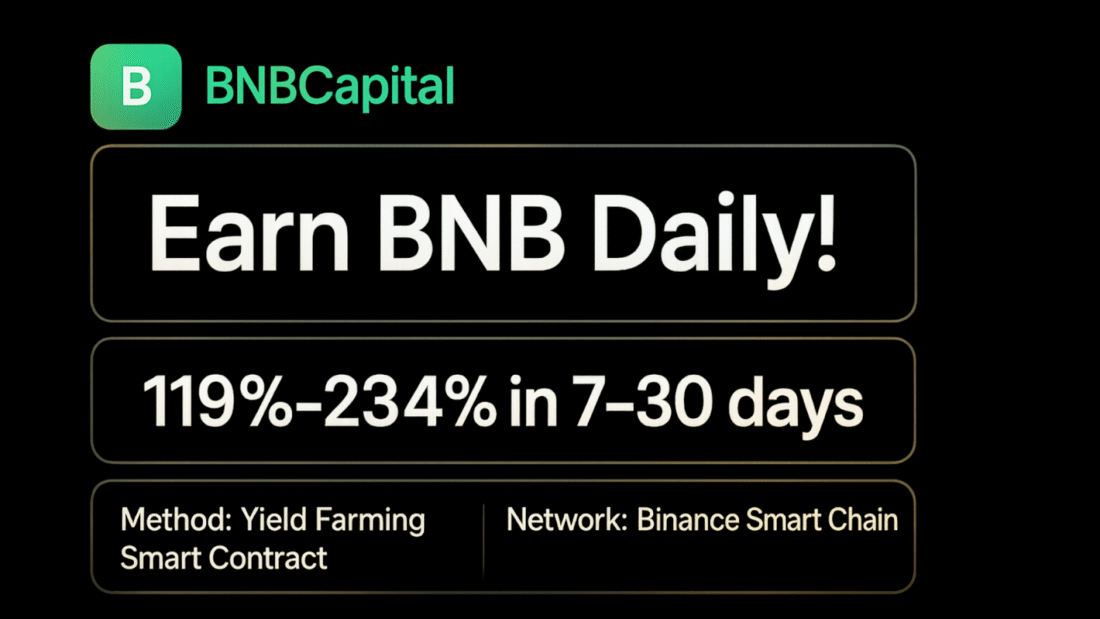
Deep Dive: How BNBCapital’s 726 Users Trust $400K to an Ownerless Smart Contract

Deep Dive: How BNBCapital’s 726 Users Trust $400K to an Ownerless Smart Contract

With 400.05 BNB ($402,050) locked in an completely ownerless smart contract, BNBCapital presents a fascinating case study in trustless DeFi architecture. The protocol has processed 862.97 BNB ($867,284) in total deposits from 726 users, all without any administrative control or governance mechanism – a radical departure from traditional DeFi protocols. The smart contract architecture eliminates […] The post Deep Dive: How BNBCapital’s 726 Users Trust $400K to an Ownerless Smart Contract appeared first on Live Bitcoin News.

Author: LiveBitcoinNews
Best Altcoins to Invest in Before October 2025

Best Altcoins to Invest in Before October 2025

Ripple’s XRP has long been at the top of the altcoins, with strong use cases in cross-border payments and ongoing institutional demand. As much as it remains a safe bet among investors seeking exposure to proven projects, however, its upside potential may be more limited compared to emerging token Mutuum Finance. Currently presale for $0.035, […]

Author: Cryptopolitan
China’s CAC summons ByteDance’s Toutiao and Alibaba’s UCWeb for “content violations”

China’s CAC summons ByteDance’s Toutiao and Alibaba’s UCWeb for “content violations”

China just hauled in ByteDance and Alibaba for a serious talk. On Tuesday, the Cyberspace Administration of China (CAC) summoned ByteDance’s news platform, Toutiao, and Alibaba’s UCWeb browser unit over content violations. The agency said both platforms had been punished for distributing material that “disrupted the online ecosystem order.” CAC said it imposed strict disciplinary […]

Author: Cryptopolitan
Crypto Indexes Down ~5%: BTC, ETH Lose Momentum, Many Mid-Caps & Meme Coins Implode, RWA Tokens Hold Steady

Crypto Indexes Down ~5%: BTC, ETH Lose Momentum, Many Mid-Caps & Meme Coins Implode, RWA Tokens Hold Steady

The post Crypto Indexes Down ~5%: BTC, ETH Lose Momentum, Many Mid-Caps & Meme Coins Implode, RWA Tokens Hold Steady appeared first on Coinpedia Fintech News Major crypto indexes retreated by roughly five percent during the latest trading cycle, erasing gains built over the past week. Flagship assets Bitcoin and Ether both shifted lower, losing the momentum that had pushed them toward recent resistance levels. The pullback intensified across mid-cap tokens and meme-branded coins, many of which recorded double-digit percentage drops …

Author: CoinPedia
Crypto-Native Autonomous Agents: A New Era of Decentralized AI

Crypto-Native Autonomous Agents: A New Era of Decentralized AI

Crypto-Native Autonomous Agents: A New Era of Decentralized AI The evolution of artificial intelligence (AI) and blockchain technology has paved the way for a new paradigm in decentralized systems: crypto-native autonomous agents (CNAAs). These agents combine the intelligence of AI with the transparency, security, and decentralization of blockchain, enabling automated decision-making, asset management, and transaction execution in crypto ecosystems. This intersection is creating opportunities for smarter decentralized finance (DeFi), autonomous marketplaces, and efficient blockchain-based governance. In this blog, we explore what crypto-native autonomous agents are, how they operate, their real-world applications, and why they are poised to redefine decentralized systems. Understanding Crypto-Native Autonomous Agents A crypto-native autonomous agent is an AI-powered program designed to operate natively within blockchain networks. Unlike traditional AI agents, which often rely on centralized servers, CNAAs execute tasks, make decisions, and interact with decentralized networks without centralized oversight. This decentralization ensures that these agents are trustless, transparent, and resistant to manipulation. Key characteristics of CNAAs include: Autonomy: They can perform tasks and make decisions independently based on predefined rules and learning algorithms. Crypto-native integration: They operate directly within blockchain ecosystems, utilizing tokens, smart contracts, and decentralized data. Interoperability: CNAAs can communicate with other agents, protocols, and dApps across multiple blockchains. Transparency and immutability: All actions and decisions are recorded on-chain, making their behavior verifiable and auditable. By combining AI decision-making with blockchain-based verification, these agents reduce the need for human oversight while increasing trust in decentralized operations. How Crypto-Native Autonomous Agents Work? Crypto-native autonomous agents function through a combination of AI algorithms, smart contracts, and blockchain infrastructure. Their workflow typically involves the following steps: Data Acquisition CNAAs continuously gather data from decentralized sources such as on-chain transactions, decentralized oracles, and crypto market feeds. Decision Making Using machine learning models, CNAAs analyze the data to make informed decisions. For example, an agent could determine the optimal time to trade a token or execute a staking strategy. Smart Contract Execution Once a decision is made, the agent interacts with smart contracts to perform actions automatically. These actions are verifiable and irreversible on the blockchain. Learning and Adaptation Advanced CNAAs incorporate reinforcement learning, allowing them to adapt strategies based on previous outcomes, market changes, and network conditions. This autonomous workflow enables decentralized systems to function efficiently without central authorities, enhancing security, reducing costs, and improving transaction speeds. Applications in Decentralized Finance (DeFi) One of the most significant use cases for crypto-native autonomous agents is in DeFi. Here, CNAAs can automate complex financial strategies, offering both efficiency and intelligence.

  1. Automated Trading AgentsCNAAs can act as autonomous trading bots, executing buy and sell orders across decentralized exchanges (DEXs) based on AI-driven predictions. Unlike traditional bots, these agents operate directly on-chain, reducing reliance on centralized intermediaries and improving trust.
  2. Liquidity Provision and Yield FarmingAutonomous agents can manage liquidity pools, optimize yield farming strategies, and rebalance portfolios dynamically. By analyzing market trends, these agents ensure maximum returns while minimizing risks for users.
  3. Risk Assessment and ManagementAI algorithms embedded in CNAAs can assess market volatility, smart contract vulnerabilities, and token risks in real-time. This predictive capability helps users make safer investment decisions and reduces the likelihood of losses due to unforeseen events. Enhancing Decentralized Marketplaces CNAAs are also transforming decentralized marketplaces by automating bidding, pricing, and trading processes. For example: NFT Marketplaces: Agents can evaluate NFT values, execute trades, and manage collections automatically. Tokenized Assets: CNAAs facilitate trading and management of tokenized real-world assets such as real estate or commodities, ensuring transparency and efficiency. Automated Auctions: Crypto-native agents can conduct on-chain auctions, adjusting bids and allocations dynamically based on demand and supply. This level of automation reduces friction in decentralized markets, encourages participation, and increases overall market efficiency. Governance and Decentralized Organizations Crypto-native autonomous agents play a crucial role in Decentralized Autonomous Organizations (DAOs). By automating governance functions, these agents ensure decisions are executed fairly and transparently: Voting Automation: CNAAs can tally votes, execute proposals, and distribute rewards automatically, minimizing human error. Resource Allocation: Agents manage treasury funds and project allocations based on predefined rules or AI-optimized strategies. Proposal Evaluation: Advanced CNAAs can assess the potential impact of governance proposals using predictive analytics, enabling informed decision-making. This automation strengthens trust in decentralized governance, as all actions are recorded and verifiable on-chain. Cross-Chain Interoperability Modern blockchain ecosystems are often fragmented, with assets and protocols spread across multiple networks. CNAAs facilitate cross-chain operations by: ✦Executing transactions across different blockchain networks seamlessly. ✦Bridging liquidity and ensuring arbitrage opportunities are optimized. ✦Monitoring cross-chain token performance and responding autonomously to market changes. This interoperability ensures that decentralized agents can operate efficiently in a multi-chain environment, enhancing liquidity and user experience. Security and Trust in Autonomous Agents Security is a critical concern for autonomous systems. CNAAs address this challenge through several mechanisms: Smart Contract Verification: Actions are executed via verified smart contracts, reducing the risk of manipulation. On-Chain Transparency: Every transaction and decision is recorded on the blockchain, making it auditable and immutable. AI-Driven Threat Detection: Some agents incorporate AI models to detect anomalies, identify potential exploits, and respond proactively. Decentralized Architecture: By operating in a decentralized manner, CNAAs reduce single points of failure and increase system resilience. These measures make crypto-native autonomous agents more secure than traditional centralized automation solutions. Real-World Use Cases Decentralized Asset Management: CNAAs manage crypto portfolios automatically, optimizing returns and balancing risk without human intervention. NFT Valuation Agents: AI-powered agents analyze NFT marketplaces to determine fair pricing, detect trends, and suggest optimal purchase or sale strategies. Yield Optimization: CNAAs automatically reallocate funds across liquidity pools to maximize yield, taking into account gas fees and market conditions. Cross-Chain Arbitrage: Agents monitor price discrepancies across chains and execute profitable trades autonomously. Governance Automation in DAOs: CNAAs ensure proposals are executed efficiently, funds are allocated correctly, and governance rules are enforced. These examples demonstrate how CNAAs are enabling smarter, faster, and more secure operations in the decentralized ecosystem. The Future of Crypto-Native Autonomous Agents As blockchain and AI technologies evolve, CNAAs are expected to become more sophisticated and widely adopted. Key trends include: Integration with AI-Powered Prediction Markets: Agents will analyze complex datasets to forecast trends and opportunities across DeFi and NFT markets. Enhanced Personalization: CNAAs will offer custom strategies tailored to individual user preferences and risk profiles. Decentralized AI Marketplaces: Agents will collaborate in marketplaces to buy, sell, and trade AI services autonomously. Self-Improving Algorithms: Reinforcement learning will allow CNAAs to continuously improve their decision-making capabilities. Broader Adoption in Traditional Finance: Financial institutions may integrate CNAAs for asset management, compliance, and risk assessment. The combination of AI intelligence and decentralized execution positions CNAAs as a critical component in the next generation of blockchain-based systems. Challenges and Considerations Despite their potential, CNAAs face several challenges: Regulatory Uncertainty: Cross-border operations and financial automation may face legal hurdles. Algorithmic Bias: AI models may inherit biases from training data, impacting decision-making. Scalability: High transaction costs and network congestion on some blockchains can limit agent performance. Interoperability: Ensuring seamless operation across multiple blockchains remains a technical challenge. Security Risks: While blockchain adds security, vulnerabilities in smart contracts or AI models can still be exploited. Addressing these challenges will be crucial for the broader adoption and success of crypto-native autonomous agents. Conclusion Crypto-native autonomous agents represent a new era of decentralized AI, combining intelligence, autonomy, aemond blockchain security. From DeFi trading and yield optimization to NFT marketplaces and DAO governance, these agents are redefining the possibilities of decentralized systems. By enabling autonomous decision-making, transparent operations, and cross-chain interoperability, CNAAs reduce the need for centralized oversight while increasing trust and efficiency. While challenges such as regulatory uncertainty and scalability remain, the ongoing evolution of AI and blockchain technologies promises to address these issues, paving the way for broader adoption. The era of crypto-native autonomous agents has arrived, offering a glimpse into a future where decentralized AI empowers users, businesses, and networks to operate smarter, faster, and more securely. Those who embrace these innovations today are likely to be at the forefront of blockchain’s next transformation.
Crypto-Native Autonomous Agents: A New Era of Decentralized AI was originally published in Coinmonks on Medium, where people are continuing the conversation by highlighting and responding to this story

Author: Medium