Dapp

Dapps are digital applications that run on a P2P network of computers rather than a single server, typically utilizing smart contracts to ensure transparency and uptime. In 2026, Dapps have achieved mass-market appeal through Account Abstraction, allowing for a "Web2-like" user experience with the security of Web3. This tag covers the entire ecosystem of decentralized software—from social media and productivity tools to governance platforms and identity management.

5021 Articles
Created: 2026/02/02 18:52
Updated: 2026/02/02 18:52

0G Labs – the Largest AI L1

0G Labs – the Largest AI L1

Michael Heinrich is co-founder and ceo of ØG Labs, building the 0G chain - the largest AI L1.

Author: Brave Newcoin
Solana Price Prediction Hints At Sideways Action While Rollblock Emerges As The Breakout

Solana Price Prediction Hints At Sideways Action While Rollblock Emerges As The Breakout

Solana stalls near $221 with sideways action, while Rollblock presale hits $11.8M, 55K users, and 500% growth. Analysts see RBLK rallying 25x–50x in 2025.

Author: Blockchainreporter
OpenAI’s Monumental Stargate Expansion: Fueling the Future of AI

OpenAI’s Monumental Stargate Expansion: Fueling the Future of AI

BitcoinWorld OpenAI’s Monumental Stargate Expansion: Fueling the Future of AI The world of artificial intelligence is experiencing an unprecedented surge, with innovations emerging at a breathtaking pace. For those tracking the digital frontier, including the dynamic cryptocurrency space, the foundational infrastructure supporting these advancements is just as crucial as the breakthroughs themselves. Imagine the sheer computational muscle required to power the next generation of AI models, the kind that could redefine industries and even human interaction. This is precisely what OpenAI is gearing up for, embarking on an ambitious journey to construct a network of colossal AI data centers known as Project Stargate. This massive undertaking, backed by industry giants Oracle and SoftBank, signals a new era in AI development, promising to reshape the technological landscape as we know it. What is Project Stargate and Why Does it Matter? Project Stargate is not just another data center initiative; it’s a vision for a supercomputing backbone designed to meet the insatiable demands of advanced AI. At its core, Stargate represents OpenAI‘s commitment to pushing the boundaries of artificial general intelligence (AGI). The sheer scale of this project is astounding, with a planned capacity of seven gigawatts. To put that into perspective, seven gigawatts is enough energy to power more than five million homes. This monumental energy requirement underscores the immense computational needs of training and deploying increasingly complex AI models, from large language models to advanced generative AI. For anyone invested in the future of technology, understanding the infrastructure behind AI breakthroughs is key. Stargate isn’t just about housing servers; it’s about creating an ecosystem where AI can truly flourish, enabling faster training times, more sophisticated algorithms, and ultimately, more powerful and versatile AI applications. The implications of such a project are far-reaching: Accelerated AI Development: With vastly increased computational power, OpenAI can iterate on models more rapidly, leading to quicker advancements. New Capabilities: More powerful infrastructure enables the development of AI models with capabilities previously deemed impossible. Economic Impact: The construction and operation of these facilities will create jobs, stimulate local economies, and attract further investment in tech hubs. Global Competitiveness: Such infrastructure solidifies the position of the United States as a leader in AI innovation. The Power Players: Oracle, SoftBank, and OpenAI‘s Strategic Alliance The success of an undertaking as grand as Project Stargate hinges on strategic partnerships. OpenAI has meticulously chosen its collaborators, tapping into the strengths of two industry titans: Oracle and SoftBank. These alliances are not merely financial; they represent a confluence of technological expertise, global reach, and a shared vision for the future of AI. Oracle‘s Cloud Computing Prowess Oracle, a long-standing giant in enterprise software and cloud infrastructure, brings its robust cloud computing capabilities and expertise in building and managing large-scale data centers. Three of the five new Stargate sites are being developed in collaboration with Oracle, leveraging their Oracle Cloud Infrastructure (OCI) platform. OCI is known for its high performance, scalability, and security, making it an ideal foundation for demanding AI workloads. Oracle’s commitment to supporting cutting-edge AI initiatives aligns perfectly with OpenAI‘s goals, providing the necessary hardware, network, and operational excellence to handle the unprecedented data flows and processing power required. This partnership signifies Oracle’s aggressive push into the AI infrastructure market, positioning them as a critical enabler for the next wave of AI innovation. SoftBank‘s Visionary Investment and Global Reach SoftBank, the Japanese multinational conglomerate known for its extensive investments in technology and telecommunications, is partnering with OpenAI on the remaining two Stargate sites. SoftBank’s involvement is strategic, providing not only significant capital but also its vast network and experience in large-scale infrastructure projects. SoftBank’s vision often involves identifying and nurturing disruptive technologies, and its investment in Stargate underscores the firm’s belief in the transformative power of AI. Their global perspective and ability to mobilize resources across diverse sectors will be invaluable in navigating the complexities of such a massive buildout. This collaboration highlights a shared understanding that foundational infrastructure is paramount for unlocking AI’s full potential. The synergy between these three entities is undeniable: OpenAI: The AI innovator, driving the demand for advanced compute. Oracle: The infrastructure provider, offering scalable and high-performance cloud solutions. SoftBank: The strategic investor and enabler, providing capital and global project expertise. Unpacking the Scale: The Immense Need for AI Data Centers The rapid evolution of AI models, particularly large language models (LLMs) and generative AI, has created an insatiable demand for computational resources. Training these models requires vast amounts of data and billions of parameters, necessitating an unprecedented scale of hardware and energy. This is where the concept of ‘gigawatt-scale’ AI data centers becomes critical. The existing infrastructure, while powerful, simply isn’t sufficient to handle the future needs of AI development. Consider these factors driving the demand: Model Complexity: AI models are growing exponentially in size and complexity, requiring more processing power and memory. Data Volume: Training data sets are enormous, demanding massive storage and high-speed data transfer capabilities. Inference at Scale: Once trained, these models need to serve millions of users, requiring efficient and powerful inference capabilities. Continuous Innovation: The pace of AI research means constant experimentation and retraining, which consumes vast resources. The $100 billion investment from Nvidia, mentioned in the original report, further illustrates this point. This capital is earmarked specifically for acquiring Nvidia’s cutting-edge AI processors – the very chips that power these advanced models – and building out even more AI data centers. It’s a clear signal that the race for AI dominance is fundamentally a race for computational infrastructure. Companies like OpenAI understand that without robust, scalable, and energy-efficient data centers, the theoretical advancements in AI cannot translate into practical, impactful applications. Geographic Footprint: Where are OpenAI‘s New Hubs Located? The strategic placement of these new AI data centers is crucial for operational efficiency, energy access, and disaster recovery. OpenAI‘s expansion includes five new sites across the United States, carefully selected for their potential to support such large-scale operations. Here’s a breakdown of the announced locations: Partner Location Notes Oracle Shackelford County, Texas Leveraging Texas’s energy resources and growing tech infrastructure. Oracle Doña Ana County, New Mexico Strategic location in the Southwest, potentially benefiting from renewable energy initiatives. Oracle Undisclosed location in the Midwest Likely chosen for access to power grids and potentially cooler climates for efficient cooling. SoftBank Lordstown, Ohio Utilizing existing industrial sites and energy infrastructure in the region. SoftBank Milam County, Texas Another significant presence in Texas, highlighting its strategic importance for data center development. These locations are not chosen at random. Factors such as access to reliable and affordable power, fiber optic networks, skilled labor, and favorable regulatory environments play a significant role. Texas, for instance, has become a hotbed for data center development due to its energy grid and pro-business environment. The expansion into the Midwest and Southwest also suggests a strategy of geographical diversification, reducing risks associated with localized natural disasters or energy disruptions. This distributed approach ensures redundancy and resilience, critical for maintaining continuous AI operations. Fueling the Future: The Economic and Technological Impact of Stargate The construction of these new Stargate data centers is more than just an infrastructure project; it’s an investment in the future of technology itself. The economic impact will be substantial, from the creation of thousands of construction and operational jobs to stimulating local economies in the chosen regions. Beyond direct economic benefits, the technological implications are profound. For the broader tech ecosystem, including areas like blockchain and decentralized finance (DeFi), the advancements enabled by Stargate could lead to: More Sophisticated AI Tools: Enhanced AI capabilities could improve fraud detection, predictive analytics, and algorithmic trading in financial markets. Improved Security: AI can play a critical role in cybersecurity, protecting digital assets and infrastructure. Innovation in Web3: Advanced AI could power more intelligent smart contracts, decentralized applications (dApps), and user experiences in the Web3 space. Energy Considerations: The immense power consumption of these centers also brings a focus on sustainable energy solutions, a conversation relevant to all high-energy-consumption industries, including cryptocurrency mining. The challenges are also significant. The sheer energy demand of seven gigawatts raises environmental concerns, pushing for innovations in renewable energy sources and energy efficiency. Cooling these massive facilities efficiently will be another engineering feat. However, the benefits of accelerating AI development are seen as outweighing these challenges, driving further investment in green tech and sustainable practices within the data center industry. Conclusion: A New Dawn for AI Infrastructure OpenAI‘s Stargate project, backed by the formidable resources of Oracle and SoftBank, marks a pivotal moment in the history of artificial intelligence. By committing to build five new gigawatt-scale AI data centers, OpenAI is not just expanding its capacity; it is laying the groundwork for the next generation of AI innovation. This monumental undertaking will provide the computational horsepower necessary to train and deploy models that could redefine industries, from healthcare and finance to education and entertainment. While challenges like energy consumption and environmental impact remain, the strategic partnerships and massive investment underscore a collective belief in the transformative power of AI. As these Stargate hubs come online, they will not only solidify OpenAI‘s leadership but also accelerate the entire AI ecosystem, promising a future where intelligent machines play an even more integrated and sophisticated role in our lives. To learn more about the latest AI market trends, explore our article on key developments shaping AI models features, institutional adoption, etc. This post OpenAI’s Monumental Stargate Expansion: Fueling the Future of AI first appeared on BitcoinWorld.

Author: Coinstats
Ethereum’s Vitalik Buterin Defends Base as Model Layer-2 Solution

Ethereum’s Vitalik Buterin Defends Base as Model Layer-2 Solution

Ethereum co-founder Vitalik Buterin has addressed concerns over Coinbase’s Base network, describing it as a model Layer-2 solution that balances efficiency with security. He explained that while Base uses some centralized features to improve user experience, its foundation remains tied to Ethereum’s decentralized Layer-1. Buterin stressed that Base is non-custodial, meaning it cannot block or […]

Author: Tronweekly
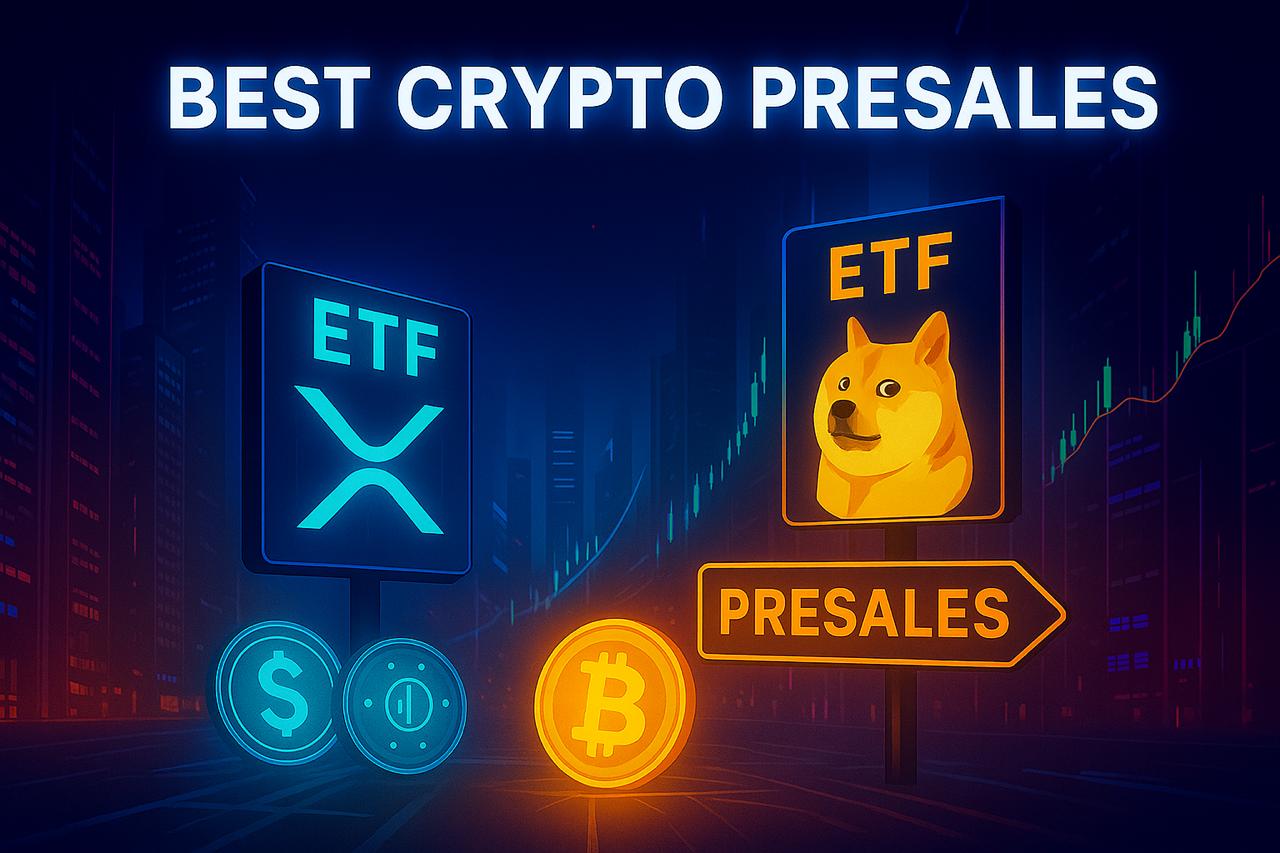
Best Crypto Presales to Buy as First XRP and Dogecoin ETFs Are at a Crossroads

Best Crypto Presales to Buy as First XRP and Dogecoin ETFs Are at a Crossroads

ETFs are no longer just for Bitcoin and Ethereum. Last week, three major altcoin exchange-traded funds launched and faced a […] The post Best Crypto Presales to Buy as First XRP and Dogecoin ETFs Are at a Crossroads appeared first on Coindoo.

Author: Coindoo
PairPoint by Vodafone Doubles Down on SKALE Ecosystem, Joining Network as Validator

PairPoint by Vodafone Doubles Down on SKALE Ecosystem, Joining Network as Validator

San Francisco, CA, USA, 23rd September 2025, Chainwire The post PairPoint by Vodafone Doubles Down on SKALE Ecosystem, Joining Network as Validator appeared first on The Daily Hodl.

Author: The Daily Hodl
How Best Wallet Is Transforming Crypto Storage

How Best Wallet Is Transforming Crypto Storage

The post How Best Wallet Is Transforming Crypto Storage appeared on BitcoinEthereumNews.com. There is no longer one chain that dominates the crypto industry. Traders are spreading far and wide in search of the best rates, opportunities, and the user experience most suited to their specific needs. Meme coin traders remain fixated on Solana and BNB, while AI development is running hot on Near Protocol, and stablecoin activity thrives on Tron. In this world, where innovation continues to spread and users splinter from legacy blockchains, fragmentation is a pressing issue.  It’s hard for users to keep track of assets across all these chains; liquidity is spread thin across ecosystems, and users are forced to rely on trusted blockchain bridges that have proved vulnerable to attacks on countless occasions. Even the top crypto wallets like MetaMask and Trust Wallet are unable to keep pace. However, a next-generation wallet, simply called Best Wallet, was designed explicitly with these issues in mind. The project is rapidly transforming the crypto storage industry, modernizing it with cross-chain infrastructure, secure MPC technology, and an array of built-in features that make users feel like they’re trading on Coinbase, not a fully on-chain, non-custodial wallet. It’s powered by Best Wallet Token (BEST), which is an Ethereum-based utility coin that is currently available to buy in its presale at a rate of $0.025685. The presale has raised $16 million so far, making it one of the strongest launches currently ongoing and signaling significant potential once it hits exchanges.  Transforming crypto storage with one super app The crypto market has grown rapidly this cycle, with the industry’s total valuation reaching a record high of $4.17 trillion, surpassing the current combined market cap of Meta, Tesla, and JP Morgan. However, the industry still faces a major challenge with crypto wallets. Consumer apps for storing cryptocurrencies have largely remained unchanged since the last cycle, which…

Author: BitcoinEthereumNews
Shocking Shift: 8 Best Crypto To Buy Now That Could Redefine Portfolios in 2025

Shocking Shift: 8 Best Crypto To Buy Now That Could Redefine Portfolios in 2025

BlockchainFX presale nears $8M with 10,300+ buyers at $0.024, offering staking rewards, Visa card integration, and 2x upside at launch. Best crypto to buy now.

Author: Blockchainreporter
Best Crypto Presales to Buy: How Best Wallet Is Transforming Crypto Storage

Best Crypto Presales to Buy: How Best Wallet Is Transforming Crypto Storage

Enjoy the videos and music you love, upload original content, and share it all with friends, family, and the world on YouTube.

Author: Blockchainreporter
Fintel’s Strategic $100M SOL Investment: What It Means for Crypto

Fintel’s Strategic $100M SOL Investment: What It Means for Crypto

BitcoinWorld Fintel’s Strategic $100M SOL Investment: What It Means for Crypto The cryptocurrency world is buzzing with significant news: Nasdaq-listed Fintel Corporation (FTEL) has secured a substantial $100 million financing facility. This isn’t just any corporate financing; the company plans to use these funds for strategic purchases of SOL, the native cryptocurrency of the Solana blockchain. This Fintel SOL investment marks a notable move, highlighting growing institutional interest in the digital asset space. What does this bold step mean for Fintel, Solana, and the broader crypto market? Let’s dive in. What Does Fintel’s $100M SOL Investment Entail? Fintel Corporation, known for its data analytics and financial technology services, is making a definitive push into the crypto arena. GlobeNewswire reported that the $100 million financing facility is earmarked specifically for acquiring SOL tokens. This move signifies more than just a treasury allocation; it represents a deliberate strategy to engage with and potentially benefit from the burgeoning Solana ecosystem. Such an explicit Fintel SOL investment from a Nasdaq-listed entity provides a strong signal to the market. Company: Nasdaq-listed Fintel Corporation (FTEL) Funding: $100 million financing facility Purpose: Strategic purchases of SOL (Solana) Source: GlobeNewswire report This action by Fintel demonstrates a clear belief in the long-term value and potential of Solana. It positions Fintel not just as a technology provider but also as a direct participant in the digital asset economy. Why Solana? The Strategic Rationale Behind This Fintel SOL Investment Solana has emerged as a prominent blockchain, celebrated for its high transaction speeds and low costs. These technical advantages make it an attractive platform for various decentralized applications (dApps), NFTs, and DeFi projects. Fintel’s decision to specifically target SOL for its investment reflects a calculated assessment of Solana’s ecosystem and future prospects. Scalability: Capable of processing thousands of transactions per second. Cost-Effectiveness: Extremely low transaction fees. Developer Activity: A growing and vibrant developer community. Ecosystem Growth: Rapid expansion of DeFi, NFT, and Web3 projects. This strategic Fintel SOL investment suggests that the corporation sees Solana as a key player in the evolving digital infrastructure. It’s not merely buying a digital asset; it’s investing in a foundational technology. What Are the Broader Implications of Fintel’s Strategic Move? An institutional Fintel SOL investment of this magnitude carries significant weight for the entire cryptocurrency market. It could potentially: Boost Solana’s Credibility: A Nasdaq-listed company’s backing adds a layer of legitimacy and institutional validation to Solana. Attract More Institutional Capital: Other traditional finance entities might view Fintel’s move as a precedent, encouraging their own exploration of crypto investments. Influence Market Sentiment: Positive news from a publicly traded company can create a ripple effect, potentially driving up demand and price for SOL. Diversify Corporate Portfolios: It highlights a growing trend among corporations to consider digital assets as part of their treasury management or strategic growth initiatives. This development underscores a shift in how mainstream finance perceives cryptocurrencies, moving beyond speculative trading to strategic asset allocation. Potential Challenges and Opportunities for Fintel’s SOL Investment While the Fintel SOL investment presents exciting opportunities, it also comes with inherent challenges. The cryptocurrency market is known for its volatility, and regulatory landscapes are still evolving. Opportunities: Capital Appreciation: Potential for significant returns if Solana’s value increases. Ecosystem Integration: Fintel could explore integrating its financial data services with the Solana blockchain. Innovation: Position itself at the forefront of digital asset adoption. Challenges: Market Volatility: SOL’s price can experience rapid fluctuations, impacting the investment’s value. Regulatory Uncertainty: The evolving legal framework for cryptocurrencies poses risks. Technological Risks: Potential for network outages or security vulnerabilities, though Solana has improved. Fintel’s leadership will undoubtedly navigate these factors, aiming to maximize the benefits while mitigating the risks associated with such a substantial digital asset holding. Looking Ahead: The Future of Fintel’s SOL Investment This initial $100 million Fintel SOL investment could be just the beginning. Depending on market performance and strategic objectives, Fintel might choose to expand its holdings or integrate Solana more deeply into its business operations. This bold move positions Fintel as an early institutional adopter of a major blockchain, potentially paving the way for future innovations in the intersection of traditional finance and decentralized technology. It will be fascinating to observe how this investment unfolds and what strategic partnerships or product developments might emerge from it. Conclusion: Fintel Corporation’s $100 million financing facility dedicated to purchasing SOL is a landmark event. It not only demonstrates a strong belief in Solana’s potential but also signifies a broader trend of institutional confidence in the cryptocurrency market. This strategic Fintel SOL investment highlights the ongoing convergence of traditional finance and digital assets, promising exciting developments for investors and the wider crypto community. As Fintel embarks on this new chapter, the industry will be watching closely to see the long-term impact of this significant institutional embrace of Solana. Frequently Asked Questions (FAQs) 1. What is Fintel Corporation? Fintel Corporation (FTEL) is a Nasdaq-listed company specializing in financial technology and data analytics, providing insights and tools for investors and financial professionals. 2. Why is Fintel investing in SOL? Fintel is making a strategic Fintel SOL investment due to Solana’s high transaction speeds, low costs, and growing ecosystem, which they believe offers significant long-term value and potential for integration with their services. 3. What is Solana (SOL)? Solana is a high-performance blockchain platform designed for decentralized applications and crypto projects, known for its scalability and efficiency. SOL is its native cryptocurrency, used for transactions and network governance. 4. How does this investment impact the broader crypto market? An institutional Fintel SOL investment of this scale can boost Solana’s credibility, attract more institutional capital to the crypto space, and positively influence overall market sentiment by demonstrating mainstream corporate adoption of digital assets. 5. Are there risks associated with Fintel’s SOL investment? Yes, like all cryptocurrency investments, it carries risks such as market volatility, potential regulatory changes, and technological vulnerabilities inherent in blockchain platforms. Fintel will need to manage these risks carefully. If you found this insight into Fintel’s strategic move illuminating, share this article with your network! Help us spread the word about significant institutional shifts in the cryptocurrency landscape and spark further discussions on the future of digital assets. To learn more about the latest crypto market trends, explore our article on key developments shaping institutional adoption of digital assets. This post Fintel’s Strategic $100M SOL Investment: What It Means for Crypto first appeared on BitcoinWorld.

Author: Coinstats