Stablecoins

Stablecoins are digital assets pegged to a stable reserve, such as the US Dollar or Gold, to minimize price volatility. Serving as the primary medium of exchange in Web3, tokens like USDT, USDC, and PYUSD facilitate global payments and DeFi liquidity. In 2026, the focus has shifted toward yield-bearing stablecoins and compliant stablecoin frameworks under global regulations like MiCA. This tag covers the intersection of traditional finance (TradFi) and crypto through stable on-chain liquidity solutions.

23339 Articles
Created: 2026/02/02 18:52
Updated: 2026/02/02 18:52
CCTV News: Trump signs stablecoin-related bill. What is a stablecoin? What should be “stabilized”?

CCTV News: Trump signs stablecoin-related bill. What is a stablecoin? What should be “stabilized”?

Written by: CCTV News On the 18th local time, US President Trump officially signed the "Guidance and Establishment of a National Innovation Act for American Stablecoins" (referred to as the

Author: PANews
Analyst: The GENIUS Act bans yield-generating stablecoins, which will boost demand for DeFi

Analyst: The GENIUS Act bans yield-generating stablecoins, which will boost demand for DeFi

PANews reported on July 19 that according to Cointelegraph, the GENIUS Act signed by US President Trump on Friday prohibits the issuance of yield-based stablecoins, cutting off interest-earning opportunities for

Author: PANews
JPMorgan analyst: Regulators outside the U.S. may prefer tokenized bank deposits over stablecoins

JPMorgan analyst: Regulators outside the U.S. may prefer tokenized bank deposits over stablecoins

PANews reported on July 19 that according to The block, JPMorgan analysts said that regulators outside the United States, including the Bank of England, seem to prefer tokenized bank deposits

Author: PANews
David Sack: The GENIUS Act will replace outdated payment methods with a new blockchain-based payment system

David Sack: The GENIUS Act will replace outdated payment methods with a new blockchain-based payment system

PANews reported on July 19 that David Sacks, the White House's director of cryptocurrency and artificial intelligence, tweeted, "President Trump signed the GENIUS Act, which establishes a legal framework for

Author: PANews
Charles Schwab Intends to Launch Stablecoin

Charles Schwab Intends to Launch Stablecoin

PANews reported on July 19 that according to Decrypt, Charles Schwab CEO Rick Wurster said in a financial report conference call on Friday that Charles Schwab hopes to issue its

Author: PANews
Non-profit development organization Argot Collective sold another 600 ETH 6 hours ago

Non-profit development organization Argot Collective sold another 600 ETH 6 hours ago

PANews reported on July 19 that according to on-chain analyst Ember’s monitoring, Argot Collective, a non-profit development organization that received 7,000 ETH operating funds from the Ethereum Foundation, continued to

Author: PANews
US President Trump officially signed the stablecoin-related bill "GENIUS Act"

US President Trump officially signed the stablecoin-related bill "GENIUS Act"

PANews reported on July 19 that according to CCTV News, US President Trump officially signed the "Guidance and Establishment of the United States Stablecoin National Innovation Act" ("GENIUS Act", referred

Author: PANews
Crypto Leaders See GENIUS Act as Turning Point for Regulation

Crypto Leaders See GENIUS Act as Turning Point for Regulation

Key Takeaways: U.S. House has passed the GENIUS Act, establishing federal stablecoin regulations. Executives from Ondo, Bitpanda, and Gluwa cite rising institutional confidence. Regulatory clarity may shape how infrastructure and securities laws intersect globally. Executives from Ondo Finance, Bitpanda, and Gluwa say the passage of key crypto regulations, including the GENIUS Act in the U.S. House, represents a shift in the policy environment for digital assets. According to statements shared with Cryptonews.com on July 16, Ian De Bode, Chief Strategy Officer at Ondo Finance, said the bill represents “the beginning of a new regulatory era,” citing bipartisan cooperation and increased institutional readiness. GENIUS Act Interpreted by Executives “The clearer the rules, the faster adoption will follow,” he said, adding that legal clarity has long been the key obstacle to full institutional participation. De Bode noted that Patrick McHenry, Vice Chair of Ondo and former Chair of the House Financial Services Committee, has played a role in advancing policy. “His presence alongside President Trump at today’s GENIUS Act signing underscores the significance of this moment – not just for policy, but for the broader digital asset industry,” De Bode said. Crypto Week has delivered. The GENIUS Act is now law, providing long-overdue clarity for stablecoin issuers, protections for consumers, and defined guidelines for regulators. With the CLARITY Act also advancing through the Senate, the US took a major step toward defining… pic.twitter.com/ckNjO2FF2t — Ondo Finance (@OndoFinance) July 18, 2025 Bitpanda Deputy CEO Lukas Enzersdorfer-Konrad said that regulatory movement in Washington is shaping investor sentiment. “This breakthrough is fuelling broad market optimism in BTC, as we’ve seen from the recent all-time high, and now for altcoins,” he said. He emphasized the renewed interest in altcoins like XRP and DOGE and said, “broad rallies need confidence.” Tae Oh, CEO of Gluwa, focused on the stablecoin provision in the GENIUS Act. “By establishing the first federal framework for USD-pegged stablecoins, this development signals a strong commitment to responsible innovation, consumer protection, and long-term industry growth,” he said. He added that the bill supports future adoption in “payments, DeFi, and financial infrastructure.” Oh also pointed to the Crypto Market Structure Bill and the upcoming Fed meeting. “Even the slightest hints of a pivot in policy could significantly impact risk assets,” he said. Evolving Regulatory Environment in Crypto Space Some industry analysts view the GENIUS Act’s passage as part of a larger trend toward regulatory convergence across major economies. The European Union’s Markets in Crypto-Assets Regulation (MiCA) and similar efforts in Asia suggest that lawmakers globally are seeking to align digital asset oversight with existing financial systems, reducing regulatory arbitrage and improving cross-border compatibility. At the same time, the regulation exposes a divide between countries that treat crypto primarily through securities law enforcement and those that treat it through financial infrastructure reform. The ability of jurisdictions to define clear supervisory roles across banking, securities, and commodities may determine how effectively they integrate blockchain-based systems into their economies. Frequently Asked Questions (FAQs) How might U.S. regulation impact crypto jurisdictions in Asia? Asia-based regulatory authorities may adjust licensing structures and enforcement thresholds based on how U.S. policy evolves, particularly if they seek access to U.S. liquidity or wish to comply with international financial standards. What are the risks of regulatory fragmentation despite growing alignment? Conflicting definitions of digital assets and inconsistent supervision of stablecoins or DeFi protocols may lead to market segmentation, making it harder for cross-border services to operate under unified legal assumptions. How are traditional financial institutions responding to the GENIUS Act? Many banks and asset managers are reportedly monitoring developments for potential entry points, especially in areas such as tokenized treasuries and compliant stablecoin issuance, which may now fall under clearer federal rules.

Author: CryptoNews
GENIUS' ban on stablecoin yield will drive demand for Ethereum DeFi — Analysts

GENIUS' ban on stablecoin yield will drive demand for Ethereum DeFi — Analysts

The lack of yield-bearing options for US-regulated stablecoins under the GENIUS bill will drive investors to search for interest elsewhere, analysts said.

Author: PANews
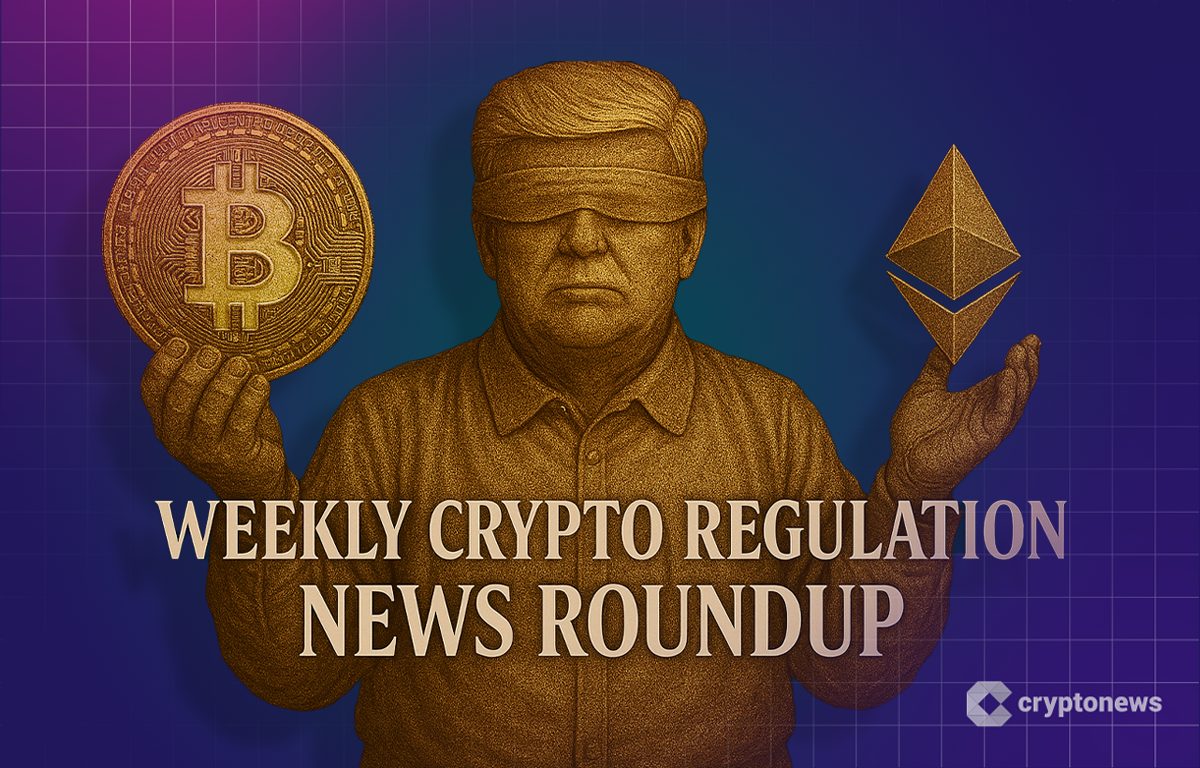
Weekly Crypto Regulation Roundup: Trump Signs GENIUS Act and SEC Eyes Tokenization Tweaks

Weekly Crypto Regulation Roundup: Trump Signs GENIUS Act and SEC Eyes Tokenization Tweaks

In a landmark week for the U.S. crypto industry, President Donald Trump signed the GENIUS Act into law , following its dramatic rescue from legislative limbo just days earlier. The move marks a seismic shift in the regulatory framework for digital assets, particularly dollar-backed stablecoins, and indicates a broader push by the Trump administration to bring clarity and control to the sector. 🚨 BREAKING: President Trump has officially signed the GENIUS Act into law, unleashing America’s leadership in the crypto space He even took a swipe at Biden while signing, saying “this is NOT an autopen, by the way!” 🤣🔥 HUGE win for our country! 🇺🇸 pic.twitter.com/2mN20i56xE — Nick Sortor (@nicksortor) July 18, 2025 Simultaneously, the Securities and Exchange Commission (SEC) is considering targeted regulatory relief for tokenized securities, and Democratic lawmakers are escalating their opposition, painting the Republican-led crypto agenda as a dangerous concession to industry elites. Trump’s Crypto Comeback Tuesday’s initial failure of the GENIUS Act in the House—where it was blocked in a 196–223 vote—sent shockwaves through the crypto industry, threatening to derail what Republicans had dubbed “Crypto Week.” 🇺🇸 GENIUS Act, Anti-CBDC Act, and CLARITY Act pass crucial procedural vote 215-211 in Congress after Trump's decisive Oval Office intervention rescues stalled crypto agenda. #GeniusAct #Trump https://t.co/Lm2tCBbimp — Cryptonews.com (@cryptonews) July 16, 2025 But by Wednesday night, the tide turned. In a rare Oval Office intervention, President Trump rallied House Republicans, warning that failure to advance digital asset legislation would undermine U.S. innovation and competitiveness. The strategy paid off. On July 16, a revised procedural motion passed in a 215–211 vote with zero Democratic support, greenlighting the GENIUS Act, the Anti-CBDC Surveillance State Act, and the CLARITY Act for final House votes. The GENIUS Act—short for Guiding and Establishing National Innovation for U.S. Stablecoins —had already passed the Senate in June by a bipartisan 68–30 vote. The bill mandates 1:1 reserve backing for stablecoins, introduces federal licensing pathways for issuers, and firmly places oversight responsibilities in the hands of prudential regulators. SEC Softens Stance on Tokenization In a parallel development, SEC Chairman Paul Atkins announced that the agency is evaluating “innovation exemptions” to ease the regulatory burden on tokenization platforms and digital asset infrastructure providers. 🏛️ The SEC is weighing an “innovation exemption” to boost tokenization, just as the House passes a landmark stablecoin bill reshaping US crypto policy. #Tokenization #CryptoPolicy https://t.co/za9zOMVvfm — Cryptonews.com (@cryptonews) July 18, 2025 Speaking shortly after the House approved the trio of crypto bills, Atkins told reporters that the SEC is reviewing ways to support novel trading models and infrastructure for tokenized securities. “We’re at an inflection point where technology is outpacing regulation,” Atkins said. “Rather than stifle innovation, we’re exploring guardrails that allow responsible experimentation, particularly in tokenized equity and real-world asset platforms.” Such moves hint at a softer, more pragmatic approach from the SEC under mounting political and industry pressure. The idea of a sandbox-like exemption could help address longstanding complaints from blockchain firms that the current regulatory framework, built around 20th-century financial models, is ill-suited to tokenized economies. Democrats Push Back Hard Not everyone is on board with this regulatory momentum. Congresswoman Maxine Waters (D-CA), a longtime critic of the crypto industry, launched a fierce counteroffensive against the GOP’s crypto legislation package. 🇺🇸 Rep. Maxine Waters is slamming congressional efforts to advance crypto legislation this week in a scathing July 16 press release. #MaxineWaters #CryptoWeek https://t.co/BzgYMmUTSt — Cryptonews.com (@cryptonews) July 16, 2025 In a pair of fiery press releases published by the House Financial Services Committee, Waters slammed the GENIUS and CLARITY Acts as reckless and dangerous. “This bill, which should be called the ‘CALAMITY Act,’ is bad public policy, plain and simple,” she wrote. “It exposes consumers to exploitation by bad actors in the crypto industry, undermines national security, and ignores Donald Trump’s escalating conflicts of interest tied to his personal involvement in cryptocurrency.” Waters didn’t hold back on President Trump either, accusing him of using public policy to further his crypto-related business interests. “These bills throw hardworking Americans under the bus,” she said, “putting them at risk for a future financial crisis—all to legitimize Donald Trump’s crypto scams.” In an even more blistering statement, Waters declared the legislation would “create a casino for crypto billionaires to make more profits,” characterizing the Republican strategy as a gift to “growing crypto crimes.” ⚖️ Congresswoman Maxine Waters is making a case against crypto legislation in her latest press release against "Crypto Week." #MaxineWaters #CryptoWeek https://t.co/4nE6WGJAuK — Cryptonews.com (@cryptonews) July 17, 2025 What’s Next? With the GENIUS Act now law, attention turns to how the legislation will be implemented. The Act provides for an 18-month rulemaking and compliance window, during which federal agencies will coordinate with states to finalize supervisory frameworks for stablecoin issuers. The SEC’s potential regulatory tweaks are still in the consultation phase, but if implemented, they could offer much-needed breathing room for tokenized platforms attempting to scale legally in the U.S. Meanwhile, Democrats are expected to continue challenging the new regulatory framework, possibly through judicial reviews or state-level resistance.

Author: CryptoNews